
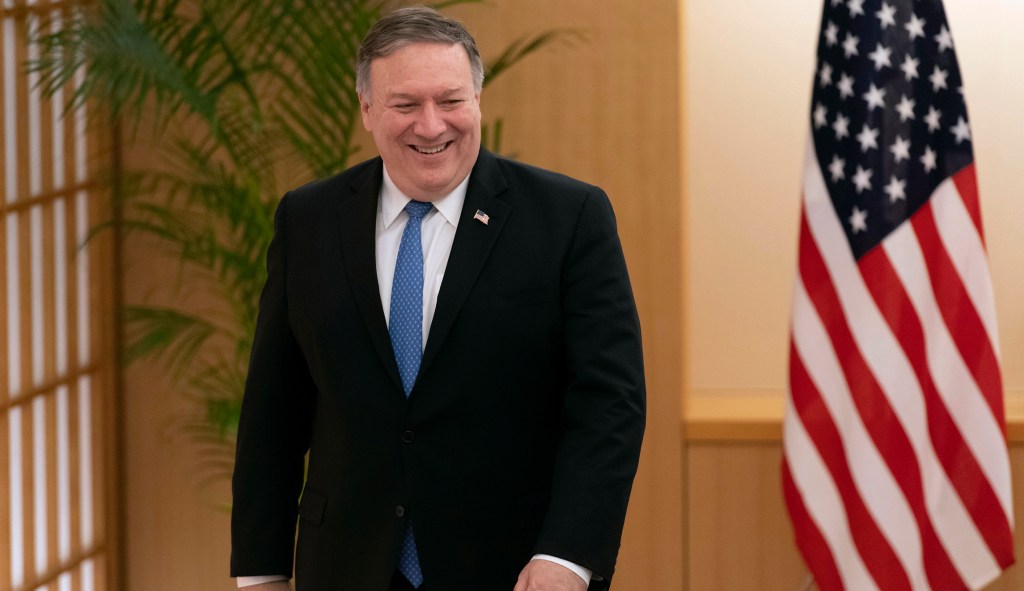
During September’s annual meeting of the United Nations General Assembly in New York, Secretary of State Mike Pompeo held a meeting with the foreign ministers of the Gulf Cooperation Council, Jordan, and Egypt. There, Pompeo discussed the Trump administration’s proposed Middle East Strategic Alliance, a grouping of eight Arab states and the United States ostensibly tasked with combating terrorism, cyberattacks, and Iran’s malign behavior in the region. Many observers have likened MESA to an Arab version of NATO.
Theoretically, an Arab NATO could benefit the Middle East’s security. Washington’s misadventures in the region — from a preventative and ill-conceived war in Iraq to a botched humanitarian intervention in Libya — have overstretched our military, drastically increased our debt, and distracted Washington from foreign policy problems more directly connected to America’s security and prosperity. The region has been an enormous burden on America’s shoulders, with $5.6 trillion spent and thousands of American lives lost over the last 17 years.
Real journalism.Trusted by millions.
Unlimited access to in-depth reporting, expert analysis, and the stories that shape our country.
Already a member? Log in