

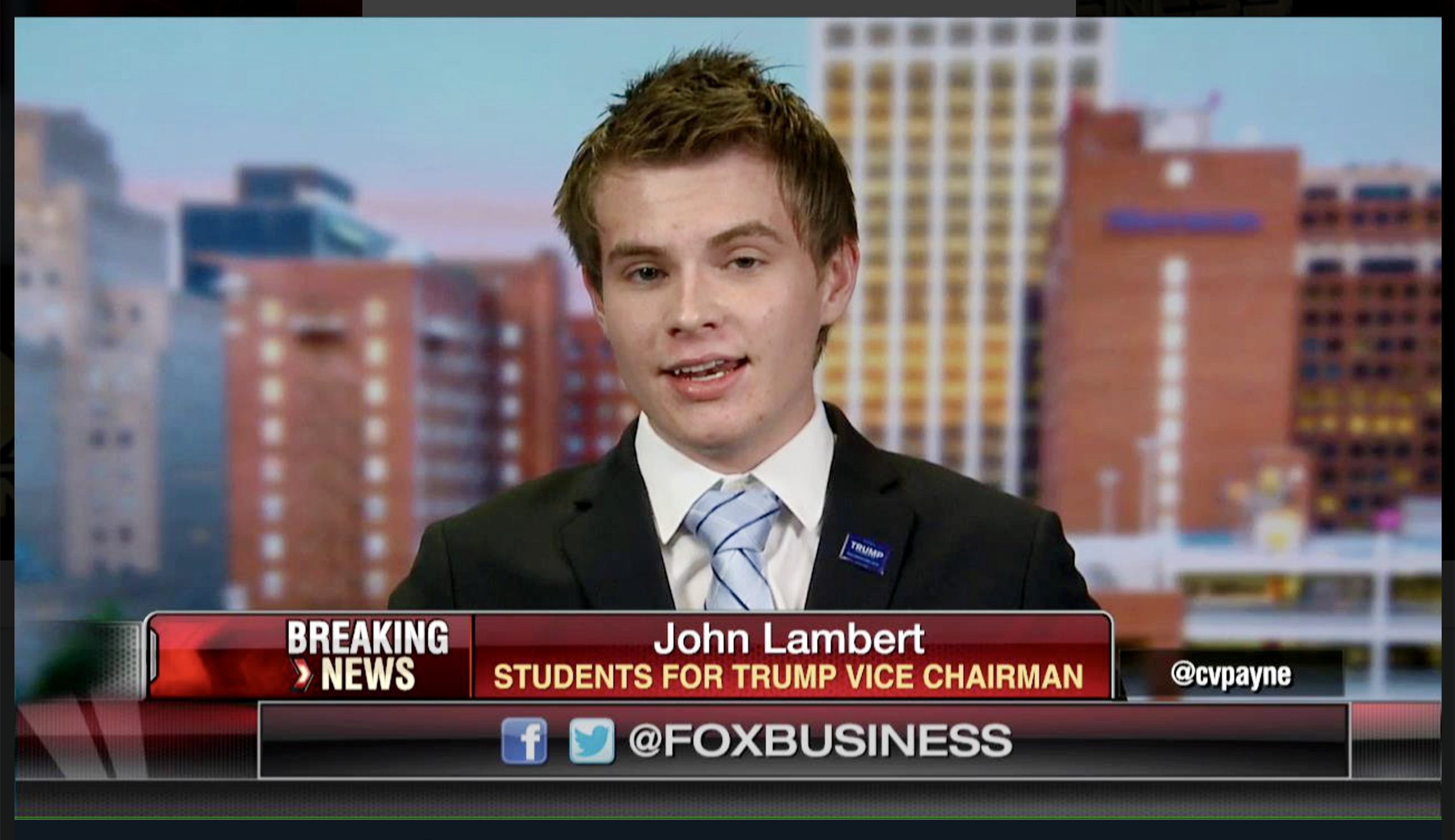
John Lambert, the founder of Students for Trump, hatched a $46,000 scam by pretending to be a lawyer. He created a fake law firm, Pope & Dunn, gave himself a NYU law degree, and boasted 15 years of experience, despite being just 23.
Lambert ran the scam from 2016 to 2018 — because you’ve got to find some way to make money once the politician you’ve attached your name to is already sitting in the White House. On Tuesday, the “babyfaced fraudster,” as the New York Daily News put it, pleaded guilty to wire fraud conspiracy.
Recommended Stories


“John Lambert represented himself to clients as a prominent New York attorney with a law degree from an elite law school,” Manhattan U.S. Attorney Geoffrey Berman said. “But Lambert’s de facto career was one of a grifter: he had never been to law school and certainly wasn’t an attorney. Today, Lambert admitted to his crimes and faces time in prison for his misdeeds.”
Lambert was arrested back in April for committing fraud, at which point Students for Trump distanced itself from him, saying that he left the group after President Trump’s election.
Students for Trump may be done with Lambert, who co-founded the group with Ryan Fournier in 2015, but is it done with people like him? He’s surely not the only grifter in the group.
Then again, an organization founded to rally college students in support of Trump by posting photos of hot babes to its Instagram probably isn’t full of the most serious members in the first place. If a “Make America Great Again” swimsuit doesn’t scream “I’m just here to cash in on this bandwagon,” I don’t know what does.
Students for Trump’s recent acquisition by Turning Point USA, run by ideologically fluid Charlie Kirk, won’t help either. Like Students for Trump, Turning Point USA has made a name for itself by coaxing young conservatives toward the Trump bandwagon, misleading them along the way to believe that allegiance is more important than intellect or ideology.
Lambert’s wire fraud scam, which will now put him in prison, may have nothing to do Students for Trump. But it’s an appropriate and cautionary symbol for what can happen to young politicos whose activism is fundamentally inspired by personal gain.
