

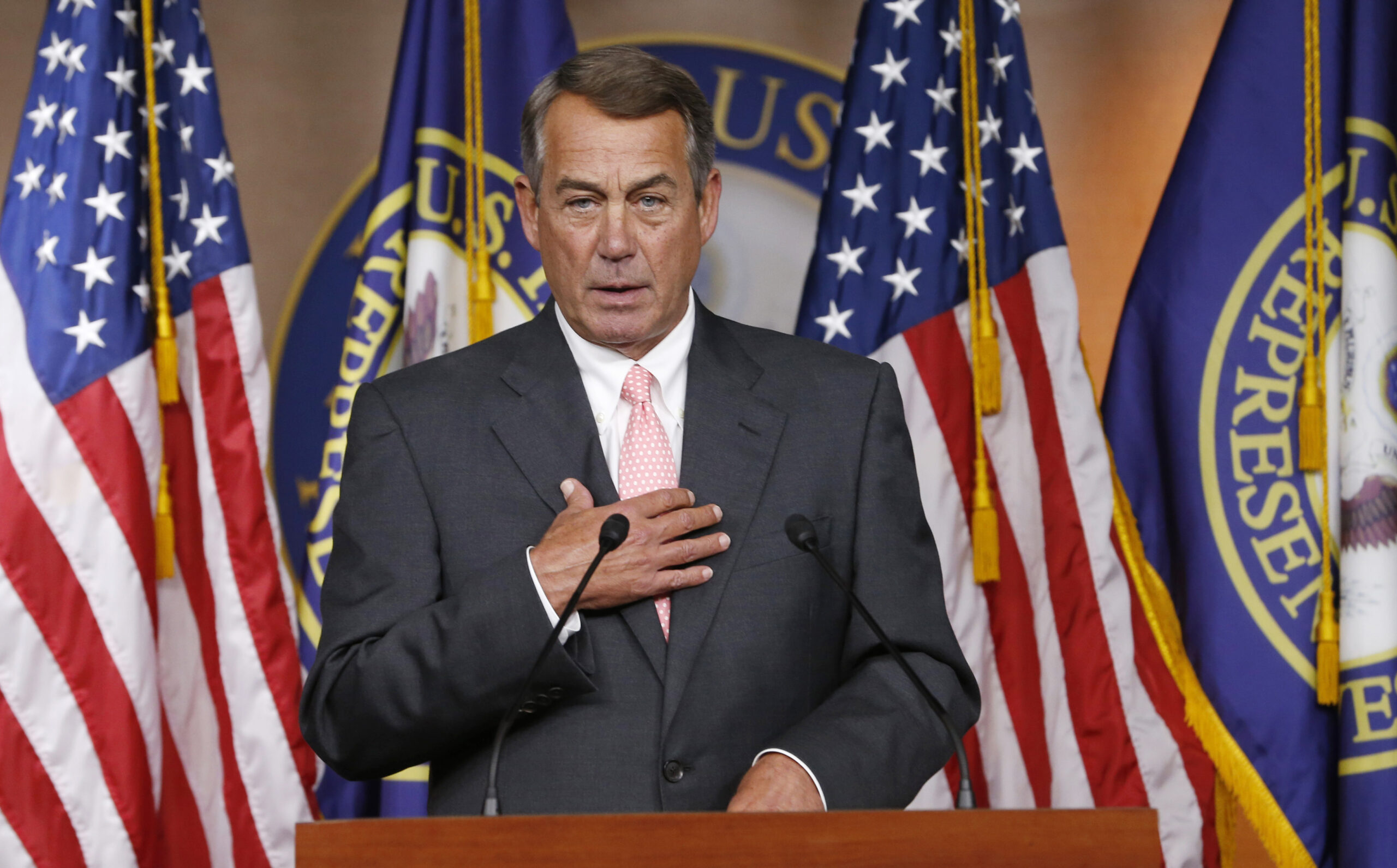
Speaker John Boehner surprised just about everyone this morning when it was announced he was resigning as Speaker and as a member of the House on October 30. In some ways Boehner’s retirement might seem overdetermined. He is 65 and turns 66 this year — the traditional retirement age. He was first elected to the House in 1990 and so by October 30 will have served almost exactly 25 years. He has exercised twice this year one of the speaker’s less often appreciated powers, to invite foreign leaders to speak in the House chamber. Whether Benjamin Netanyahu in March or Pope Francis on Thursday delivered just the message that Boehner expected or hoped is unclear. So there is a certain symmetry to Boehner’s resignation, which is otherwise a jarring break with tradition. Speakers do not ordinarily resign in mid-term; the only example I can think of is Jim Wright, who resigned in June 1989 because of scandal charges.
No such charges are pending against Boehner now. But he did face a motion, made by North Carolina’s Mark Meadows, to declare the speaker’s chair vacant. The motion was quietly shelved, but could come forward and force a vote on the floor of the House, in which all members would vote. That means that Boehner would cease to be speaker if a 218-member majority so voted, even if that majority included, as well as the 188 Democrats, only 30 of the 247 Republicans. Meadows and other members of the Freedom Caucus have been mulling a mid-term Boehner ouster for some time, on the grounds that he has been insufficiently aggressive in pushing for legislation opposed by congressional Democrats and the Obama White House. Most recently they have been disappointed that he hasn’t supported defunding Planned Parenthood in an appropriation bill, although he has pushed forward free-standing legislation that would do that.
Stay informed.Stay ahead.
Join Washington Examiner for unlimited access to the news, analysis, and commentary that matter most.
Already a member? Log in
