

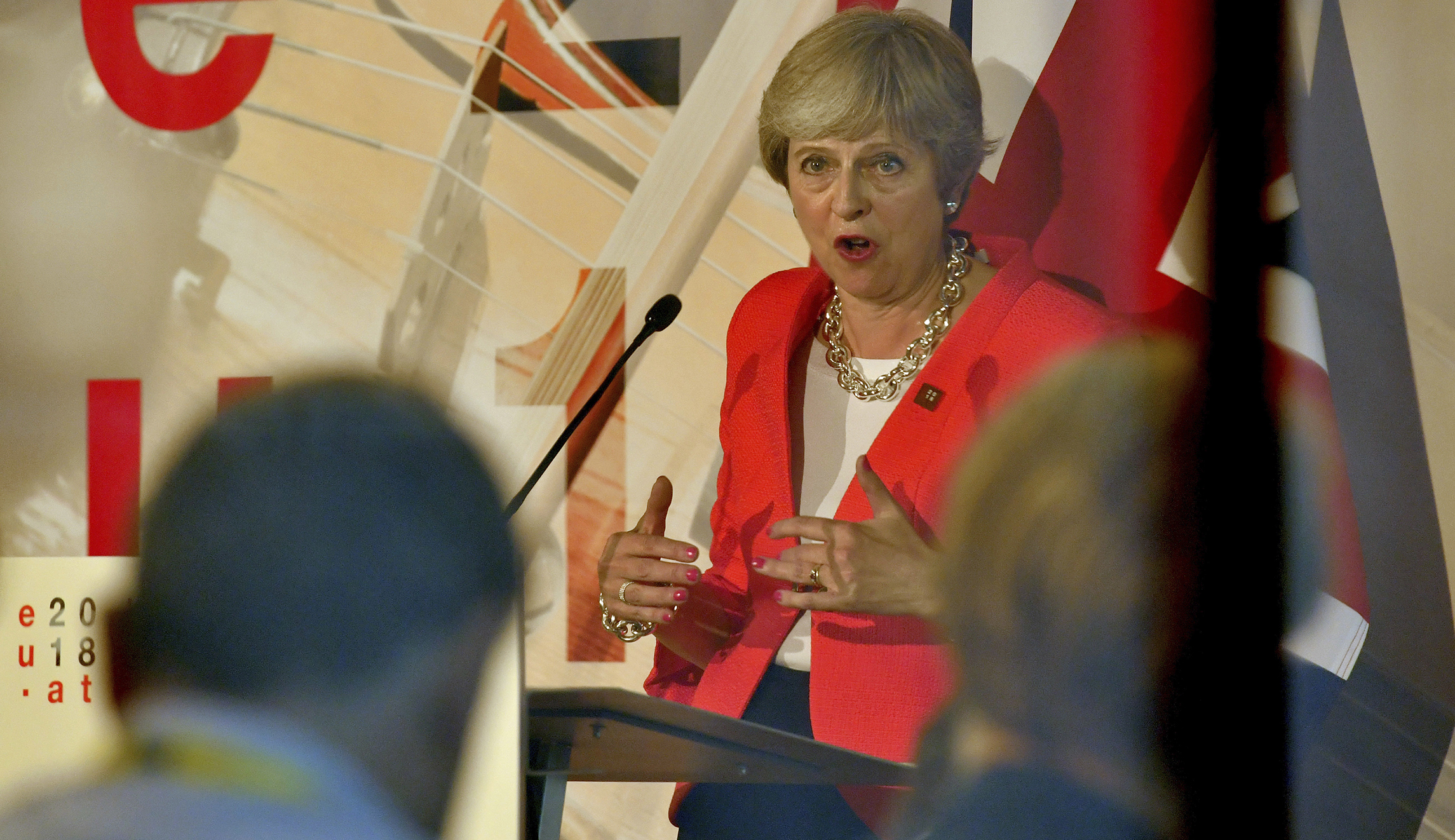
Meeting with the 27 other European Union leaders in Salzburg, Austria (where you can bet Russian intelligence were watching closely), British Prime Minister Theresa May found herself in treacherous political waters this week.
This week it became abundantly clear that May is increasingly isolated in her position on Brexit. Not only did the EU reject her proposals, but May’s stance is very different from that of powerful interests in her own Conservative Party, and in the Labour Party opposition. Reflecting the tensions, on Thursday, European Commission President Donald Tusk said that October would bring the “moment of truth” on whether Britain could establish a formal partnership with the EU after Britain leaves the political union on March 29, 2019. If that deal isn’t reached, Britain will withdraw from the EU without a structured agreement. That’s an outcome May is keen to avoid, since most economists believe it would inflict a significant blow on the British economy.
Recommended Stories


But the simple issue is that with the EU not budging and a growing chorus of voices in Conservative Party planning to challenge May’s premiership, the prime minister faces a convergence of threats.
What happens next, I suspect, will be one of two things. Perhaps the EU and May will be able to find some common ground at the last minute and fudge some language over the two major sticking points: how border issues will play out between EU member state Ireland and the British territory of Northern Ireland, and what trading access the U.K. will have inside the EU after Brexit. If a deal can be reached here, May will likely retain just enough parliamentary support to ensure either that she can ratify a deal with the EU or call a new general election as the unchallenged Conservative leader.
If, however, the EU does not budge and May offers a significant number of new concessions, she’ll face a leadership election before Christmas. In that contest, a hardline anti-EU figure such as Boris Johnson or Jacob Rees-Mogg is likely to take power in Downing Street and Britain will almost certainly leave the union without a deal. In turn, the Conservatives will come under major pressure to call a new election. Britain may then elect a fanatical anti-semitic socialist as its new prime minister.
Ultimately, the stakes here are great. Theresa May rightly has no interest in calling a second referendum that would allow Britain to back out of Brexit. But the prime minister also has an immense challenge in trying to balance her own domestic political authority alongside a deal that the EU can agree on. The next few months will be very interesting to watch.
