

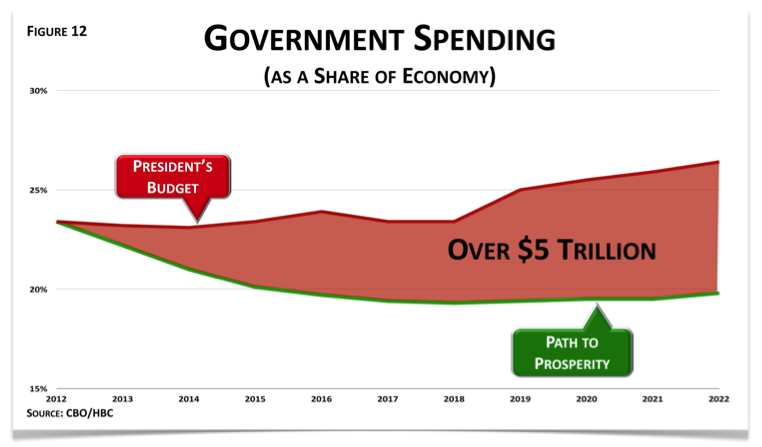
The Atlantic‘s Derek Thompson tries to reduce House Budget Committee Chairman Paul Ryan’s, R-Wis., budget into just one question: “What’s the best way to reduce the deficit by cutting government health care spending without doing something too unpopular?” This misses the point of Ryan’s budget entirely.
Yes, the Ryan budget contains significant reforms to Medicare and Medicaid that do reduce government spending. But it also touches so many more areas than that. Here is how Ryan describes the effort in The Wall Street Journal (emphasis not in original):
Recommended Stories


When Ryan’s budget reduces federal spending by $5 trillion, that is $5 trillion worth of more decisions made by individuals, not the federal government. When the Ryan budget eliminates almost all of the $12 trillion that the CBO estimates is spent through the tax code, that it another $10 trillion worth of decisions made by individuals, not the federal government.
The question Ryan’s budget answers is, “Who do you trust more to make decisions about your future, you or the federal government?”
Ryan’s bet is that the American people will not choose the federal government.
