

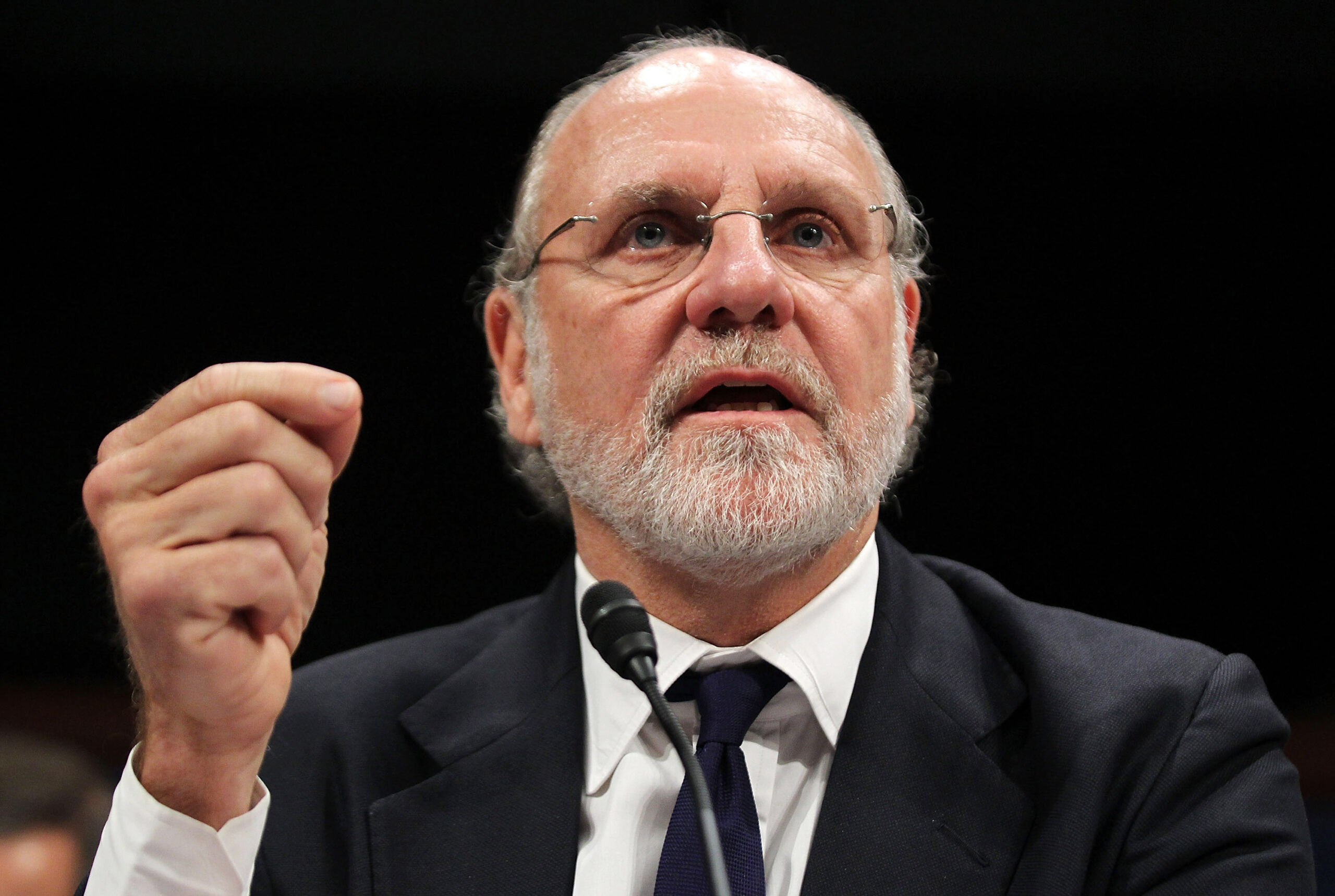
Former New Jersey Sen. and Gov. Jon Corzine will not be prosecuted, the New York Post reports today. Corzine, who was CEO of Goldman Sachs in the 1990s and made something like $400 million when the firm went public, was CEO of MFGlobal, a futures and commodities trading firm which went bankrupt, with some $1.6 billion missing from customers’ accounts. Money in customer accounts belongs to customers, and it’s a crime for firms to seize customers’ money.
For an unflattering view of Corzine’s private sector career and the civil case filed against him last month by the Commodity Futures Trading Commission, see this Bloomberg article by William D. Cohan, author of Money and Power: How Goldman Sachs Came to Rule the World. Cohan writes that Corzine “designed a trade that almost bankrupted the firm in 1994″ and in his book argues that Corzine was made CEO only when his predecessor abruptly resigned earlier than anyone else expected, with no process in place for selecting a successor. I see a common thread in Corzine’s public sector and private sector careers, which helps explain his defeat by Chris Christie in 2009 and the MFGlobal bankruptcy and CFTC charges. In both public and private sectors, he assumed that there was no limit to taxpayers’ willingness to be soaked by government. In New Jersey he raised taxes sharply; voters rebelled and his public sector career was over. At MFGlobal, he bought up distressed European government debt, but the Eurocrats didn’t bail him out with taxpayer money.
Stay informed.Stay ahead.
Join Washington Examiner for unlimited access to the news, analysis, and commentary that matter most.
Already a member? Log in
