

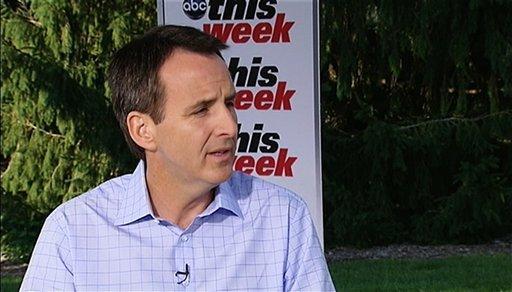
Tim Pawlenty abandoned his presidential candidacy on Sunday morning, after finishing third in the Iowa Republican straw poll, with only about half as many votes as Michele Bachmann and Ron Paul. For the second time in a row, Pawlenty’s ambitions for national office have been stymied by a female candidate who seemingly came out of nowhere to shove him aside. In 2008 he was pretty clearly one of John McCain’s second top choices for vice president, but even as he was preparing to welcome the Republican National Convention to his home town of St. Paul McCain picked Sarah Palin instead. Three or four months ago, Pawlenty seemed the clear favorite to win the straw poll and precinct caucuses in Iowa, next door to his home state of Minnesota, on the basis of a generally conservative record on economic issues as governor and with a conservative record on cultural issues. Iowa wins would have launched him as a serious national candidate, with a real potential to win. But Michele Bachmann, known for casting protest votes in the Minnesota Senate and the U.S. House, made herself into a national celebrity and in two months assembled a solid Iowa organization and pulled off a win that left Pawlenty in the shade.
Recommended Stories


Pawlenty seems to have suffered the fate of a vanilla candidate, with a record generally acceptable to economic, cultural and national security conservatives, but unable to stir the enthusiasm necessary to win him first choice votes in a state in which his chances on paper seemed better than almost any place else. Pawlenty has many admirable qualities, and having observed him in Minnesota over the years I expected him to do better. But his inclination to ingratiate himself—apparent in his refusal in June to confront Mitt Romney on “Obamaneycare” and in his statement after the Tuscon shootings when Sarah Palin was criticized for a document showing crosshairs on Gabrielle Giffords’s district that he would not have done it that way—made him seem to lack the sense of command voters instinctively seek in a president. He has reason to feel that he has been thrust aside, in ways that almost no one predicted or foresaw, by two female candidates substantially less qualified for national office than he is. But no one is guaranteed a fair shot at the presidency.
