

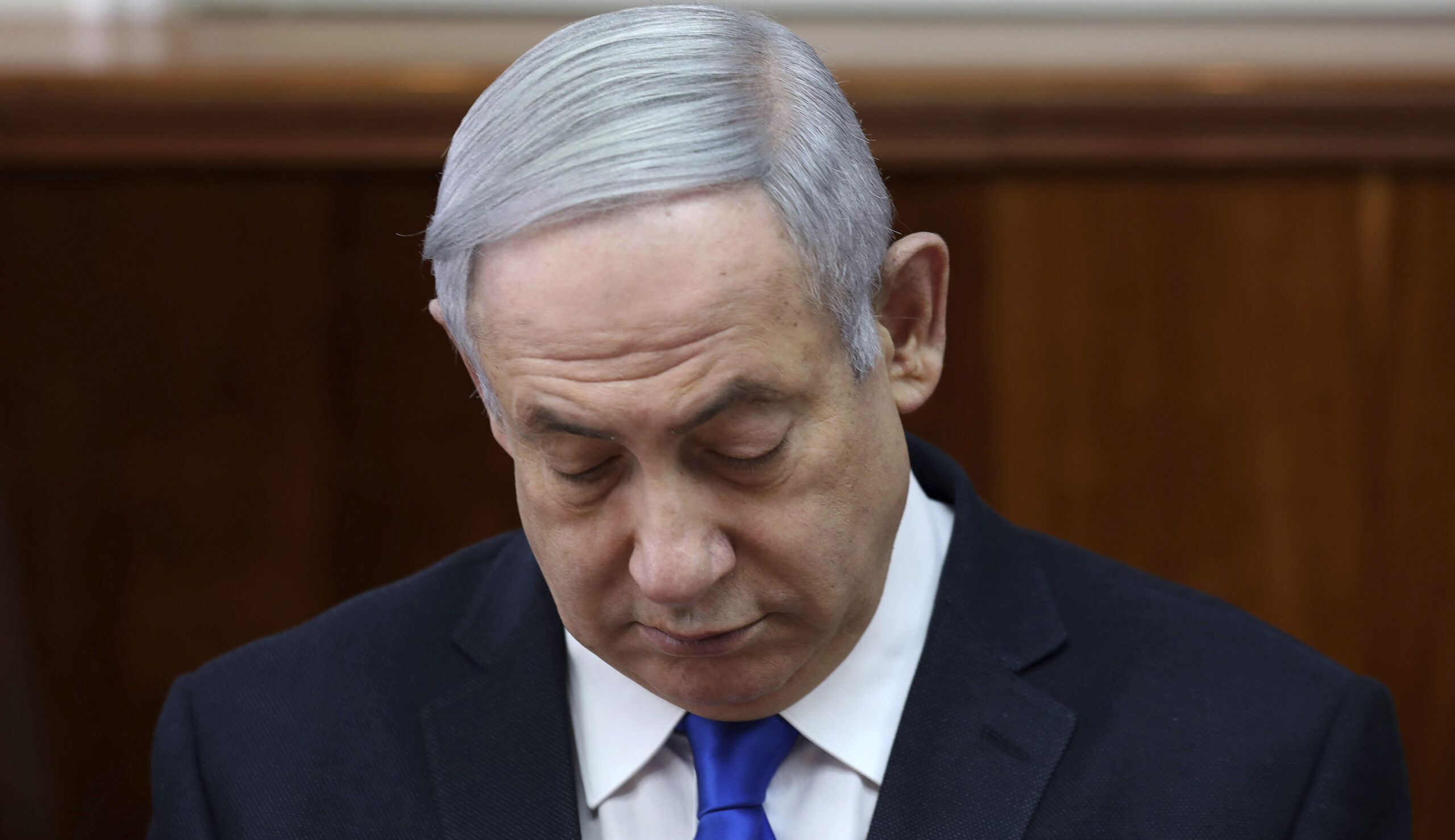
As a young man, Prime Minister Benjamin “Bibi” Netanyahu served with courage as a member of Israel’s most elite special forces unit. Indicted on Thursday in three separate corruption cases, Netanyahu must rediscover that courage now and step down.
Facing an array of foreign threats and domestic political deadlock, Israel needs a prime minister who can unify the nation and move toward addressing its challenges. It’s clear that Netanyahu is no longer that leader. He’s already failed twice now to form a government that can command the confidence of the Knesset. And Attorney General Avichai Mandelblit’s charge sheet on Thursday only consolidates Netanyahu’s woes. The most problematic of these involves a charge that Netanyahu was bribed by a telecommunications executive to make regulatory decisions in his favor. The allegation is thus one of crystal clear political corruption.
Recommended Stories


Netanyahu will hope to survive this indictment by holding firm in his office and seeking Knesset approval for immunity. But that won’t do anything good for any Israeli but Bibi. The polls show that a new election, nominally expected for March, is highly unlikely to alter the political deadlock. With the country’s politics deadlocked following a second recent inconclusive election in September, neither Netanyahu’s Likud party nor the opposition Blue and White party, led by Benny Gantz, have been able to form a parliamentary majority. A key obstacle: Blue and White oppose joining a national unity government that has Netanyahu at its head.
But were Netanyahu to step down, the door would likely open to a unity government.
Likud’s Gideon Sa’ar has responded to the indictments on Thursday by breaking ranks. Sa’ar now says he’ll stand in a primary against Netanyahu and seek to form a unity government. It’s in Israel’s interest that he succeed.
While Sa’ar is opposed to a two-state solution to the Israeli-Palestinian conflict — a problem for prospective peace talks — he commands respect and credibility. That would likely allow him to win support from Gantz and, assuming he endorsed Lieberman’s call to end national service waivers for Ultra-Orthodox Israelis, third party kingmaker Avigdor Lieberman. This outcome would also serve America’s interest in ending Israel’s concerning technology cooperation with China.
Yet, the basic point is this: The Jewish state faces a rising and potentially existential challenge from Iran, diplomatic pressure globally, and continuing threats from various terrorist groups in Gaza. With Gantz, the former head of Israel’s military at his side, Sa’ar could consolidate Israeli security and undertake effective governance.
Time to be courageous, Bibi. Time to go.
