

CONNELLSVILLE, Pennsylvania — Thirteen years ago, hundreds of locals lined the streets of the downtown business district of this Fayette County city to see the train arrive … sort of. It was actually a nearly 30,000-pound model railroad display that was being delivered by a massive double-wide tractor-trailer hauling the late Harry Clark’s labor of love back home to Connellsville after spending a few years housed at the Nemacolin Woodlands Resort near Farmington.
The move marked the second time Clark’s intricate 25-foot-by-52-foot model railroad display had been moved; the first was when it was moved from the second floor of Clark’s garage to Nemacolin.
“Harry Clark spent 40 years of his life building this display, and we wanted to make sure we preserved it and that it was available for the public to enjoy his handiwork,” explained Daniel Cocks of the Connellsville Canteen, where the railroad display now lives.
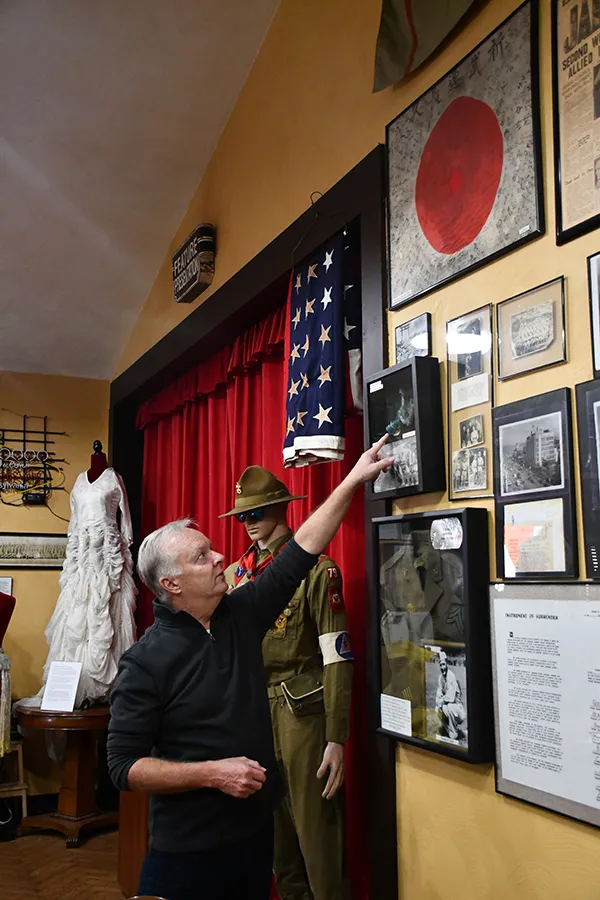
Cocks, who also serves as executive director of the Fayette County Cultural Trust, is the visionary behind the Connellsville Canteen — a sprawling World War II museum that houses the Clarks train display and a café, all under one roof, designed to recreate the canteen that once served American soldiers traveling from home to the war overseas.
Today, the three stand side by side in the center of a city that was once known as the “Coke Capital of the World,” anchored in the Connellsville Coalfield, where mining and coke production built a thriving industrial hub. Now, Connellsville is finding new life as a favored stop on the Great Allegheny Passage, the trail stretching from Pittsburgh through Cumberland, Maryland, and on to Washington, D.C.
Cocks said the canteen honors the soldiers from the region who went off to war and the women in the community who opened a canteen to serve them as they passed through on their way overseas to fight for their country. “Over 600,000 troops were ultimately fed here,” Cocks claimed.
From floor to ceiling, the canteen is filled with memorabilia, each piece with a story of its own. The structure is an extraordinarily faithful recreation of the old train station where women once offered soldiers hot meals and drinks 24 hours a day as they traveled on the Baltimore and Ohio Railroad. The result is so authentic that it feels like stepping back in time, a testament to the Fayette County Cultural Trust’s work to revive the city.
The train display is something to behold. Clark, a veteran of the Pacific Theater during WWII, spent 40 years of his life painstakingly replicating the Indian Creek Valley, a former boom town centered on the Indian Creek Railroad, now long gone, and the detail reflects that.
“Clark crafted each building. As for the leaves on the trees, well, he made those out of dried hydrangea and then dipped them individually into melted crayon,” Cocks explained.
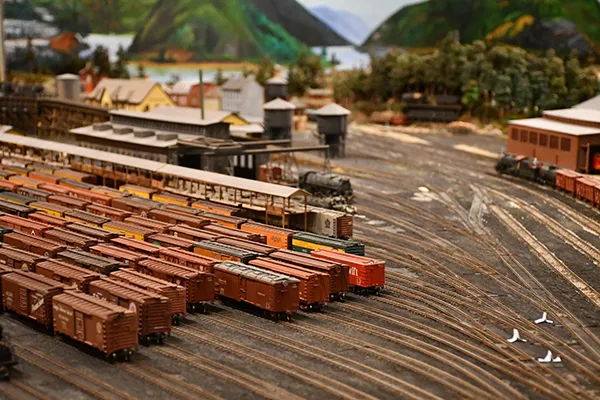
When Nemacolin decided to move the train display to make way for a casino, Cocks knew it was time for it to come home. “We painstakingly boxed it up, then it was delivered here and has been here for over a decade,” he said.
“It was important as part of the history of Connellsville to not see it broken up and sold separately. Everyone here was attached to it through family and tradition,” he said.
As we enjoyed breakfast at the café, a Boy Scout troop entered for a tour. “They will get to know and understand the sacrifices of the men and women who served from their community,” Cocks said, “but also see the craftsmanship of Clark, who cared enough to preserve a place that no longer exists but meant something to people for a very long time.”
SALENA ZITO: THE UNSUNG HERO OF ROLLING THUNDER MINE
The train display was donated to the Fayette County Cultural Trust by Terry Shallenberger, the owner of a local construction company, who had purchased it from Clark before his passing.
The canteen is a reminder to honor history by showcasing those who served and never came back, and also those who came back from serving, like Clark, and found a purpose in recreating a model of the region that honors its industrial past.
