On This Day: George Washington asks Congress how British peace commissioners should be received

Published May 7, 2026 11:50am ET | Updated May 7, 2026 11:50am ET


The following is an installment of “On This Day,” a series celebrating America’s 250th anniversary by following the actions of Gen. George Washington, the Continental Congress, and the men and women whose bravery and sacrifice led up to the signing of the Declaration of Independence.

May 7, 1776

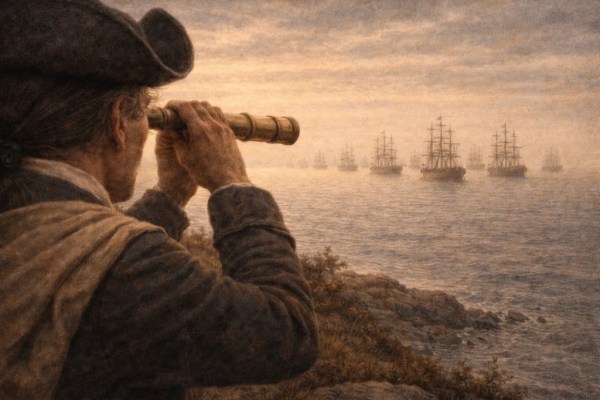
Gen. George Washington readies his army for the inevitable: the British Army’s arrival in New York. Each regiment has direct orders to mount a small, temporary military detachment every day, with the goal of providing early warning of an enemy attack at sunset. 

These soldiers are to lie on their arms and be ready to engage at a moment’s notice. 

The orders are clear and evident. The enemy is on their doorstep, and their arrival in New York is anticipated at any moment.

General Orders

Head Quarters, New York, May 7th 1776.

Parole Devonshire.

Countersign Cavendish.

Every Regiment encamped in the Line, and every Regiment in the Brigade, upon Long-Island, exclusive of their Quarter, and Rear-Guards; are to mount a picquet every evening at Retreat beating, at Sun-sett; consisting of one Captain, two Subalterns, three Serjeants, one Drum, one Fife, and fifty Rank and File; They are to lay upon their Arms and be ready to turn out at a minute’s notice. One Colonel, one Lieut. Colonel, and one Major, to mount every evening at sun set, as Field Officers of the picquet: Immediately upon any Alarm, or Order from the Brigadier General of the day, the picquets are to form in the front of their respective encampments, and there wait the Orders of the Field Officer commanding the picquet—The Field Officer commanding the picquet, is instantly to obey the Orders of the Brigadier General of the day.

A Brigadier General to mount every morning, at Ten O’Clock, who will receive all reports, visit all the out guards in the day time, and report all extraordinaries to the Commander in Chief.

A Brigade Major of the day, is constantly to attend Head Quarters, to receive all extraordinary Orders, and to distribute them immediately to the brigades.

The Colonel, Lieut. Colonel, and Major of the same picquet; the former to go the Grand rounds and the two latter the visiting rounds of the camp.

Brigadier General Greene, will order the same picquet to be mounted by the Regiments, in his Brigade, as are mounted by those in the Grand-Camp; he will also direct, one Field Officer to mount daily, to command them—Genl Greene will report all extraordinaries to the Commander in Chief.

Col. Prescot, or Officer commanding upon Nutten, or Governors Island, and the officer commanding at Red-hook to report all extraordinaries to the Commander in Chief; upon any appearance of an enemy, the commanding Officer at Red-hook will also dispatch a messenger to Genl Greene.

The Officer commanding the Riffle-men upon Long-Island, will constantly report all extraordinaries to Brigadier Genl Greene, and the Officer commanding upon Staten-Island, will do the same to the Commander in Chief.

Washington receives fresh intelligence in the evening, delivered by express. He writes the Second Continental Congress and raises both a political question and a military one: If the expected British peace commissioners arrive, how are they to be received?

George Washington to John Hancock, 7 May 1776

To John Hancock

New York May 7. 1776

Sir

At a quarter after Seven this Eveng, I received by Express a Letter from Thos Cushing Esqr., Chairman of a Committee of the Honorable Genl Court, covering one to them from the Committee of Salem, Copies of which I do myself the Honor to lay before Congress, that they may Judge of the Intelligence contained therein, and direct such measures to be taken upon the occasion as they may think proper and necessary. I wou’d observe, that supposing Captn Lees account to be true in part, I think there must be a mistake either in the number of Troops or the Transport Ships; If there are no more Ships than what are mentioned It is certain there can not be so many Troops, of this however Congress can Judge as well as myself, and I submit It to them, whether upon the whole of the circumstances & the uncertainty of their destination If they were seen at all, they chuse that any forces shall be detached from hence, as they will see from the Returns transmitted Yesterday that the number of men now here is but small and inconsiderable & what is to be regretted, no small part of those without Arms—Perhaps by dividing & Subdividing our force too much we shall have no one post sufficiently guarded—I shall wait their direction & whatever their order is, shall comply with It as soon as possible. I have the honor to be with much respect sir Yr Most Hble Servt

Go: Washington

ON THIS DAY: WASHINGTON CONFRONTS A DANGEROUS WEAKNESS AT THE HEART OF HIS ARMY

P.S. I have by the Express a Letter from Genl Ward containg a Similar Acct to that from the Salem Come, & by way of Capn Lee.

Shou’d the Commissioners arrive which are mentioned How are they to be received & treated? I wish the direction of Congress upon the Subject by return of the Bearer.