
Mike Rowe has been on a lonely mission. For two decades, he has been raising the alarm.
Rowe has been warning anyone who would listen that our skills gap in the trades was widening to a chasm so large that the economic affect on U.S. manufacturing companies, in particular auto and steel industries, but also defense, construction, and energy sectors, was going to be nothing short of catastrophic.
Recommended Stories
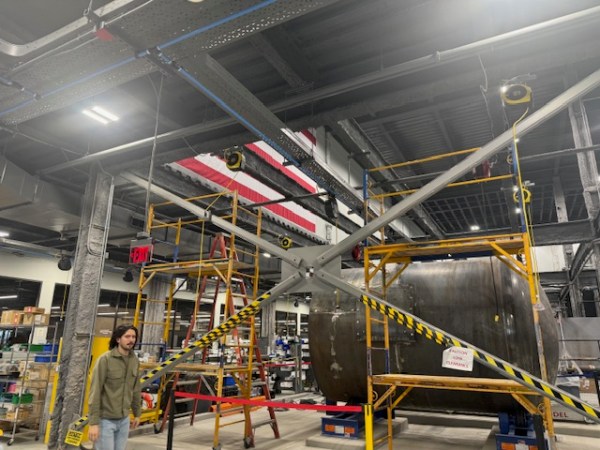
Few listened. Rowe appeared before Congress. Twice. He sent an open letter to then-President Barack Obama. Crickets. Nonetheless, Rowe persisted. His alarm bells were not hyperbole. In fact, the gap has continued to widen. Last week, the Tech Times reported that the construction sector alone needs 349,000 net new workers just to keep pace with demand in 2026.
In April, the property services firm JLL issued a report showing that by 2030, 2.1 million skilled trades positions for electricians, HVAC technicians, plumbers, welders, pipe fitters, and equipment operators were at a high risk of going unfilled. These are the key jobs needed to build homes, offices, buildings, energy infrastructure, and artificial intelligence data power centers.
Some raw facts from the American Builders and Contractors Association are even more chilling: 39% of electricians in this country were 45 years old or older. Another disturbing stat: for every five plumbers leaving the workforce, only two apprentices are entering. As Baby Boomers age out, the industry faces an estimated shortage of up to 550,000 plumbers, according to the Merrow Report.
Same with auto mechanics. Currently, the United States is facing a shortage of 600,000 auto mechanics, according to that same report.
All of these shortages are creating a downward and slippery slope for both consumers and builders alike, including higher costs and growing safety risks. And it creates wait times for services that extend beyond days into weeks, months, and even years for larger projects.
Dina Powell McCormick, president of Meta, said that she first saw the impact of this escalating problem when she joined her husband Sen. David McCormick, a Pittsburgh Republican, when he was running for office in 2022 and 2024.
Both listened to the growing concerns of small, medium, and large business owners of manufacturing facilities and their worries over the expanding skills trade gap.
Last year, Rowe spoke at the Energy Innovation Summit in Pittsburgh, the first of its kind in bringing leaders and workers in the trades together with the intellectual capital at Carnegie Mellon University, along with the industries that need them both for energy and AI data power centers. Rowe bluntly addressed the problem in a panel. McCormick was listening and it was then that she knew she wanted to help bridge that gap.
The problem, Rowe warned a somewhat stunned audience, wasn’t just in traditional manufacturing. All of the tech companies that were clamoring to build infrastructure for AI were running into the same challenge. They couldn’t find “skilled workers to not just build the data power centers needed to power the future, but also [to] keep them humming,” Rowe said.
SALENA ZITO: THE ‘EMPIRE OF LIGHTS’ IS REBORN AT ITS INCEPTION
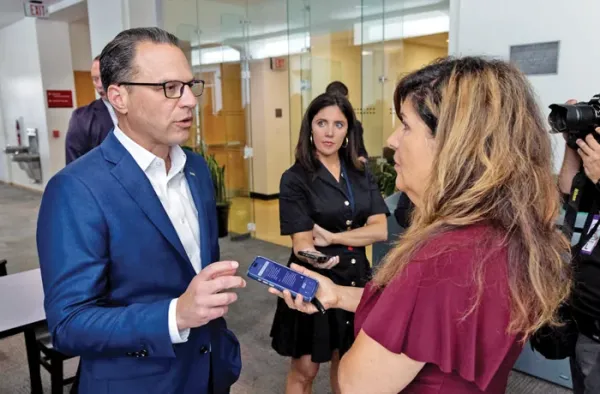
But it wasn’t until she became president of Meta earlier this year that McCormick’s ability to “do something” could finally be realized. On Tuesday, McCormick and Rowe, as CEO of mikeroweWORKS Foundation, announced America’s Workforce Academy. The new effort is a training initiative aimed at connecting workers with skilled trade careers tied to data center and infrastructure development.
In a dual interview with the Washington Examiner, McCormick said that it’s an honor to partner with Rowe. “He is the greatest evangelist for the American worker, and he has been for 18 years,” she said of his decadeslong efforts to inspire people to get into the trades. Rowe’s foundation runs a scholarship program trying to fill the gap between the massive demand for plumbers, electricians, welders, and fiber technicians, and the growing shortage.
“What Meta is launching today is America’s Workforce Academy,” she said. “A program that within five weeks gives you paid training, a credential that you have for life, and a guaranteed job on a Meta job site, or anywhere else you want to take that credential.”
Meta, the parent company of Facebook, Instagram, and WhatsApp, among others, has a mission for America’s Workforce Academy to fast-track the certification process to make job site-ready graduates, McCormick said.
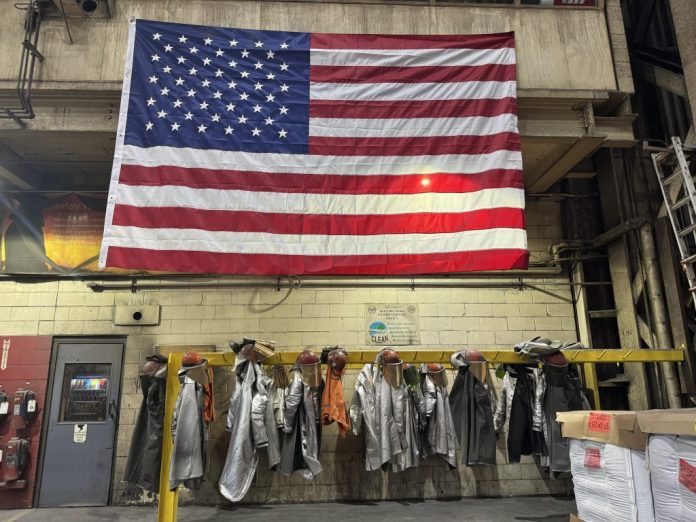
“This is an opportunity for people like Uber drivers, waitresses, grocery store clerks, and anyone out there who is living paycheck to paycheck,” she said. “The challenge has always been: how do they take the time off unpaid to learn a trade? How do they pay for the expensive training and do all that without a guaranteed job? Well, that is what we are solving with America’s Workforce.”
Rowe said that the whole “supply-demand thing” has evolved in the past six years, since he first talked about micro- and macroeconomics. “The idea that whatever the solution will ultimately entail is going to involve government at the highest levels, private industry at the highest levels, small business at every level, and guidance counselors and parents at the most granular level,” he said. “And then ultimately [it’s] the worker, him or herself, who’s going to have to decide for themselves what the definition of a good job really is.”
Rowe has been in the space of reframing the conversation of work. Some of his work has centered on debunking stigmas and stereotypes. However, a lot of it has to do with just showing people the enormous totality of opportunities that actually exists in the trades.
“People just don’t know, and the third leg of the stool — which Meta is addressing perfectly, I think — is to remove all the friction,” Rowe said.
Rowe succinctly lays out the problem, calling it vocational training on steroids. “You don’t have to pay for a flight. You don’t have to pay for your transportation. You get a stipend, you get paid to learn over a five-week period, and when you come out the other end, you’re certified, you’re work ready, [and] you’re guaranteed a job within the metaverse, and if you leave, your skills go with you.”
SALENA ZITO: THE HEADLINES HAVE CAUGHT UP TO MIKE ROWE. NOW WHAT?
Rowe said that he cannot find a chink in the armor. “It’s a great way to grease the skids for those people who are grappling with that primary barrier–but there are other barriers too. This is maybe the most important way, I think, to get the supply freed up, but it doesn’t mean [that] there’s not a role for trade schools.”
Applicants accepted into the program get tuition, lodging, and airfare fully covered. The locations for the first wave of programs are in Baton Rouge, Louisiana, Columbus, Ohio, Houston, Texas and Indianapolis, Indiana.
Rowe said what Meta is doing is showing the broader scope of how this is being done, and that it’s available to young people at trade schools all across the country.
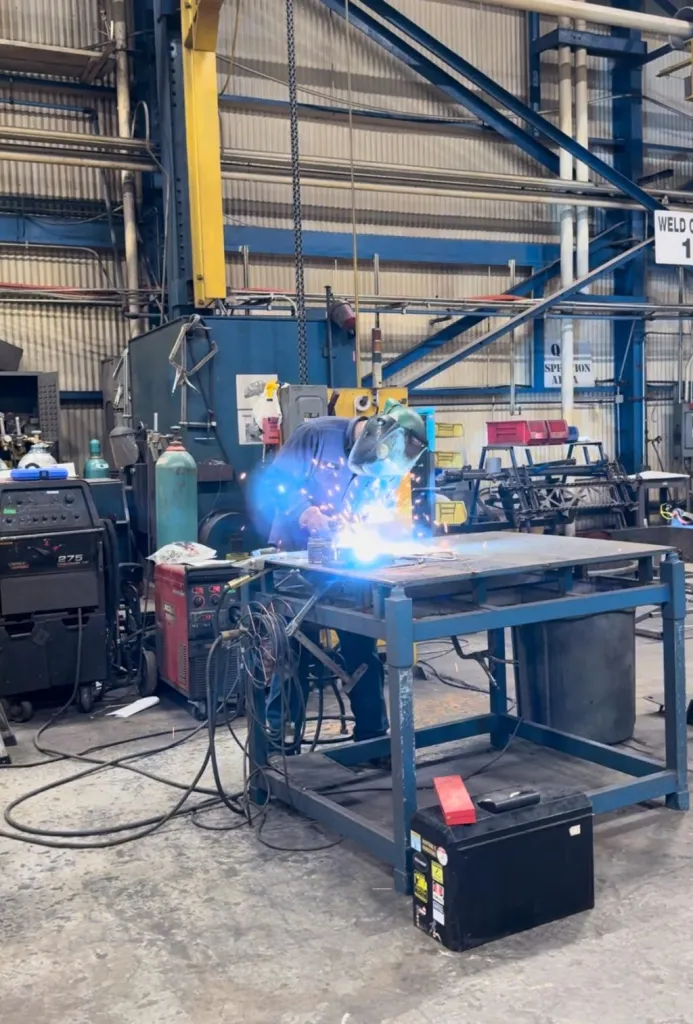
McCormick explained that the people they are investing in are feeders for trade schools if they want to get more advanced training for specific roles. “This is a program, though, [that] because you get a certification from the National Council on Construction, Education and Research, that makes you job site ready,” she pointed out.
The program empowers workers with safety credentials to get on a job site and be paid while they work. “Then you can go into electricity, you can go into fiber training, pipe fitting, welders, and you can even go on and get more training at trade schools,” she said.
Rowe said that we need to look at workers in the trades throughout our history with clear eyes and see them as the American heroes that they are. Rowe pointed to their work during World War II, when workers, many of them women, came together to physically build the arsenal that defeated tyranny worldwide.
McCormick agrees, “Today, if we don’t build the infrastructure that’s going to fuel American AI leadership, then we’re going to lose this race,” she said. “And that means they’re on a different kind of front line in America today. And I think that we should show them the respect and dignity of what that work really means.”
McCormick said it is important to note that America’s Workforce Academy is bigger than Meta. “This is a problem that’s way bigger than any one company. We hope that we will build a national coalition to invest even more,” she said.
Rowe said that it’s too early to take a victory lap. “But I’ll tell you that the thesis that informed Dirty Jobs 23 years ago and kept it on the air to this day is the exact thesis that’s informed this endeavor,” he said of his iconic show, which has him working in just about every job imaginable, from garbage man to being 10 feet underground in a sewer.
“It starts with appreciation and gratitude,” he said. “It’s being fueled today by a level of practicality that wasn’t necessarily in the works twenty years ago, but it is now. So this is an effort for our times.”
Rowe said he was thrilled to be part of this. “This is only a matter of national security. I mean, it’s only a matter of global hegemony, but it also trickles all the way down to anyone who has ever pledged allegiance to our flag and thought about pursuing something that looks like happiness and wanted to do it in a way that made sense to their brain, and to their talent.”
If it weren’t for Dirty Jobs, he may not be part of this today. In fact, today may not have even happened. “I’m really grateful that there are enough macros out there in the world right now paying attention to get this thing elevated to where it ought to be,” he said, adding, “It is only a matter of national security.”