
President Donald Trump certainly did his part in setting the table for the current state of public discourse. Make what you will of his agenda: His successful campaign has transformed the substance of political speech. This is an era when offhand vulgarity counts as straight talk; when “bomb the s— out of” ISIS becomes a policy plank; when George Carlin’s “Seven Words You Can Never Say on Television” might as well be a consultant’s handbook, for not only can you now say them on the stump, you are likely to lead the evening newscasts as a result. This is not about what was said in some bus on a Hollywood set 12 years ago. It is about taking such language to the lectern—mouthing the F-word or using slang for the female anatomy in a rally venue—and then arriving behind a podium embossed with the presidential seal.
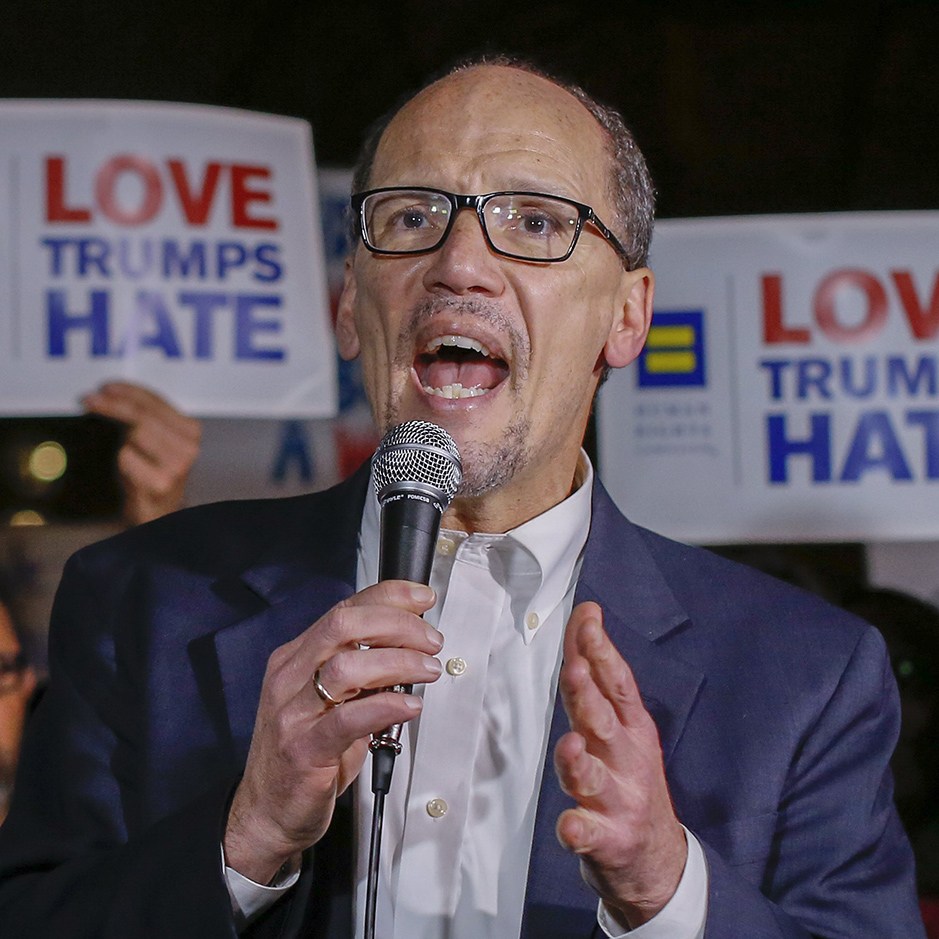
But if Trump was a trendsetter, the trend is real, and he’s far from alone. Four-letter words are now the terms with which we conduct significant debates. Obama Labor secretary Tom Perez adopted “No more bulls—” as a virtual yard sign in his quest to become Democratic party chairman. He won. He recently told a gathering of activists in New Jersey that Republicans “don’t give a s— about people.” Provided the opportunity to comment, Perez’s spokeswoman doubled down. “Tom Perez won’t apologize for saying ‘Republicans don’t give a s— about people,’ ” the Washington Post‘s Dave Weigel tweeted. “Sorry not sorry,” Perez replied—because if Democrats have learned anything in the last six months, it’s that backing down is for losers.
Real journalism.Trusted by millions.
Unlimited access to in-depth reporting, expert analysis, and the stories that shape our country.
Already a member? Log in