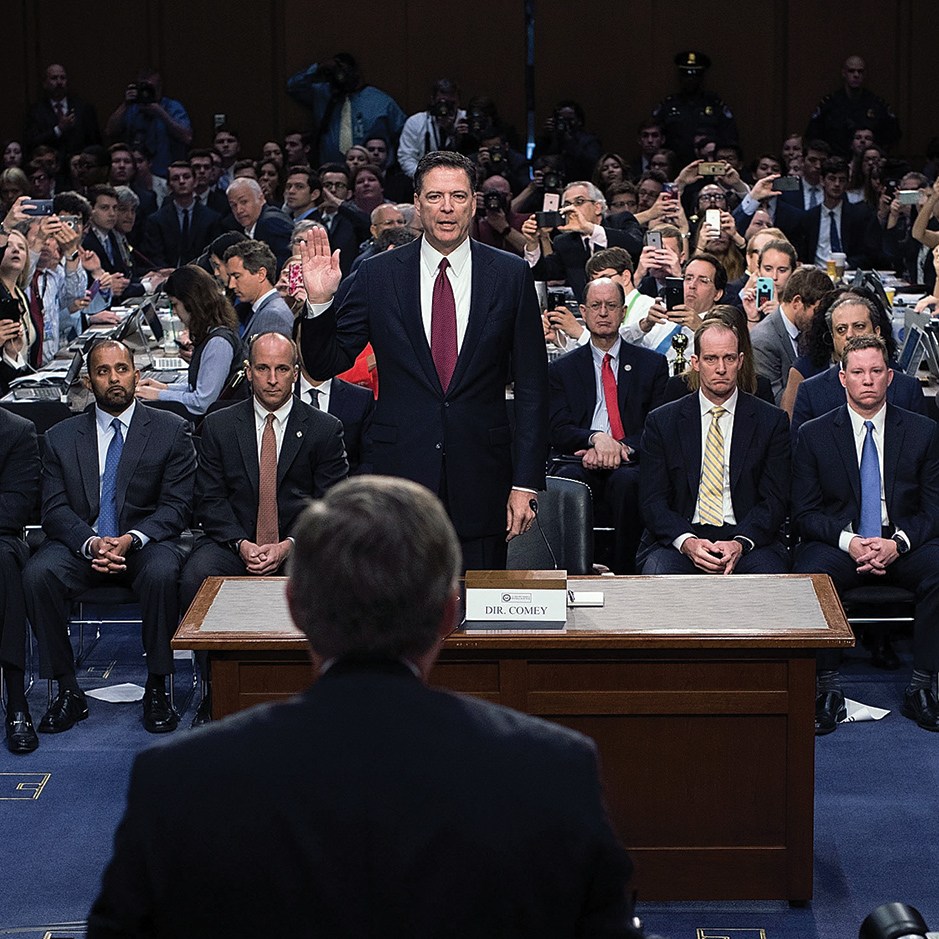
It’s not hard to understand why Donald Trump was frustrated with FBI director James Comey. In the weeks before the inauguration and the weeks that followed, Comey repeatedly told Trump that he was not under investigation as part of the FBI’s probe into Russian attempts to influence the 2016 election. But when Trump urged Comey to say so publicly, to help quell a steady stream of media reports suggesting otherwise, the director refused. Top White House officials took up the cause, lobbying Comey and his associates to be more transparent and to spare the new president unfounded accusations.
To Trump, Comey’s unwillingness to say publicly what he would say in private was a profound demonstration of bad faith. It was, he believed, another indication that the law enforcement and intelligence communities were out to get him. And it is hard to blame him after the spate of leaks that have characterized the investigation.