

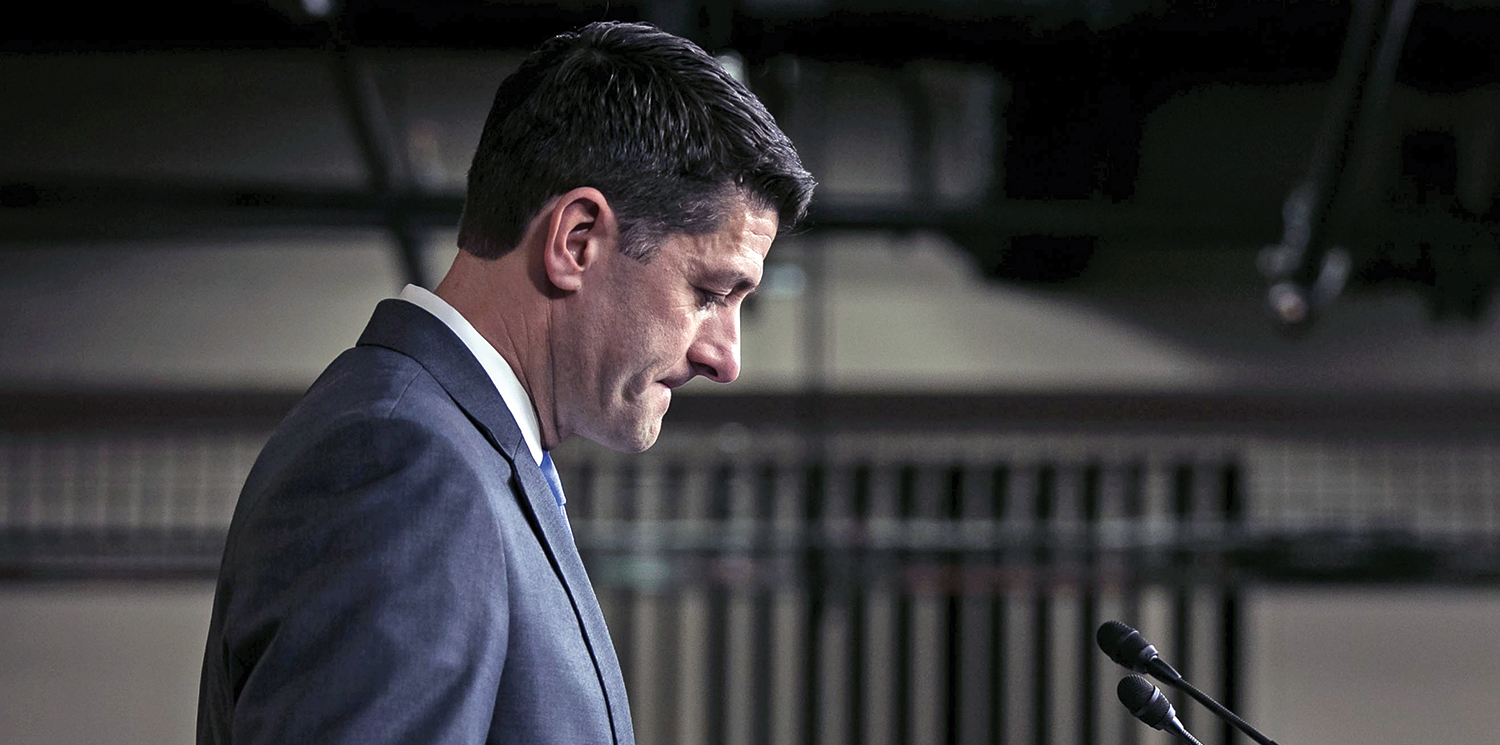
Speakers of the House of Representatives don’t ordinarily retire before they’re turned into minority leaders. But on April 11, Paul Ryan announced he would leave his seat at the end of this term. His decision, which had been rumored for months, wasn’t entirely surprising. His children are still young, and the speaker’s job is all-consuming. Ryan had been reluctant to take the job in 2015; he is closer to an intellectual than the sort of transactional powerbroker a speaker needs to be. Even so, it’s hard to believe Ryan’s retirement isn’t part of the wider phenomenon of Republican political retirements. They’re being asked to defend an unpopular Republican president who isn’t really a Republican, and many of them are opting out. Altogether there are 38 House Republicans not seeking reelection this year.
For Republicans, Ryan’s retirement throws the 2018 midterm election effort into further chaos. Not only is it tougher to raise money for a caucus whose future leadership is uncertain, it’s tougher to make the case for Republican ideas when the leader most closely associated with many of those ideas has himself given up the fight.
Stay informed.Stay ahead.
Join Washington Examiner for unlimited access to the news, analysis, and commentary that matter most.
Already a member? Log in
