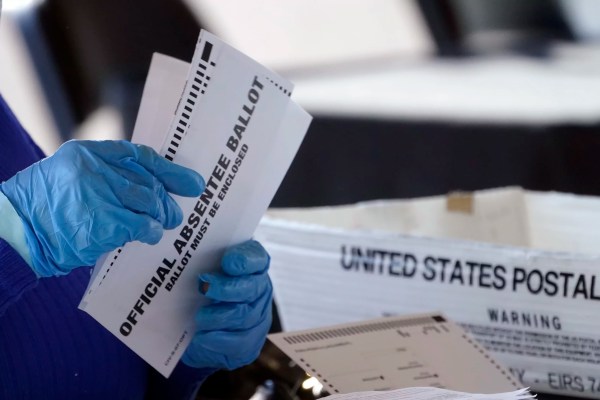
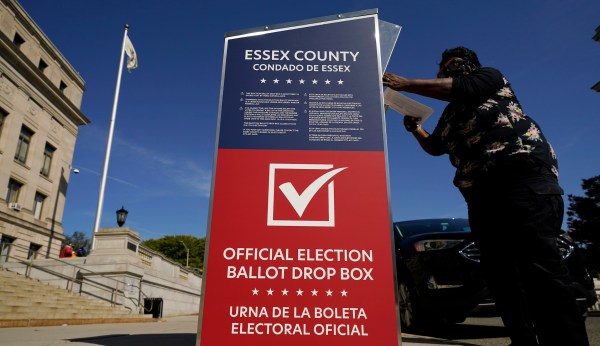
At least 400 immigrants have illegally voted in New Jersey elections since 2023, Gov. Mikie Sherrill (D-NJ) admitted Tuesday. It happened because the state improperly registered almost 7,000 noncitizens between June 2023 and June 2024. “This entire situation is unacceptable,” Sherrill said, before unfortunately adding, “This is just, to me, not a problem with some of our laws. It’s a problem with accountability … and it is really a lack of responsibility.”
Sherrill’s attempt to blame others, particularly her Democratic predecessor, Gov. Phil Murphy, instead of lax voter registration laws, would ring true if she had made her announcement sooner.
Recommended Stories
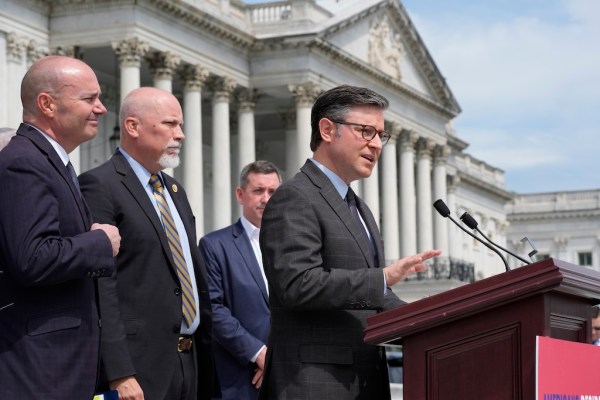
But her sudden enthusiasm for election integrity comes only after President Donald Trump’s Department of Homeland Security notified New Jersey, California, Nevada, and Pennsylvania that each had tens of thousands of noncitizens on its voting rolls.
Even then, Sherrill seemed more concerned about protecting immigrants who illegally voted than about protecting the integrity of New Jersey elections. “We are working very hard to protect them,” Sherrill said of the noncitizens who voted when they should not have done so, adding, “It would be really the utmost hypocrisy for the state to charge them when it’s our fault.”
Why shouldn’t noncitizens who illegally voted be punished for breaking the law? After all, the Republican National Committee first learned of the state’s error because some noncitizens who had been improperly added to the voter rolls contacted local election officials. If some noncitizens did the right thing by notifying state officials of the error, and thousands of others did not vote at all, shouldn’t those who illegally voted be punished? If they are not, what signal does that send to future noncitizens who are improperly issued a ballot?
Unless state and federal laws are changed, millions of noncitizens will continue to receive illegal ballots.
The underlying problem stems from the confluence of the 1993 National Voter Registration Act, which requires states to provide voter materials to anyone who enters a Department of Motor Vehicles. The standard national voter registration form includes a box asking applicants to affirm that they are U.S. citizens. But it does not require proof.
In many Democrat-controlled states, including California, Illinois, and New Jersey, a driver’s license or other state-issued identification number is sufficient, even though noncitizens can get both. That means an illegal immigrant can register simply by checking the citizenship box and providing a state ID number, with no documentary proof of citizenship. Once registered, that person can vote. The law forbids noncitizens from voting but does not require proof of citizenship to register. It is like having a legal drinking age of 21 but relying on the honor system to enforce it.
Ideally, states would not offer driver’s licenses to illegal immigrants and would do more to purge ineligible voters from their rolls. In California, 21 of 58 counties have removed fewer than five voters from their rolls since 2020, and some have more registered voters on file than citizens of voting age. That is a guarantee of illegal voting, some of it surely by noncitizens
Democrats such as Sherrill claim that illegal votes are “rare,” but they can swing elections. One 2014 study of the 2008 elections found that while just 6.4% of noncitizens voted, their votes were enough to swing close elections and “likely gave Senate Democrats the pivotal 60th vote needed to overcome filibusters to pass health care reform and other Obama administration policies.”
The SAVE America Act would close this loophole by replacing the honor system with verification. It would require applicants to provide documentary proof of U.S. citizenship before registering for federal elections, give states access to federal citizenship records, and require them to identify and remove noncitizens on their rolls. The current version would also require voters to present photo identification when casting a federal ballot. Had those safeguards been in place in New Jersey, a driver’s license and a checked box would not have been enough to register 6,600 noncitizens, and hundreds of illegal votes could have been prevented.
The question is not whether illegal voting is widespread. It is how many illegal votes Americans should be expected to tolerate. The answer should be zero. Elections can turn on a few hundred ballots, and citizenship is the most basic qualification for participation. Requiring proof of citizenship is not voter suppression. It is the minimum safeguard necessary to ensure that American elections are decided by citizens.