

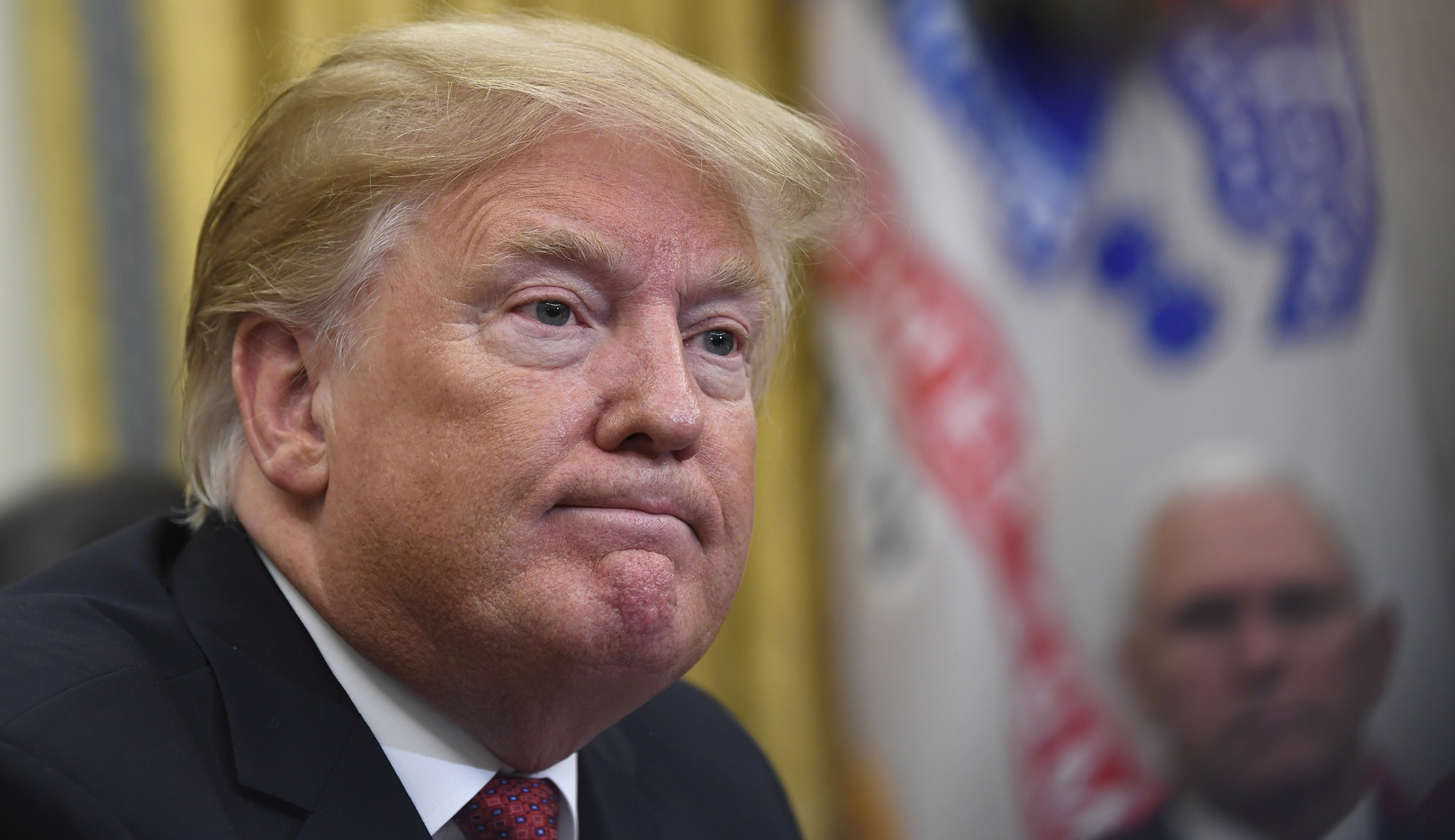
“[There] is no reason for the U.S. consumers to pay the tariffs,” President Trump tweeted Monday, referring to the 25% tax he has levied against Chinese imports. He then tried to claim that Americans were paying only one-fifth of the tariff’s cost — which meant he was contradicting himself.
That or a misspelling probably explains why he then deleted the tweet.
Recommended Stories


We understand why Trump has imposed high tariffs on Chinese goods. He is trying to force China into a written trade deal that will end that Asian nation’s systematic theft of American intellectual property. The Chinese, having already made the necessary concessions orally, balked at having those provisions in writing because they are counting on going back on their word.
China’s economy, which has long set a record-breaking pace of growth, is now cooling off. A downturn could endanger its current regime, which cannot afford a prolonged slowdown in sales to its best customer-nation. But the tariff-induced slowdown in trade will also hurt America and its economy.
So Trump has his reasons, but that doesn’t mean tariffs are good or even harmless, and he shouldn’t pretend as much.
If a trade war is worth fighting, Trump should have the courage to admit that they are costly. He should be calling on Americans to share in the sacrifice of an inherently harmful tax laid by government. Tariffs are specifically bad — the equivalent of a wartime blockade against one’s own nation.
Are you paying the tariff? Yes, and not just through the cost of imported Chinese goods. You are also paying for China’s retaliatory tariffs against American commodities. If you pay taxes, you have already been forced to subsidize American farmers to the tune of $8.5 billion for their lost sales, and that’s just for starters because China’s new tariffs on crops and natural gas will hit next month.
If you buy American goods that compete directly with Chinese products, they will be that much more expensive because there will be less price competition. If you buy American-made goods that are manufactured using materials from China, then you will also pay more than you would otherwise, and the jobs of the workers who make those goods will be at more risk as a result of the tariffs. Meanwhile, your likelihood of success in finding employment or running a business decreases as tariffs rise, because it means U.S. exporters will be bringing in and investing less cash into their communities.
If tariffs were as helpful as Trump suggests, his administration would not be working eagerly to resolve and remove U.S. tariffs against certain products from regional trading partners Mexico and Canada.
Tariffs are a destructive weapon. Even when they have diplomatic or other benefits, they come with economic costs. It’s one thing to make the case that our tariff against China is a necessary evil. It’s quite another to pretend there are no trade-offs.
