

President Donald Trump unveiled a plan to restart transportation of oil and gas through the Strait of Hormuz and stanch the surge in energy prices brought on by the Iranian response to the strikes carried out by the United States and Israel over the weekend.
Trump said Tuesday afternoon that the U.S. government would offer financial and logistical help, including Navy escorts, to shippers navigating the waters around Iran.
“Effective IMMEDIATELY, I have ordered the United States Development Finance Corporation (DFC) to provide, at a very reasonable price, political risk insurance and guarantees for the Financial Security of ALL Maritime Trade, especially Energy, traveling through the Gulf,” Trump wrote in a post to Truth Social, minutes after meeting with Energy Secretary Chris Wright and Treasury Secretary Scott Bessent Tuesday afternoon.
He said the deal would be available to all shipping lanes.
Crude oil prices had been soaring in the past few days following the U.S. and Israeli attacks on Iran, as the Islamic Revolutionary Guard Corps moved to close the Strait of Hormuz, one of the most important chokepoints for global oil trade, and Iran began to target energy infrastructure in retaliatory strikes.
Global oil markets were on track to see the largest daily gain in years on Monday, rising by around 6%. Those gains extended on Tuesday, with domestic and international benchmarks jumping by nearly 8% in the morning.
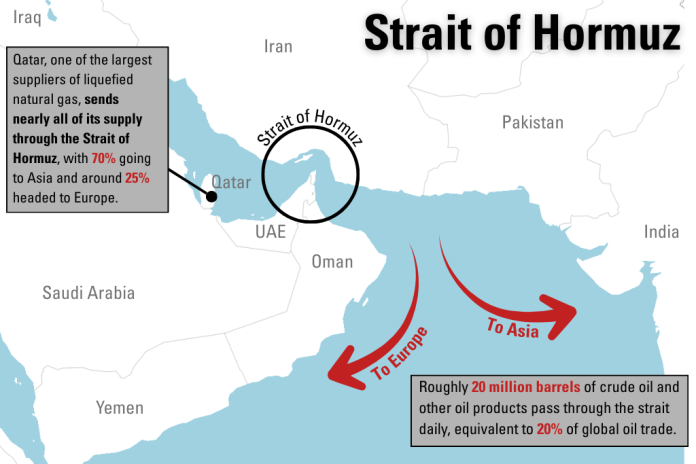
Analysts have warned that if the Strait of Hormuz remains effectively closed for a significant period of time, even just three to four days, the disruption to global oil and gas trade will send prices into the triple digits.
Roughly 20 million barrels of crude oil and other oil products pass through the strait each day, equivalent to 20% of global oil trade.
As of Monday, shipping data tracked by Bloomberg showed that traffic passing through the strait had dropped to zero.
Many vessels have changed course in the days following Saturday’s attack, as the Guard has threatened to target any ship attempting to travel through the waterway.
“This is the highest concentration of foreign gas facilities in the world and the Strait of Hormuz is the big artery of the entire oil market,” Rystad Energy chief economist Claudio Galimberti told the Washington Examiner, adding, “If the war continues, then expect oil prices to continue to climb.”
High oil prices complicate the Trump administration’s campaign promise to keep domestic gasoline prices low for everyday people.
Crude oil is the largest component of the retail price of gasoline, accounting for around 50%.
IRAN CONFLICT THREATENS TO RAISE GAS PRICES
On Monday, gasoline prices also experienced a significant hike of around $0.12 per gallon, the largest daily increase seen since early March 2022, during the immediate aftermath of Russia’s invasion of Ukraine. This brought the national average to $3.109 per gallon.
Analysts had forecast that gas prices would rise by an average of $0.10 to $0.30 per gallon over the next week.
