

Washington should view the United States’s semiquincentennial year as an inflection point to reassess the country’s democratic experiment and how to preserve it for future generations, according to No Labels.
“If it’s not something they are thinking about, it is something they should be thinking about,” Ryan Clancy, No Labels’ chief strategist, told the Washington Examiner. “Their job is really to make sure this experiment continues, and they can pass it on to the next generation.”
No Labels is known as one of the country’s most prominent organizations advocating moderation in U.S. politics, warning that polarization in Washington is eroding American democracy, and sending citizens toward a “tipping point.” Extreme voices looking to burn down the whole system hold an increasing appeal for voters frustrated by the continual gridlock and corruption they see in Washington, Clancy said.
DAN HANNAN: THE MAIN LOSERS FROM BRITIAN’S ‘ISLAMAPHOBIA’ CODE? MUSLIMS
Beyond Lincoln: 25 Unsung Heroes of American Unity
No Labels sees “building bridges” as the antidote to growing destabilization. The organization is releasing a new book detailing 25 “unsung heroes of American unity” across the 250 years of the United States’ existence who bridged sweeping divides, leading efforts to bring opposing sides together and embrace common ground. The book, exclusively viewed by the Washington Examiner, is designed to encourage the spirit of putting country over party in the semiquincentennial year, and highlights figures ranging from Clara Barton and Dolley Madison to Fred Rogers and Joe Lieberman.
“It’s about how we lasted this long as the world’s oldest continuous democracy, and the types of leaders that we want to let in this era and going forward, to help us get another 250 years farther,” a No Labels spokesman said of Beyond Lincoln: 25 Unsung Heroes of American Unity. “We go all through every different era of American history to show these unsung heroes who have brought the country together.”
The book is meant to inspire a new wave of “bold, courageous leaders who will stand in the breach and really work on bringing the parties together,” he said. Intense political infighting and the voices of moderation who met extremes in the middle are the common theme throughout the Republic’s timeline, the spokesman contended.
In the Republic’s early days, Madison played a crucial role in keeping political rivals talking by hosting bipartisan weekly parties at the White House that forced the Federalists and Democratic-Republicans into the same rooms, easing tensions. Barton, in the Civil War, saw humanity in soldiers on both sides, nursing Confederate and Union soldiers back to health, and later founding the Red Cross. “She helped knit the country back together in ways few others could,” the book reads.
GUY BENSON: CALIFORNIA’S TRAINS TO NOWHERE
The book describes Rogers, the decadeslong host of Mister Rogers’ Neighborhood, as the quiet model of “radical empathy” in fractious times, including the tense era of desegregation. And when federal funding for public broadcasting came under threat, Rogers appeared before Congress to make his appeal for continued support, “and, in gentle tones, won over its toughest skeptics,” the book reads.
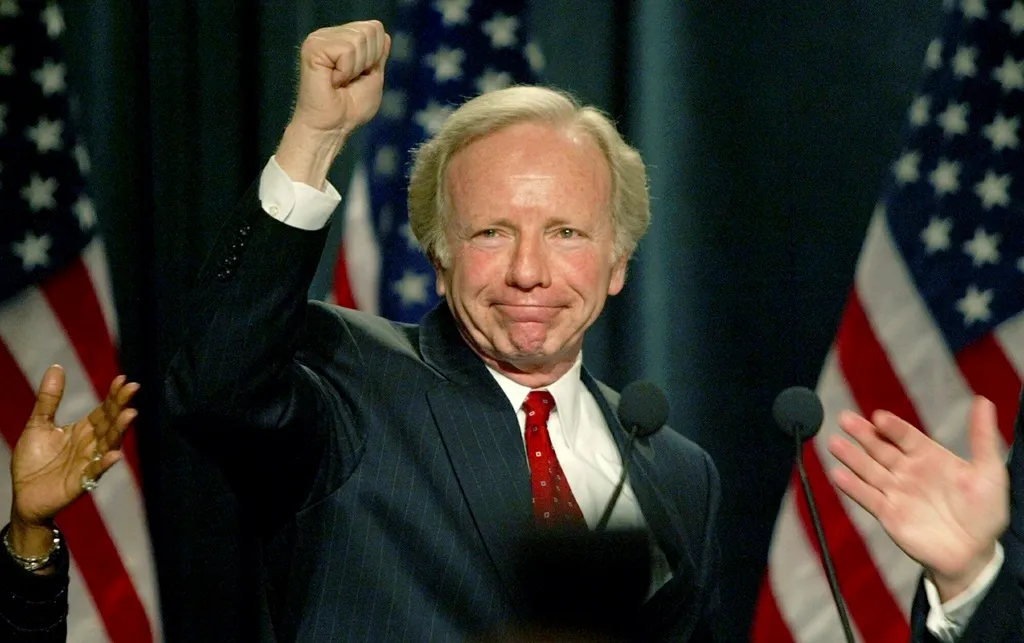
Former Sen. Joe Lieberman (I-CT), the founder of No Labels, is the final figure highlighted, as someone who lived by the creed that “compromise is not a dirty word—it’s the oxygen of democracy.” His approach, at a time when “politics was hardening into tribal camps,” disarmed opponents, the book reads, as “he refused to treat opponents as enemies.”
Today, the threat to unity is found in Democrat versus Republican camps, and conservative versus progressive, No Labels said. But the leaders of the past prove it is possible to knit together “seemingly opposed coalitions.”
The threat to the Republic
In its pitch for unity, Clancy said No Labels is seeking to engage a demographic coined the “exhausted majority” by researchers in 2018. It’s around two-thirds of Americans across seven political “tribes” that a More in Common case study identified as being “fed up with the polarization, often forgotten in public discourse, flexible in their views, and believe we can find common ground.”
Clancy said polling conducted in the lead-up to the 2024 election, when No Labels flirted with running an independent “Unity ticket” candidate, backed up those numbers, with data showing at least 60% of voters were looking for an alternative to the two major candidates at the time—President Donald Trump and then-President Joe Biden.
TIMOTHY CARNEY: THE CONSERVATIVE CASE FOR COLLEGE
“That strikes me as a pretty good ballpark for where it is and how much bigger it is than the respective extremes,” he said.
But the strategist expressed concern that congressional moves to undermine the filibuster and other legislative tools that force bipartisanship are further feeding polarization. Developments to the primary process are also entrenching divisions, due to how mail-in voting is conducted in those elections, Clancy argued.
“No Labels is certainly not against mail voting,” Clancy said. “But there comes a point where if a state is saying you can send in your mail ballot two months before the election, what the state is kind of saying is, we’re not even going to pretend like you can be persuaded in those last two months, we know you’re a Democrat, we know you’re a Republican, just put in your vote for your team and let’s get them in.”
“I’m struck by how often people don’t think of that— isn’t the point of political campaigns, that maybe somebody might change their mind if they hear a good appeal from a candidate?” he questioned.
Another item of concern for No Labels is the debt crisis they say is imminent. The U.S.’s debt is now approaching $39 trillion, up from over $5 trillion in 2000. Clancy said in the event that the economy crashes under the fiscal burden, as outlined in No Label’s Nightmare on Main Street, extremists on both sides could leverage it as an opportunity to promote their agenda.
SALENA ZITO: OUR CIVILIAN-MILITARY BOND IS CRACKED
“If you look at history, and if you look at when there’s a major crisis…That’s when the bad people get a lot closer to power,” he said. “That’s when, you know, Tucker Carlson gets a shot at the presidency. That’s when the DSA [Democratic Socialists of America] goes from having 100,000 members to a million.”
Clancy conceded that the viable solution isn’t likely to be a third party. The Democratic and Republican parties “are still the main vehicles through which people get elected,” he said. Still, he noted that a Gallup poll released at the start of 2026, which revealed that more U.S. adults identify as independents than at any time on record, is significant.
“I think that’s just a lead indicator that is suggesting people are so unhappy with the state of affairs in our politics, and telling a pollster that you know what one way I’m going to express my dissatisfaction is. I’m not going to think of myself as a D or an R,” he said.
Washington should take note, he warned, if lawmakers truly want to preserve the American way of life for generations to come. Operating for narrow interests and short-term political gain comes at a price, Clancy said, but “if members can operate with a little bit of that longer view,” then “maybe we can start to turn things around.”
JOE MANCHIN HITS JOHN CORNYN OVER ‘DEEPLY DISAPPOINTING’ FLIP ON SENATE FILIBUSTER
“If enough people decide the system doesn’t work for me, then they’ll just tip over the whole system,” he mused. “When you flip over the whole system, usually the thing that replaces it is a lot worse.”
“That doesn’t have to happen. It is still well within our control to prevent that outcome, because the system we have is still the best system. It still works, but you do have to do the work to protect it and cultivate it, and what that means is understanding that the government needs to actually solve the people’s problems,” Clancy said.
