

The rapid development of data centers, artificial intelligence, and domestic manufacturing is sparking fears that electricity prices will continue to soar, putting further strain on consumers’ wallets.
While the underlying price for electricity is set by utilities, state regulators, and grid operators, there are several actions homeowners and small business owners can take to lower their monthly bills.
Recommended Stories



For homeowners, the key to lowering their electric bills is addressing how exactly they are consuming and using energy.
“I think it comes down to what comfort level can a customer live with,” Meghan Dewey, senior vice president of products and services and pricing solutions at Duke Energy, told the Washington Examiner.
“Because there are a lot of ways you don’t even have to use energy, but you might be a little uncomfortable,” Dewey continued. “You can turn your thermostat up pretty high in the summer, but are you going to be comfortable? But, I do think that there are things we take for granted.”
Conducting an energy assessment
One of the best ways a homeowner or small business owner can determine how they are using their energy and electricity, and where changes can be made, is to conduct an energy assessment or audit.
A professional assessment generally costs between $300 and $500, depending on the size of the home or business. However, many utility companies, including Duke Energy, PG&E, Eversource, and Pepco, offer these assessments at no additional cost.
Duke Energy, for example, will travel to the customer’s home or conduct the assessment online if the individual does not want anyone entering the home.
During the assessment, the company will identify various things the homeowner can do to save energy, such as upgrading the heating, ventilation, and air conditioning system; adjusting temperatures in various rooms; or changing out old or dirty air filters.
“It all depends how you’re managing it now,” Mark Wolfe, executive director of the National Energy Assistance Directors Association, told the Washington Examiner. “If you haven’t had your air conditioner tuned up, if you have dirty filters, all that makes your system less efficient.”
On average, Wolfe estimates, homeowners can save between 10% and 15% on their electricity bills by taking “relatively inexpensive efficiency measures.”
Changing habits
After determining what areas can be improved, homeowners and small business owners then have the choice to implement any changes.
“I would boil it down to the level of comfort that you have as a customer, and the level of interest you have, and time you have to address some of these things,” Dewey said. “Because then you got to think about when you might want to do your laundry. It might not be that convenient for you.”
For air conditioning, utilities and municipalities often recommend keeping thermostats set at higher temperatures when experiencing heat waves or warmer summer months.
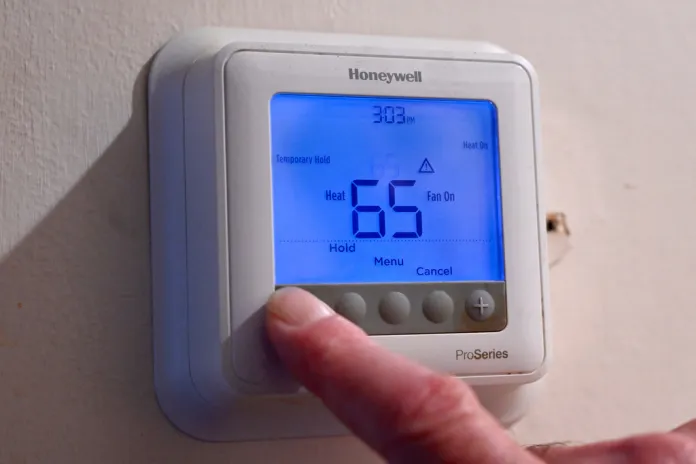
It is a big ask, as it forces homeowners and small businesses to decide what they value more: savings or comfort.
“I think a lot of people don’t realize what even a one-degree change in the house will save,” Wolfe said. “People are still keeping their temperatures in some houses at 68 degrees. It might be very comfortable, but it’s expensive. There’s a price for that.”
Florida Power & Light recommends keeping thermostats set between 75 and 78 degrees when at home and 82 degrees or warmer when away for long periods of time, such as vacation. The utility estimates that each degree over 75 degrees can save consumers 3%-5% on cooling costs.
New York Mayor Zohran Mamdani came under fire earlier this month for asking New York City residents to keep their thermostats set to 78 degrees as a dangerous heat dome settled over the East Coast.
Even changing the time of day when families run their laundry machines can affect electricity bills if the power company uses time-of-use pricing.
Time-of-use electricity rates are being offered by more power providers with the intent of offering some cost savings by incentivizing customers to equally distribute their demand on the grid. Under these types of plans, utilities will charge customers at a rate that depends on when the energy is used.
During off-peak hours, such as at night, homeowners will be charged a lower rate when using energy-intensive appliances, such as washing machines.
For some power producers, such as Dominion Energy, off-peak hours see rates roughly half of what is charged during the peak hours. During the summer months, Dominion’s time-of-use plan charges $0.31 per kilowatt-hour for on-peak usage and $0.15 for off-peak.
However, households do not have to opt into a certain payment plan to see savings.
Implementing new habits such as closing curtains or blinds during the day can keep more heat outside of the house, reducing the need for cooling systems. Installing additional weatherstripping or caulking around windows and doors can also prevent any heat or cooling from escaping.
Energy-efficient devices and power
For those who own a home or business, replacing appliances with energy-efficient alternatives should also be considered when looking for long-term cost savings.
“If you’re planning to stay in your house for say, five years or more, investments in high efficiency products like heat pumps start to make a lot of sense,” Wolfe said.
This could also include replacing a furnace, refrigerator, or washing machine with a more efficient appliance. Even opting to use a smart thermostat can help cut costs.
Energy Star, a government-backed program that identifies energy-efficient products, has said using a smart thermostat certified under the program can reduce heating and cooling bills by more than 8%, saving on average $50 annually.
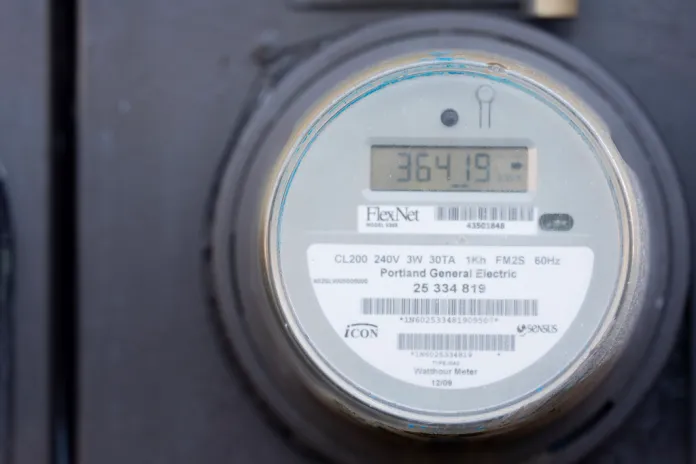
For those living in California, PG&E told the Washington Examiner that smart thermostats can save the average customer up to $78 each year.
Investing in energy-efficient appliances is not always feasible for some families, particularly those who are renting or planning to move within the next year.
In those instances, Dewey said, families can consider opting into programs such as community solar. Under these plans, homeowners or renters can subscribe to a portion of the power generated by a local solar facility and receive a credit on their regular bill in exchange.
Depending on where people live and the solar provider they chose, homeowners and renters can save around 10%-20% on their electricity costs.
Rebate and assistance programs
While there are low-to-no-cost adjustments consumers can make, such as adjusting the thermostat or lowering the setting on a water heater, changes to HVAC systems or opting for more energy-efficient appliances can add up.
The higher costs associated with the long-term adjustments can often deter homeowners or small business owners from moving forward with necessary upgrades.
However, many power providers and states offer rebate programs that can significantly lower the cost of the new appliances.
Dewey told the Washington Examiner that Duke Energy often meets with customers who are not even aware that the utility offers partial refunds for energy-efficient products.
“We still get feedback from customers, they don’t even know we have all these offerings,” she said, adding that one of the best things any customer can do is ask if there are any incentives they can take advantage of.
There are also state and utility programs that homeowners and renters can opt into. In California, for example, the California Alternative Rates for Energy Program offers a monthly discount of 35% or more on electricity.
PG&E’s Family Electric Rate Assistance Program also provides a monthly discount of 18% on electricity bills for those eligible.
Other federal programs, such as the Low Income Energy Assistance Program, offer one-time payments of up to $1,500 on past-due bills.
TRUMP PROMISED TO CUT YOUR ELECTRIC BILL IN HALF. IT’S UP 16% INSTEAD
Wolfe pointed out that even while these assistance and rebate programs are available, changing daily habits on how energy and electricity are used in the home will be crucial as rates are only expected to rise.
“These prices aren’t coming down anytime soon,” Wolfe said. “Plan for prices to remain high. I think that some people still think, ‘Well, it’ll get cheaper next month.’ It won’t get cheaper.”
