

Iranian leaders have recently agreed to negotiate “aspects” of their nuclear program, Secretary of State Marco Rubio revealed on Tuesday.
While he acknowledged there’s no guarantee their willingness to negotiate on parts of the nuclear question means the two sides will be able to finalize an agreement on it, the secretary said.
Recommended Stories


“For the first time, certainly in my memory, they have agreed to negotiate aspects of their nuclear program that just a month ago, just a year ago, they were refusing to even mention, much less enter into discussions about. That is not a guarantee that ultimately will lead to a deal that’s acceptable to the Senate or acceptable to the American people, but we’ll be able to engage them in a process to truly test the proposition of how far they’re willing to go,” he said.
Rubio, who testified in front of the Senate Foreign Relations Committee on Tuesday morning, did not specify which aspects of its nuclear program the country had expressed a willingness to negotiate.
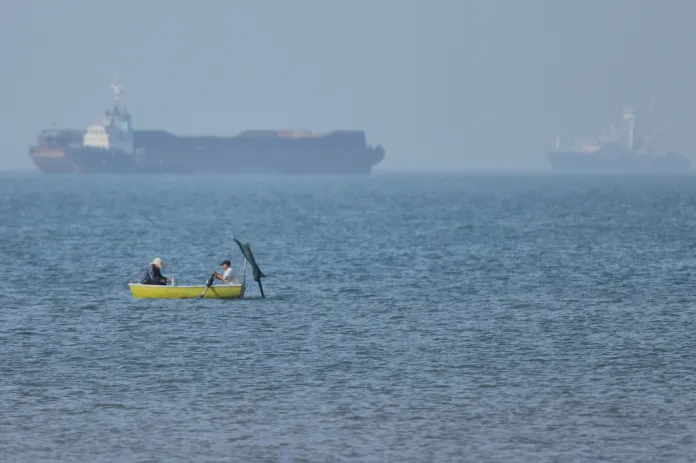
The Trump administration is currently pursuing a phased agreement with Iran, the first portion of which would focus on the Strait of Hormuz. The strait is a narrow body of water that connects the Persian Gulf to the Gulf of Oman, and roughly 20% of the world’s oil would transit the waterway on a daily basis prior to the conflict, but at the conflict’s onset, Iranian forces threatened to attack commercial vessels and placed mines in the water.
The U.S. Navy is carrying out a dueling blockade of Iran’s ports so it, too, feels the brunt of the economic fallout its threats have had on the global economy.
“The notion is, if no one’s ships are going to get out, then Iran’s ships aren’t going to get out either. We can’t live in a world in which they get to close the straits and tell everybody, ‘Pay us a toll, or we’ll blow you up,’ but their ships get to go out unfettered, so that’s the reason why there’s a blockade,” Rubio said. “So, condition No. 1 is they have to reopen the straits, and reopening the straits means the following: ships can sail through international waters the way they can do through other choke points around the world, without being fired upon, without paying a toll.”
Iranian forces have repeatedly fired drones and missiles at U.S. Navy vessels and commercial ships since the president announced the U.S. blockade. In some instances, the U.S. troops fired retaliatory or defensive strikes. The Iranians have also fired drones and missiles at various Gulf states, including at U.S. bases in those countries.
He said a deal for the first phase could be a lifting of the U.S. blockade in exchange for Iran ending its threats against commercial vessels and following through, so ships feel comfortable transiting the strait. The blockade is currently costing the Iranian economy hundreds of millions of dollars a day, he said, adding that the “Supreme Leader and the IRGC core are a little bit more immune from those pressures until they can be convinced otherwise.”
Additionally, the secretary said the administration has not discussed the possibility of giving Iran sanctions relief immediately to convince it to open up the Strait of Hormuz. But the administration has discussed with the Iranians the possibility of lifting sanctions in exchange for concessions on its nuclear program, which would be the primary focus of the second phase of negotiations, but those concessions would be condition-based.
Rubio said these “highly technical” negotiations about the nuclear program would “require a team of experts to meet over a 30-, 60-, [or] 90-day period and work out the details, but they have to commit to their willingness to do that.” He added, “For example, they have to commit to say, ‘We will dispose of the enriched uranium,’ and the question now is, what are the mechanisms by which we do so? That can be negotiated.”
Iran is believed to have had more than 900 pounds of highly enriched uranium, though the status of it is unknown following the U.S. military’s airstrikes in “Operation Midnight Hammer” last year.
President Donald Trump said last month he “wouldn’t be comfortable” with either China or Russia taking possession of Iran’s highly enriched uranium. He also recently said that he would be willing to make a deal that called for Iran to halt its enrichment of uranium for 20 years, which would allow the country to resume its nuclear program eventually.
Iranian leaders have said they aren’t interested in negotiating about their nuclear program. Their top leader is Supreme Leader Mojtaba Khamenei, the son of slain former Ayatollah Ali Khamenei. Mojtaba Khamenei was injured in the strikes that killed his father in the early hours of the war. The younger Khamenei was named his father’s successor days later, and has still not been seen publicly, which has raised speculation about the severity of the injuries he’s suffered.
Rubio said the United States believes Mojtaba Khamenei is alive, and “there are indications out there that he is increasingly engaging at some level, although all of his communications have been in writing and through intermediaries.”
Rubio explained that the supreme leader is advised by a council of six to eight people made up of both the Islamic Revolutionary Guard Corps and other elements of the regime that “has to sign off on anything.” As a result, the Iranian leaders who led their negotiating team, such as Foreign Minister Abbas Araghchi and Parliament Speaker Mohammad-Bagher Ghalibaf, have to report back to them.
IRAN TO PAUSE NEGOTIATIONS OVER ISRAELI STRIKES IN LEBANON: STATE MEDIA
“It is our view of the system as we understand it, and as it’s been expressed to us, both by the intermediaries and by Iran directly, that what Araghchi and Ghalibaf bring or take from us, they then have to run back to this council and ultimately get guidance from them,” he said.
Trump has continued to vacillate between stating that the two sides are close to a deal and that Iran wants to make one, while also maintaining that the U.S. is prepared to restart offensive military operations against the country if diplomacy fails.
