

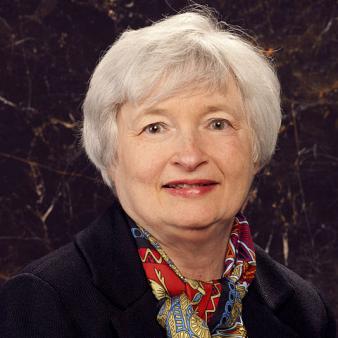
We now know the approximate date when Federal Reserve Board chair Janet Yellen will feel comfortable ending the Fed’s near-zero interest rate policy: never. Those who were led to believe by her first press conference that she has shed her dove’s feathers for those of an inflation hawk, circling over the markets, poised to raise interest rates, got it wrong. She has her heart set on keeping rates low enough to eliminate “slack,” borrowing a term often used by Mark Carney, governor of the Bank of England. And “slack” is a many-dimensioned concept when applied to labor markets.
As Yellen made clear early last week when she told an audience in Chicago, “While there has been steady progress, there is also no doubt that the economy and the job market are not back to normal health.” It is doubtful whether Friday’s job report, which revealed that the private sector had created 192,000 jobs in March, restoring private-sector employment to its pre-recession level, will provide the Fed chair with sufficient cheer to encourage her to allow interest rates to rise. The unemployment rate remains stuck at 6.7 percent, and 12.7 million workers are jobless, involuntarily working short hours, or too discouraged to continue the job hunt. Some experts are guessing that job creation will have to hit some 300,000-400,000 per month to persuade Yellen to tighten monetary policy.
Stay informed.Stay ahead.
Join Washington Examiner for unlimited access to the news, analysis, and commentary that matter most.
Already a member? Log in
