

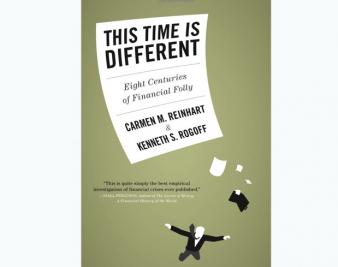
If you want to have a relaxed summer break, definitely do not include on your beach reading list This Time is Different: Eight Centuries of Financial Folly, by Carmen Reinhart and Kenneth Rogoff. Based on a massive multi-nation data base covering 800 years the authors conclude that, in the case of past financial crises, “the duration of housing price declines has been quite long lived … unemployment rises for almost five years, with an increase in the unemployment rate of about 7 percentage points … [which would mean an 11 percent rate in the U.S. before things get better] … unemployment consequences of financial crises are strikingly large … recessions surrounding financial crises are unusually long compared to normal recessions … huge buildup in government debt.” If that is not enough, Reinhart and Rogoff, professors of economics at the University of Maryland and Harvard University respectively, make clear that the notion that “this time is different” is wishful thinking, and point out that the global scope of the recent crisis makes it difficult for economies to avail themselves of a boost from increased exports, as was the case in past crises that were restricted to individual nations or regions.
If you are looking for “kindly light” amid the “encircling gloom,” to borrow from Cardinal Newman, don’t look in the financial pages or at recent economic reports. “Layoffs Deepen Gloom” and “Slowing Sales Imperil Growth” lead recent stories in the Wall Street Journal. “The Housing Horror Show Is Worse Than You Think” headlines a story in Bloomberg Businessweek.
Stay informed.Stay ahead.
Join Washington Examiner for unlimited access to the news, analysis, and commentary that matter most.
Already a member? Log in
