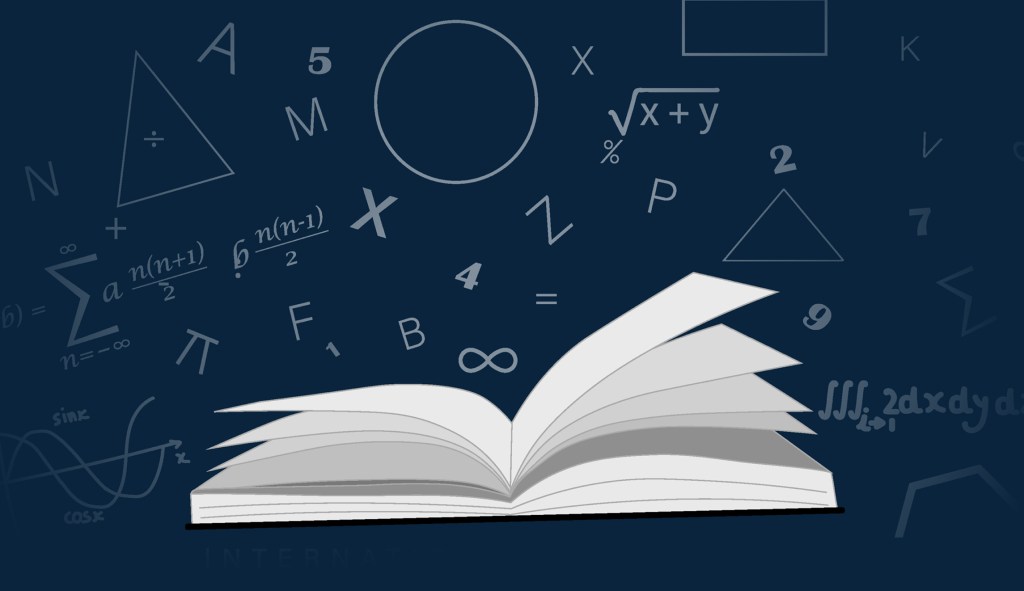
No two fields seem to have less in common than mathematics and literature. The former, in Aristotle’s view, is the foundation of all the sciences and nothing if not useful. Poetry, on the other hand, “makes nothing happen,” as W. H. Auden put it famously.

Yet references to math abound in modern literature. Herman Melville, for example, was positively obsessed with mathematics. In Moby-Dick, Captain Ahab compares his cabin boy to a circle — “True art thou, lad, as the circumference to its center” — and Ishmael praises the “mathematical symmetry” of the sperm whale’s head. In another scene, Ishmael describes the mathematical properties of the cycloid, a curve that is made by tracing a point on a circle, in which “all bodies … will descend from any point in precisely the same time.” And in Mardi, the character Babbalanja remarks that man is “harder to solve, than the Integral Calculus — yet plain as a primer.”