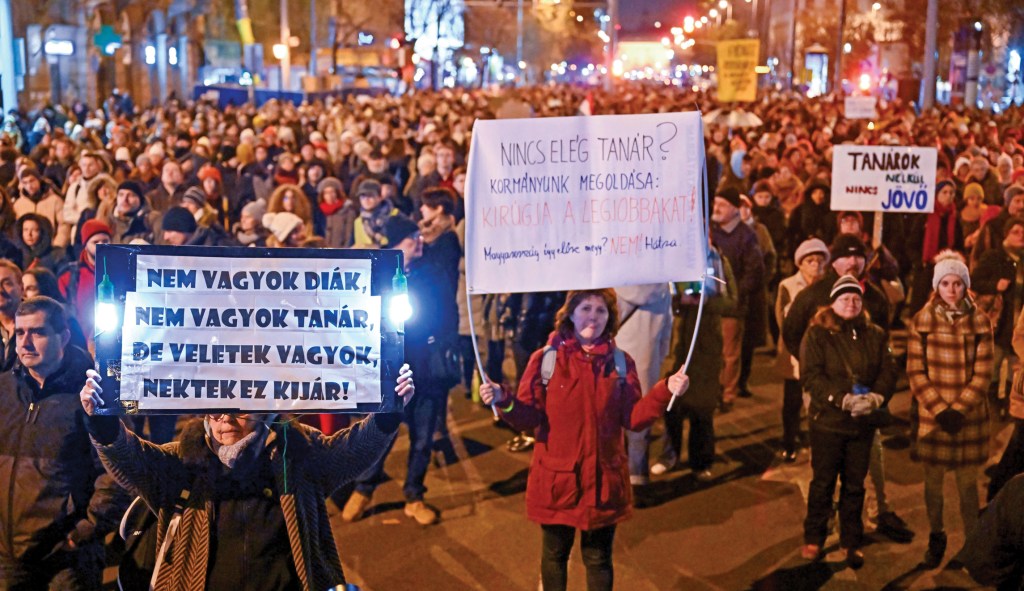
In October, protesters linked hands from the Elizabeth Bridge to Keleti train station, a mile-and-a-half human chain that stretched through the heart of downtown Budapest. Bus passengers gawked while commuters honked in solidarity from passing cars. Schools canceled morning classes as students and teachers walked out to protest meager teacher salaries. Sporadic strikes and demonstrations would follow into the cold winter months. With rising inflation, spiking gas prices, and intermittent shortages on supermarket shelves, the teacher protests are only the most visible sign of Hungary’s economic distress.
Despite Hungarian Prime Minister Viktor Orban’s reputation in the Western press, no protesters were hauled off in unmarked vans to secret detention centers. Freewheeling, cosmopolitan Budapest has always resented Fidesz, Hungary’s ruling conservative party, and its combative prime minister. From marches against a controversial overtime law in 2019 to protests against a Chinese university’s proposed downtown campus in 2021 to this year’s spate of teacher and student walkouts, Budapest has long been restive under Orban.