

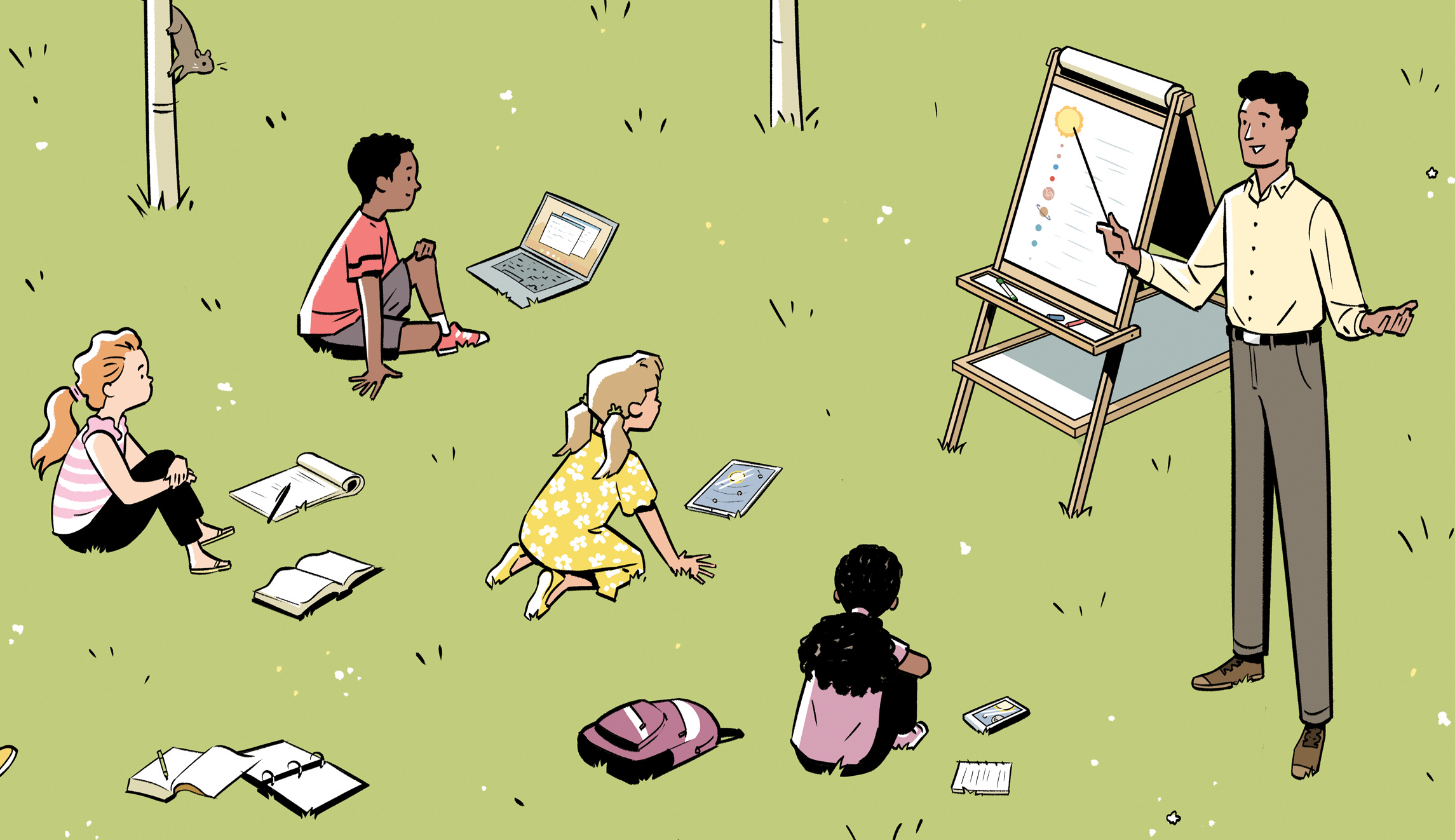
When schools in Northern Virginia switched to remote learning last spring, Andrea Picciotti-Bayer started planning ahead. The attorney and mother of 10 knew the change could persist through the fall thanks to COVID-19, so she made a contingency plan: Her children would join a “microschool” instead. Parents put together microschools, or “pods,” where they pool resources to hire instructors for groups of area children (usually 10 or fewer), often in a parent’s home.
Her reasoning had nothing to do with politics or ideology. When the pandemic sent children learning from home via virtual classrooms, “a lot of parents discovered … that their kids were behind,” Picciotti-Bayer told the Washington Examiner. Even putting that aside, there’s the inconsistency and unpredictability of the way school systems are handling learning this year. “All parents are better served knowing the plan for the long term and not having to wait every few weeks to see what districts have decided to do now,” she told me over the phone recently. “A lot of parents have been farming education out, subcontracting it out. They need to know, ‘I’m in the driver’s seat.’”
Stay informed.Stay ahead.
Join Washington Examiner for unlimited access to the news, analysis, and commentary that matter most.
Already a member? Log in
