

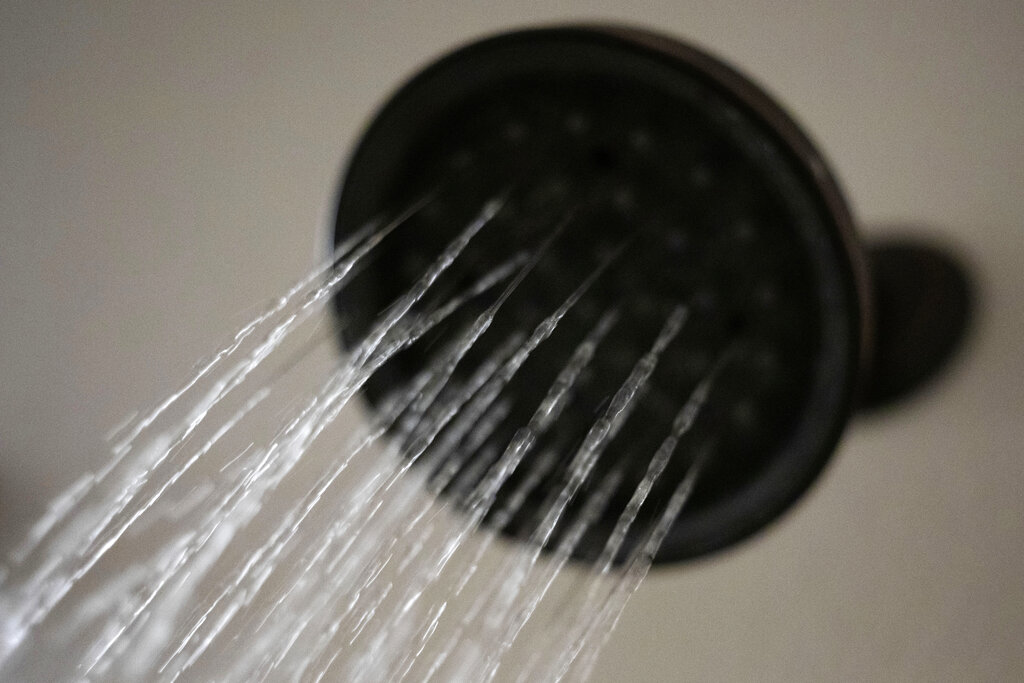
House lawmakers on Tuesday passed a bill that would ease limits on showerhead water flow, adding to Republican efforts to roll back energy efficiency standards imposed during the Biden administration.
The House voted 226-197 to pass the SHOWER Act, which was sponsored by Rep. Russell Fry (R-SC). The bill would codify Trump’s executive order meant to soften federal rules limiting the flow of water through showerheads.
Recommended Stories


Trump has criticized the showerheads that were produced under the rules, saying they lack sufficient flow and blaming them for making it hard to maintain his signature hairdo.
The Obama administration set standards allowing no more than 2.5 gallons of water to flow from a showerhead. Trump, in his first term, repealed those standards. But the Biden administration then reimplemented the Obama standards.
“In my case, I would like to take a nice shower to take care of my beautiful hair,” Trump said in the Oval Office on signing the order. “For 15 minutes until it gets wet, drip, drip, drip. Ridiculous.”
Fry’s bill would clarify that each nozzle in a multihead shower system is an individual showerhead that may operate at up to 2.5 gallons of water per minute. The bill would also prevent future reinterpretations of the standards.
“The SHOWER Act is a smart fix that reaffirms each shower nozzle is just that—its own showerhead—and should be treated accordingly under the law,” Fry wrote in a press release last summer. “This is about defending consumer choice, pushing back on regulatory overreach, and standing up for commonsense policy.”
Over the past year, the Trump administration and Republicans have pushed legislation to reverse or ease energy efficiency standards for home and commercial appliances, ranging from showerheads to refrigerators.
TRUMP CLAIMS THAT VENEZUELA STOLE US OIL: WHAT TO KNOW
For instance, House lawmakers last week passed the Affordable HOMES Act, which was introduced by Rep. Erin Houchin (R-IN). The bill would remove the Department of Energy’s authority to regulate manufactured housing energy efficiency standards, which Republicans say have raised costs. Republicans have also argued that energy efficiency standards limit consumer choices.
