

The European Union plans to pursue a partnership with the United States to reduce China’s dominance in the critical minerals sector.
The EU plans to sign a memorandum of understanding with the U.S. to develop a “Strategic Partnership Roadmap” within three months, Bloomberg reported on Tuesday. The partnership aims to diversify the supply of critical minerals beyond China, which controls about 90% of global mineral production and has used its dominance to pressure the U.S. and other nations in trade policy.
The Trump administration has sought to expand the domestic supply of critical minerals, as they are necessary for technologies in the energy and defense sectors, including batteries, fighter jets, missiles, and night vision.
People familiar with the matter told Bloomberg the memorandum suggests the EU and U.S. will consider joint critical mineral projects, price-support mechanisms, and recommendations to avoid market manipulation. The EU also proposes that both sides respect each other’s territorial integrity.
The EU’s proposal follows President Donald Trump’s push to assert control over Greenland for national security reasons related to Russia and China. Trump has eased his efforts to purchase Greenland after announcing that a framework for a deal to acquire it had been agreed upon with NATO Secretary-General Mark Rutte. The details remain unclear, but Trump has previously said that mineral rights will be included in the deal.
The EU’s reported efforts to partner with the U.S. on critical minerals come on the eve of the State Department’s “Critical Minerals Ministerial,” which will bring together over 50 countries to discuss ways to reduce reliance on Chinese critical minerals and to seek new agreements.
The Trump administration has considered several ways to diversify the domestic critical mineral supply, including entering into agreements with countries such as Malaysia, Thailand, Cambodia, and Australia.
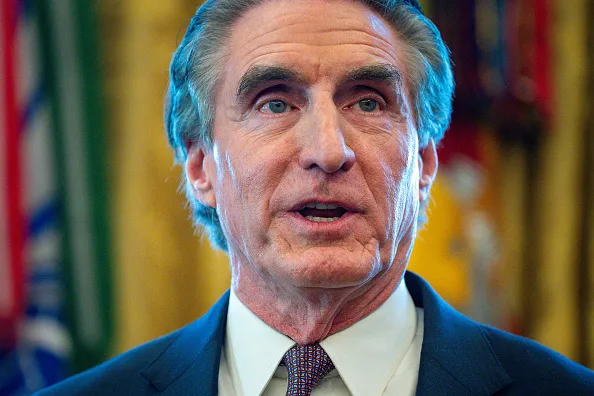
Interior Secretary Doug Burgum spoke at the Center for Strategic and International Studies on Tuesday, noting that the U.S. this week will seek more bilateral agreements with countries to diversify the supply chain.
“We have plans to announce as many as 11 more of those agreements this week.… We know that there is strong interest from another 20 countries coming behind that,” Burgum said.
He added that the concept of bilateral agreements would include tariff-free trade on rare earths and critical minerals, noting that some previous agreements have included price floors.
TRUMP ADMINISTRATION LOOKS TO CREATE $12 BILLION CRITICAL MINERAL RESERVE
“If you have someone who’s dominant, who can flood a market with a particular material, they have the ability to essentially destroy the economic value of a company or a country’s production,” Burgum said.
China has used its market control over countries such as the U.S. through export controls on rare earths. Last November, Trump reached a deal with China to lift some export controls for a year, but restrictions on other rare earths remain in place.
