

Nuclear energy is now championed by liberal Democrats and environmentalists, who led anti-nuclear protests and rallies across the United States 50 years ago.
The carbon-free power source was long controversial, as critics said it posed massive environmental and public health threats. But as demand has soared, thanks to artificial intelligence, electrification, and increased manufacturing, many on the Left are now turning to the once-vilified power source to provide reliable energy while also helping to meet climate change goals.
Anti-nuclear campaign
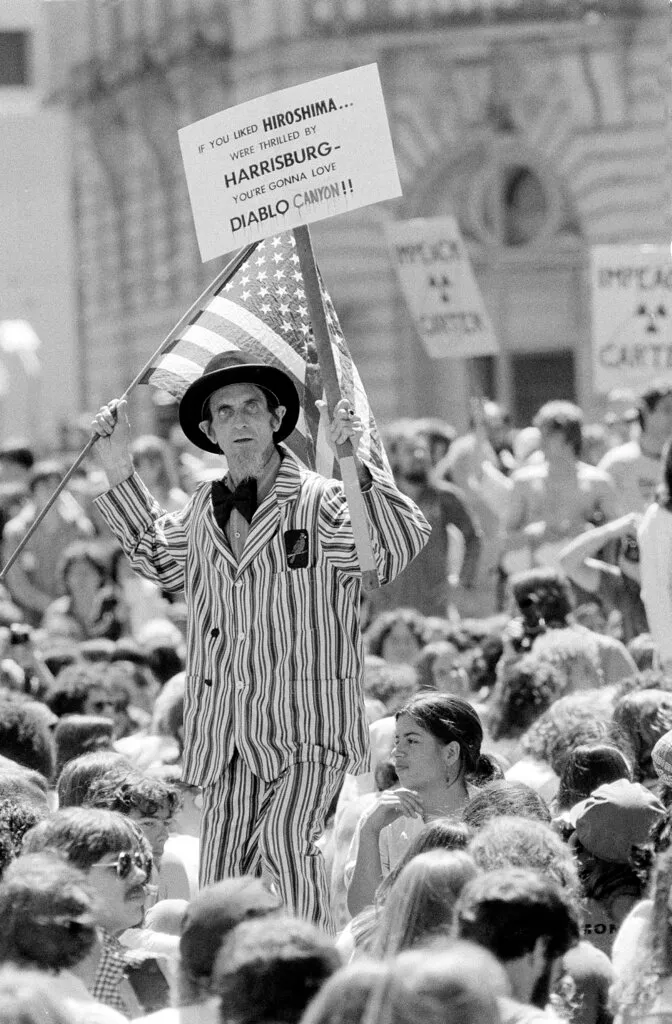
Pushback against nuclear peaked in the 1970s and 1980s, as millions rallied together to protest it because of the problems involved in the long-term management of radioactive waste, the potential for the proliferation of nuclear weapons, and the broader risk of accidents such as those seen at Three Mile Island in Pennsylvania and Chernobyl in Ukraine.
This anti-nuclear campaign was backed by environmentalist groups, including the Sierra Club and Greenpeace, and led Democratic-leaning states, such as California and Illinois, to impose bans on developing new nuclear power.
These bans and moratoriums led investors and utilities to shy away from nuclear energy. Cheaper forms of power, especially natural gas, grew in popularity, and Democrats sought to deploy renewable energy sources, such as wind and solar.
The lack of new, steady investment ultimately created intense financial strain on existing nuclear power plants, causing dozens to close. Only three large nuclear power reactors have come online in the U.S. in the last 20 years.
Legislative change
Democratic attitudes on nuclear energy first began to shift under President George W. Bush with the passage of the Energy Policy Act of 2005. This law, which received significant bipartisan support in both the House and Senate, provided financial incentives and loan guarantees for new nuclear facilities.
Bipartisan support continued under President Barack Obama, who committed to using the resource as a part of his strategy to lower greenhouse gas emissions. He also offered loan guarantees to build new nuclear reactors.
While Democratic lawmakers broadly opposed President Donald Trump’s efforts to expand the U.S. nuclear weapons arsenal during his first administration, many did support his plans for advancing nuclear energy, as seen with the 2018 Nuclear Energy Innovation and Modernization Act. This law established a new budget and fee structure for existing reactors while also revising the licensing framework for advanced nuclear projects.
Congress has passed several other bills meant to help expand the nuclear energy industry, with support across the aisle in the years since. But some energy analysts point to the passage of the 2022 Inflation Reduction Act under the Biden administration as a major turning point. The law included tax credits for clean energy sources, including nuclear.
“That’s the point at which that the parties agreed that things should happen to enable new nuclear,” Adam Stein, the head of the Nuclear Energy Innovation program at the Breakthrough Institute, told the Washington Examiner.
“By including nuclear energy and all other clean energy sources in one single credit that puts them all in the same playing field,” Stein said. “That’s the point where the Democratic Party said that nuclear, for them, is on par with other energy sources.”
Others have cited the passage of the 2024 ADVANCE Act, which had overwhelming bipartisan support in both chambers, as an example of support for nuclear power among Democrats. The law, signed by then-President Joe Biden in July 2024, was meant to accelerate the licensing of advanced reactors, lower regulatory costs, and strengthen the domestic nuclear fuel supply chain. Only two Democrats — Sens. Bernie Sanders (I-VT) and Ed Markey (D-MA) — voted against the bill in the Senate.
Both senators are known for their anti-nuclear positions, having repeatedly opposed the expansion of new nuclear power plants in the U.S due to concerns about the long-term management of nuclear waste. Another notable anti-nuclear senator is Elizabeth Warren (D-MA), who previously vowed not to back the build-out of new nuclear energy. Warren, however, voted in favor of the Advance Act in 2024.
Lingering criticism of nuclear energy among Democrats has been criticized by members of the party itself. During his presidential campaign in 2019, Sen. Cory Booker (D-NJ) said Democratic opposition to nuclear was just as bad as Republicans denying the existence of climate change.
“It was one of the most bipartisan bills in recent U.S. history,” Ryan Pickering, an energy developer and nuclear power advocate, told the Washington Examiner. “And I think that signaled something really important, that, you know, our energy systems are beyond politics.”
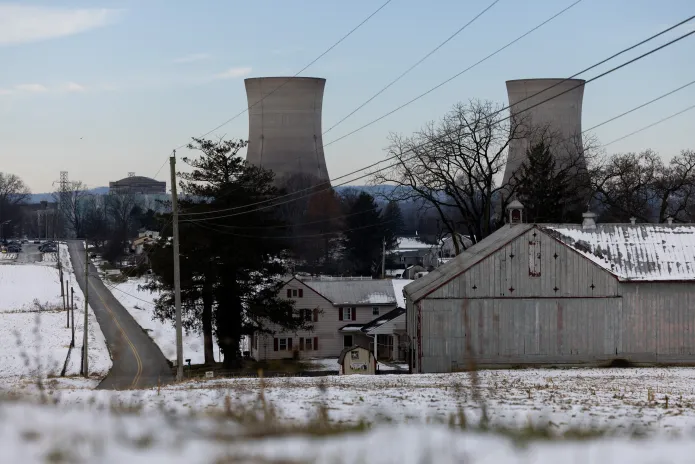
This push from Washington has been met with support from the tech industry, which made its first big turn to nuclear energy during 2024.
Companies such as Microsoft, Google, and Amazon have committed to supporting restarting former nuclear plants and building new advanced nuclear energy facilities to secure enough power for their growing AI operations. In early 2025, several of these major tech firms pledged to triple nuclear power capacity worldwide by 2050.
Pressure on the states
As Big Tech has raced to build out AI, many voters have worried that the deployment of large-load facilities will increase consumers’ energy bills, which have already been soaring for months.
Those fears about data centers have forced both Republican and Democratic governors to reassess their states’ energy makeups and determine the best combination of reliable and clean energy. While the Trump administration has pushed for increased energy production from traditional fossil fuels such as coal, nuclear energy has become an attractive solution for Democrats who have otherwise prioritized wind and solar energy projects in recent years.
“I think there’s been a really broad recognition that we cannot meet decarbonization goals without contribution from nuclear,” Valerie Gardner, founder and managing partner of Nucleation Capital, told the Washington Examiner.
Unlike fossil fuels, nuclear energy releases zero carbon emissions, as it generates power through fission — splitting uranium atoms to create heat and steam, which is then used to generate electricity.
“Wind and solar, as popular as they are, are not scaling as fast as we need them to, especially in the context of growing energy demand from AI data centers, manufacturing, things like that,” Gardner added.
Not only does nuclear energy contribute to emissions reduction, but it is also considered one of the most reliable sources of energy, next to geothermal.
The Energy Information Administration estimates that U.S. nuclear facilities have a capacity factor of 93%, meaning nuclear plants operate at full capacity 93% of the time. Solar and wind have capacity factors of 23% and 33%, respectively, while coal has a capacity factor of 42%.
“I think the data is showing that from system reliability and a total system cost standpoint, adding nuclear to the mix is a benefit to rate payers,” Pickering said, adding Democrats are looking at these numbers and recognizing that nuclear energy is “in the interest of their constituents.”
Where we’re seeing change
Last fall, Gov. JB Pritzker (D-IL) lifted the state’s long-standing moratorium on the construction of large-scale nuclear power plants. The ban was first imposed in 1987 due to a lack of a permanent solution for disposing of highly radioactive nuclear waste.
Pritzker partially lifted the moratorium in 2023, allowing for the construction of small modular reactors. And by August 2024, the governor suggested that lifting the ban entirely could help address rising energy costs.
Pritzker was also poised to expand his targets for nuclear energy development in the state this week, with his office confirming plans to bring 2 gigawatts worth of nuclear power online.
In New York, Democratic Gov. Kathy Hochul also created a pathway for new nuclear development, despite the state having shut down the Indian Point nuclear plant just five years ago.
Last summer, Hochul directed the New York Power Authority to add at least 1 gigawatt of new nuclear power generation to the state’s fleet, through the construction of a new plant upstate. The governor expanded these goals in January, calling on the state to add 4 gigawatts of new nuclear capacity to the state’s grid.
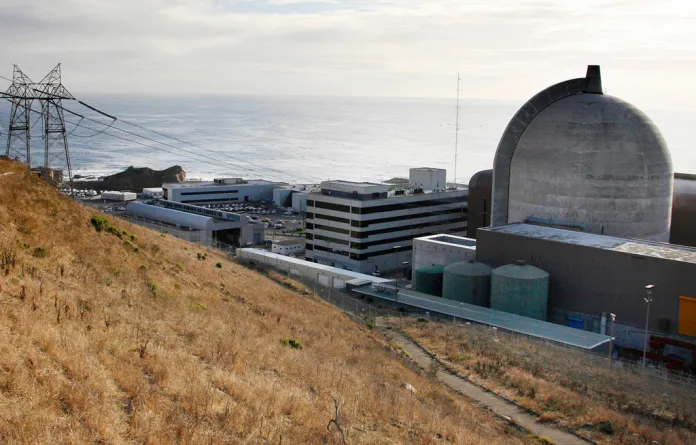
California remains the largest major Democratic holdout on opening its doors to new nuclear energy.
While there has been support to keep the state’s only operating nuclear plant, Diablo Canyon, open, California’s nearly 50-year-old ban on new development is still in effect. Some attribute this to continued pressure from environmental groups such as the Sierra Club.
“It’s the environmental groups who see their fundraising being impacted if they were to come out and support nuclear,” Gardner explained. “So they have an interest in not dividing their donors, and wind and solar have an interest in trying to keep nuclear out of the market.”
That pressure, however, is dwindling.
Over the last 20 years, Democratic Assembly members have introduced or supported numerous bills that would lift restrictions on new advanced nuclear projects. Even environmental policy groups have offered their support for the resource.
Jay Hansen, president and CEO of the California Foundation on the Environment and the Economy, told the Washington Examiner that the state’s legislature appears to be “increasingly open” to allowing nuclear energy development, maybe even as soon as this year.
“The grim reality of climate change paired with the state’s ambitious net-zero carbon goals means all options, including nuclear, must be considered,” Hansen said. “Tripling the state’s energy production while phasing out greenhouse gas-producing sources, as California is striving to do, will be a very tall order.”
While California has yet to walk back its ban on new nuclear energy, the willingness to do so is evident in how conversations about the resource have changed.
BELTWAY CONFIDENTIAL: AI’S ENERGY DEMANDS ARE FUELING A NUCLEAR COMEBACK
Gardner told the Washington Examiner that there no longer appears to be a “taboo” when discussing nuclear energy. Conversations that were once dominated by waste and environmental concerns now focus on the ability to deliver reliable power on time and on budget.
“I think the way we communicate how nuclear fits into these buckets of, it’s not ‘renewable versus traditional,’ it should be ‘non-emitting versus emitting,’” she said. “That would be a change that could make a lot more of the public recognize that we need to focus on all the non-emitting categories of energy, of which nuclear is clearly the best.”
