

Lloyd’s of London is in talks with the U.S. International Development Finance Corporation regarding President Donald Trump’s plan to offer political risk insurance for ships traveling through the Strait of Hormuz to permit the flow of oil despite the threats posed by the conflict with Iran.
The president touted a plan earlier this week to help the transportation of oil and gas through the Strait of Hormuz by offering financial and logistical support to all shipping lanes, including escorts by the United States Navy.
In a statement, a Lloyd’s spokesperson told the Washington Examiner that “Lloyd’s is engaging constructively with the US Development Finance Corporation and relevant stakeholders, with a clear focus on ensuring that the Lloyd’s market continues to lead as the global centre of excellence for war risk insurance, providing practical, market‑led solutions that support shipowners, protect crews and sustain global trade during periods of heightened geopolitical risk.”
Lloyd’s Market Association CEO Sheila Cameron also welcomed the U.S. engagement in a statement to Reuters. Cameron added that at least 40 vessels have transited the strait since Sunday.
“There remain approximately 1,000 vessels, approximately half of which are oil and gas tankers, with an aggregate hull value exceeding $25 billion in the Persian/Arabian Gulf and surrounding waters,” Cameron said.
Most of the vessels are insured through the London market, and coverage remains in place, Cameron added.
The DFC is a federal corporation that facilitates private capital for ventures in developing countries to promote U.S. business and influence. In a press release on Tuesday, DFC said it would provide support to commercial shipping charterers, shipowners, and key maritime insurance providers to reduce market disruptions.
There is precedent for such a role for the DFC. The DFC and insurers have provided insurance during the Ukraine-Russia war. Lloyd’s of London and insurance broker Marsh provided war risk insurance for Ukrainian maritime exports, particularly for steel and grain. DFC has also provided political risk insurance for businesses in Ukraine.
In a statement, Marsh told the Washington Examiner that it is working to support its shipping clients and has engaged with DFC to explore insurance options for maritime trade.
“We have experience in these types of government-based solutions,” Marsh said. “In 2023, we collaborated with the Ukrainian government and others to launch an insurance facility to provide affordable war-risk insurance for the export of grain and other critical supplies from Ukraine’s Black Sea ports, helping to restore shipping and enable commercial vessel transit across the Black Sea amid the ongoing Russia-Ukraine conflict.”
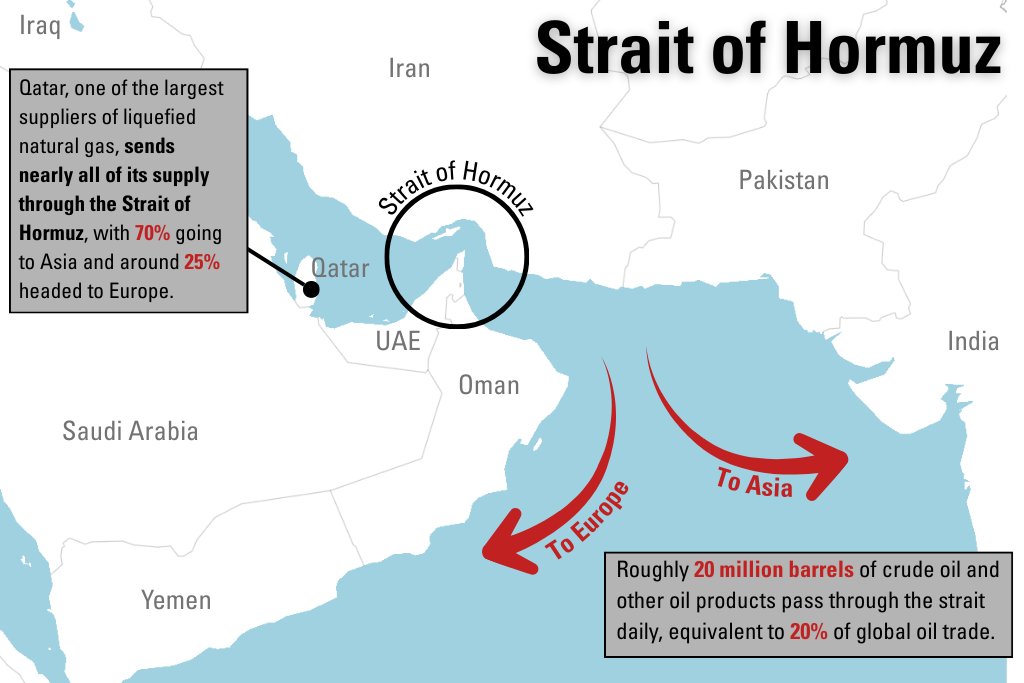
The strait, which was effectively closed after the U.S. and Israel carried out strikes on Iran over the weekend, is a key global route for transporting oil and gas exports. The pause in shipments caused the global energy prices to soar.
Nearly 20 million barrels of crude oil and other oil products transit through the strait daily, accounting for about 20% of global oil trade.
BIMCO chief safety & security officer Jakob Larsen told the Washington Examiner in a statement that the president’s plan to insure maritime transit traveling through the Gulf has yet to be fully explained.
Larsen said the administration’s proposal to escort ships through the strait with the U.S. Navy could reduce the threat.
“That said, providing protection for all tankers operating in areas currently threatened by Iran is unrealistic as this would require a very high number of warships and other military assets,” Larsen said.
NATURAL GAS PRICES SURGE WORLDWIDE AS IRAN CONFLICT CRIMPS SUPPLY
“At some future point, if the Iranian threat has been degraded significantly, the relative effect of naval escorts will improve. This might push the security risk below the risk acceptance level of some shipowners and cause some ships to resume operations in the high-threat area,” he added.
