For years, Florida has quietly positioned itself to become more than a tourism powerhouse. State leaders invested in higher education, expanded aerospace and engineering industries around the Space Coast, marketed the state as a low-tax alternative to California and New York, and courted businesses to relocate.
At the same time, lawmakers were also investing billions of dollars in land conservation, preserving wildlife habitats, and establishing one of the country’s most ambitious conservation networks.
Recommended Stories
Now, those two long-term strategies are coming to a head.
As artificial intelligence, aerospace, financial technology, and cloud computing companies increasingly look to Florida for expansion, the state is confronting a question that has divided other fast-growing states: Can the Sunshine State become a technology capital without compromising the natural resources that helped attract business and residents in the first place?
State lawmakers and conservationists largely agree on the answer.
“The economic requirements and the environmental requirements … should not be mutually exclusive,” state Rep. Toby Overdorf, a Republican who has worked extensively on environmental policy, told the Washington Examiner.
Florida spent years preparing for two futures
Florida’s push to become a technology hub did not begin with AI corporations. Long before technology companies expanded in Miami or venture capital established South Florida offices, lawmakers were investing in many of the ingredients those companies would eventually seek.
Overdorf points to the state’s long-standing comprehensive planning process, which requires every county to project future residential, commercial, and industrial land needs while accounting for transportation, infrastructure, and environmental constraints. The idea is to determine where future development belongs before developers begin to knock.
At the same time, Florida’s universities have expanded engineering, aerospace, and computer science programs, while the Space Coast’s booming launch industry has helped create a deep pool of technical workers. With commercial launches expected to increase dramatically over the coming decade, Overdorf said he thinks the state already possesses much of the talent needed to support future technology investment.
“We now have the trained workers, and we have the education that’s here in the state of Florida,” Overdorf said. “I think that is something that is somewhat overlooked from our history. We have the workers, the personnel that actually can be a part of those [corporations].”
During the COVID-19 pandemic, Gov. Ron DeSantis (R-FL) aggressively recruited businesses leaving California and New York, touting Florida’s lack of a state income tax, lower regulatory burden, and business-friendly climate.
When California proposed a 5% wealth tax on billionaires, companies looked to Florida for relief.
Companies like Citadel, Palantir Technologies, and Andreessen Horowitz have since expanded their presence in South Florida, while aerospace companies clustered around Cape Canaveral and Central Florida continue to fuel demand for engineers and software developers.
But Florida’s economic strategy unfolded alongside an equally ambitious conservation effort.
LUDDITES ARE WINNING THE DATA CENTER DEBATE
In 2021, lawmakers unanimously approved the Florida Wildlife Corridor Act, establishing a statewide framework for protecting connected habitats stretching from the Everglades to North Florida. The initiative built on decades of land acquisitions to connect nearly 18 million acres of conservation land designed to protect wildlife migration, water resources, and habitats, even as population growth accelerated.
The conservation effort has continued, as DeSantis allocated in his 2027 budget over $800 million for Everglades restoration and granted $425 million to the Rural and Family Lands Protection Program to protect working farms from development.
The hard decision
For years, Florida’s technology ambitions and conservation goals largely advanced side by side.
Most companies relocating brought office jobs, investment, and high-income workers rather than sprawling campuses. Meanwhile, conservation efforts focused on preserving wildlife habitats and directing future development away from environmentally sensitive land.
AI has changed the conversation surrounding development.
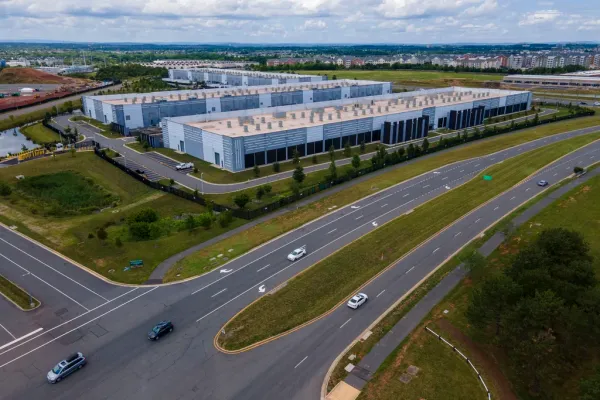
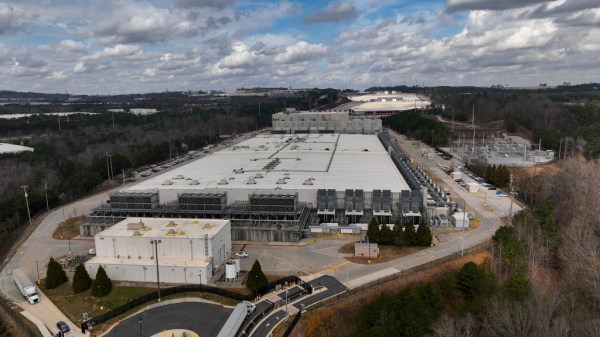
Unlike many office developments, AI infrastructure depends on massive computing infrastructure. Data centers require substantial electricity, fiber-optic connectivity, and water resources for cooling, making them one of the most visible and controversial components of the emerging AI economy.
At the same time, companies building AI software, aerospace technology, and cloud computing services are looking for places with skilled workers and room to grow.
Virginia‘s experience has become a cautionary tale. Northern Virginia now hosts the world’s largest concentration of data centers, but rapid growth has sparked backlash over energy demand, water use, transmission lines, and development pressures.
Florida lawmakers, like Overdorf, have watched those debates closely. Rather than creating a patchwork of state-specific AI regulations, he said Florida has largely deferred to expected federal standards while moving to address needs residents are speaking up about.
“We agreed with the president that we would go ahead and have a policy that, No. 1, any data center that comes in would, in fact, not affect the rates associated with electricity for the area that is surrounding that specific data center,” Overdorf said.
He also said projects must still obtain permits through the Florida Department of Environmental Protection and the state’s water management districts, demonstrating they will not create a burden on communities and the environment.
Overdorf argued that data centers can become anchors for rural communities, providing high-paying jobs and expanding local tax bases while occupying relatively compact footprints compared with large residential subdivisions.
The state has also resisted requiring communities to accept projects they do not want.
“If you want this, great. If you don’t want this, great,” Overdorf said. “We’re not telling you what you can and can’t do when it comes to this type of use.”
ABIGAIL SPANBERGER DEFENDS RECORD AT SIX-MONTH MARK WITH APPROVAL RATING UNDERWATER
To Overdorf, those safeguards give Florida an opportunity to avoid conflicts now unfolding elsewhere while remaining competitive for technology investment.
Conservation groups agree that the state’s planning framework provides an advantage. The challenge, they say, is ensuring those plans continue to guide where development occurs as demand for AI infrastructure accelerates.
It’s the ‘where and the why’
For Greg Knecht, the executive director of the Nature Conservancy in Florida, the debate surrounding data centers often misses the bigger picture.
While public attention has largely centered on data centers, he argued the issue facing Florida is much broader than a single industry.
From his perspective, Florida’s population will continue growing regardless of whether the next wave of investment comes from AI, aerospace, manufacturing, or another industry. The challenge, he said, is ensuring that growth follows a long-term plan instead of unfolding project by project.
“The fact is that Florida is going to continue to grow,” Knecht said. “We’re not saying stop coming. Both things can happen. We need to be smart about it. We need to be thoughtful about it.”
That is why he believes Florida already has one of the tools it needs in the Florida Wildlife Corridor. Knecht said the corridor is more than a conservation project. It’s a blueprint for future development.
“That’s the first place we should avoid,” he said. “The places outside of that should be places we should be thinking about where development of all different kinds is more appropriate.”
That does not mean every acre outside the corridor should be developed, nor does it mean the corridor should remain untouched. Instead, Knecht pointed out efforts such as “corridor-compatible communities,” which encourage developers to cluster homes, preserve open space, use native landscaping, and build around wildlife rather than through it.
“What we don’t want to do is drop into the middle of the corridor and start fragmenting the corridor itself,” he said.
Whether the next proposal is a data center, manufacturing plant, or housing development, Knecht said the same question applies: Does it belong there?
“I think it’s bad policy to single out any one particular industry,” he said. “I think we need a comprehensive approach to the what and the where and the why.”
In some cases, Knecht argues that a single large technology campus may even have a smaller long-term footprint than the alternative.
TOP ECONOMISTS AND AI LEADERS WARN OF ‘UNPRECEDENTED TRANSFORMATION’
“I’d much rather work with one innovative company than 1,000 new homeowners,” he said. “If it’s the same footprint, I’d much rather work with one who can be innovative and help solve some of our water and land resource challenges.”
That may ultimately be the question Florida faces as it competes for the next wave of technology investment. The state spent years preparing to become both an innovation economy and a conservation leader. Whether those ambitions remain compatible may depend less on the industries Florida attracts than on whether it continues directing growth to the places it planned for all along.