

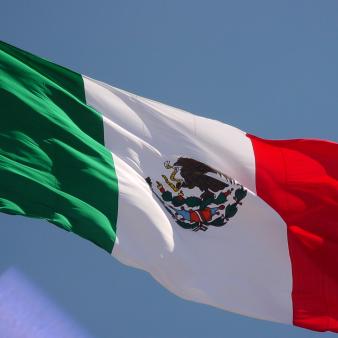
The day after his inauguration on December 1, Mexican president Enrique Peña Nieto joined with leaders of the country’s two main opposition parties to sign the “Pact for Mexico,” a joint pledge to pursue dozens of domestic reforms in areas such as education, telecommunications, and energy. At the time, it was unclear how soon the most controversial reforms would be adopted, or whether they would be adopted at all. Mexico had suffered from years of legislative gridlock, and powerful interest groups were determined to protect their turf. Did the Pact for Mexico represent a historic breakthrough? Or was it mostly a symbolic gesture?
Thus far, it seems that the agreement really was a breakthrough. On February 25, Peña Nieto approved the most ambitious Mexican education reform in several decades, a reform that will hopefully raise standards for teachers and make their promotions contingent on classroom performance. (A day after the education reform became law, the leader of Mexico’s most powerful teachers’ union—a woman long suspected of massive corruption but also considered politically untouchable—was arrested and accused of embezzling more than $200 million.) On March 21, the lower house of the Mexican congress passed a telecom reform that will promote greater competition and make it easier for the government to crack down on monopolistic practices. The telecom reform is now being considered by the Mexican senate, and is expected to win approval sometime this month.
Recommended Stories


Not surprisingly, foreign observers have praised Mexican officials for rising above partisan politics and working together to address longstanding problems. In a recent editorial, the Christian Science Monitor hailed the Pact for Mexico and the country’s subsequent reform spree as a model for U.S. lawmakers on Capitol Hill. Depending on how the education reform is implemented, it could dramatically boost the quality of Mexican schools, and thus the achievement levels of Mexican students. And the telecom reform will almost certainly make the Mexican economy more competitive.
But the biggest challenge for Mexican reformers lies ahead. I am referring to Pemex, the 75-year-old state oil monopoly, which represents the most notable “third rail” issue in Mexican politics. Since its creation in the 1930s, Pemex has been a prominent symbol of both Mexican nationalism and Mexican corporatism. Its iconic status has prevented multiple generations of presidents and lawmakers from doing what is necessary to make the Mexican oil industry more productive.
As a result, writes Financial Times correspondent Adam Thomson, Pemex has become notorious for “inefficiency, corruption, and, above all, monumental losses.” (An explosion at its headquarters on January 31 left 37 people dead.) Last year, for example, the company reported approximately $130 billion worth of sales; and yet, “only exploration and production, one of its four subsidiaries, regularly turns a profit.” In 2012, the three other Pemex subsidiaries “racked up a combined net loss of 111.6 billion pesos—about the same as the entire government budget of Bolivia.”
The company is now carrying more than $51 billion in net debt, and its oil production has declined every year since 2004, dropping from a peak of 3.4 million barrels per day to fewer than 2.6 million. In fact, Mexico could conceivably become an oil importer sometime within the next decade; the U.S. Energy Information Administration believes it could happen by 2020.
Mexico’s problem isn’t a lack of proven oil reserves; according to the latest government estimate, it has nearly 13.9 billion barrels’ worth. For that matter, The Economist is right: “Mexico could be an energy superpower,” if only it would adopt the necessary reforms. Roughly half of its oil lies in deep-water areas, and Pemex is poorly equipped to extract it. That’s why Mexico desperately needs greater private investment by foreign multinationals. As energy expert Robert Bryce has written, “Excessive nationalism and fear of foreign investors have prevented the country from developing new oil fields, either on- or offshore. The result has been near-total reliance on a handful of fields.”
Meanwhile, the Mexican government has developed an unhealthy dependence on Pemex oil revenue, which accounts for up to 40 percent of the national budget. This means that Pemex is shouldering a heavy tax burden, in addition to an excessively large workforce. The bloated workforce is a consequence of collective-bargaining agreements signed with the might Pemex union. According to Thomson, the company has around 11,000 workers who collect salaries “without actually having any work to do.” Thus, Pemex reform should include a significant downsizing of the workforce, and it should be paired with broader tax reforms that broaden and diversify the Mexican government’s revenue base.
Needless to say, these reforms will be difficult to achieve. But the Pact for Mexico shows that all three of the country’s main political parties are willing to consider policy changes that would help boost Mexican oil production, and the ruling Institutional Revolutionary Party (known by its Spanish acronym, PRI) has formally revised its platform to remove the language opposing Pemex reform. On the other hand, Peña Nieto’s energy secretary has rejected the idea of privatizing Pemex.
If Mexican policymakers seize the moment and forge ahead with a bold plan for transforming the oil industry, their country truly could become an “Aztec tiger.” After all, for two years in a row, Mexico has grown faster than Brazil, and it has rapidly become a global manufacturing powerhouse (thanks in part to rising labor costs in China). Andrew Selee of the Wilson Center observes that Mexico’s average income “has more than doubled in real terms since 1997,” thereby reducing the U.S.-Mexican wage gap significantly. (Mexico’s average income is now comparable to that of Malaysia, Russia, and Turkey.) Between 2000 and 2010, some 17 percent of Mexicans entered the middle class, and inequality declined more in Mexico than it did in Brazil, according to the World Bank.
In other words, most of the economic news from Mexico is quite positive. But the country will never realize its full potential without overhauling its oil sector. The Mexican energy ministry believes that the reforms under discussion could boost annual GDP growth by up to 2 percentage points. Indeed, if Peña Nieto could seriously reform Pemex, it would be the ultimate “game changer” for the Mexican economy.
Jaime Daremblum, who served as Costa Rica’s ambassador to the United States from 1998 to 2004, is director of the Center for Latin American Studies at the Hudson Institute.
