

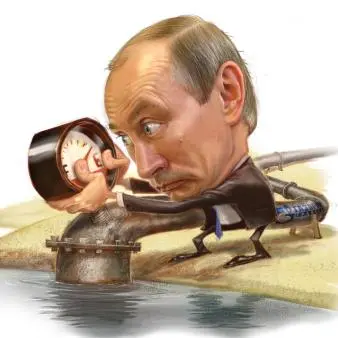
The Cold War is now so over that it might as well be grouped with the ancient ice ages, but there is one echo rolling across Europe from East to West: the Russian attempt to dominate the natural gas market on the European continent. As the energy sector accounts for 25 percent of Russia’s economy, any large changes in energy markets present major challenges for Vladimir Putin. Those old enough to recall the Soviet gas pipeline controversy of the early 1980s—a high-profile fight of the Reagan administration to deprive Moscow of hard currency—are right to have a feeling of déjà vu, as Putin’s motives transcend honest commerce.
Despite huge gas reserves waiting to be tapped, most of Europe lags the United States in the shale gas boom for several reasons: a lack of mineral rights on private land, bureaucratic obstacles, the usual intransigent opposition from Europe’s potent green lobby, and, perhaps most important, the lack of adequate pipelines to connect new gas fields to the market. Hence, natural gas prices in Europe are several times higher than U.S. prices. Since natural gas and oil are Russia’s principal export commodities, the prospect of newly abundant oil and cheaper gas outside of Russia is a grave threat to Russia’s economic and political might in the region. Russia can’t do much about global oil trends, but Putin and the state-controlled Gazprom are doing everything they can to throttle new gas development in Eastern Europe, rerunning the same kind of behind-the-scenes propaganda against shale gas that the KGB ran against new NATO missiles back in the Cold War. Propagandists in Russia are promoting every translation possible for the message fracking=bad. The second prong of Putin’s strategy is to control pipeline development as far as possible. But things are not going well for him.
Stay informed.Stay ahead.
Join Washington Examiner for unlimited access to the news, analysis, and commentary that matter most.
Already a member? Log in
