

The Iran war has increasingly focused on key energy infrastructure, with several major oil and gas assets, including facilities and shipping routes, shaping the course of the fighting and global energy markets.
At stake is not just Iran’s ability to fund itself in the war but also the stability of the global energy supply. A handful of chokepoints, export hubs, and production centers determine whether oil continues to flow from the Middle East.
Stay informed.Stay ahead.
Join Washington Examiner for unlimited access to the news, analysis, and commentary that matter most.
Already a member? Log in
Strait of Hormuz
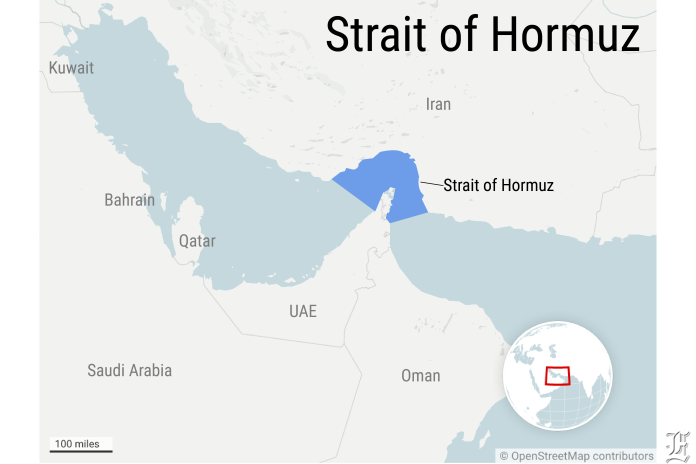
The Strait of Hormuz sits at the forefront of the conflict. The vital shipping lane between Iran and Oman is where nearly one-fifth of the world’s oil supply travels through, roughly 20 million barrels of crude oil a day, as well as large volumes of liquefied natural gas.
Any disruption to traffic through the strait has immediate global implications, and Iran has used that to its advantage, effectively shutting down the strait. Traffic through the strait dropped by roughly 97% after the war began on Feb. 28, and oil prices have soared, reaching over $100 per barrel at one point.
Although Iran has shut down shipping through the strait, it has allowed its own so-called shadow fleet tankers to transport oil while also attacking other countries’ ships in an attempt to maintain profits amid the monthlong war.
Since the war reached the one-month mark, Iran has also allowed select countries’ ships to pass through the strait, though traffic is still significantly lower than before the war.
Due to the closure of the strait and the ultimate effects on oil prices, President Donald Trump has repeatedly threatened Iran’s power plants.
The president has also taken a less militaristic stance and offered peace negotiations to open the waterway. Iran has denied having engaged in such negotiations with the United States, but a reported five-point draft of the country’s terms for peace included complete control over the Strait of Hormuz.
Kharg Island
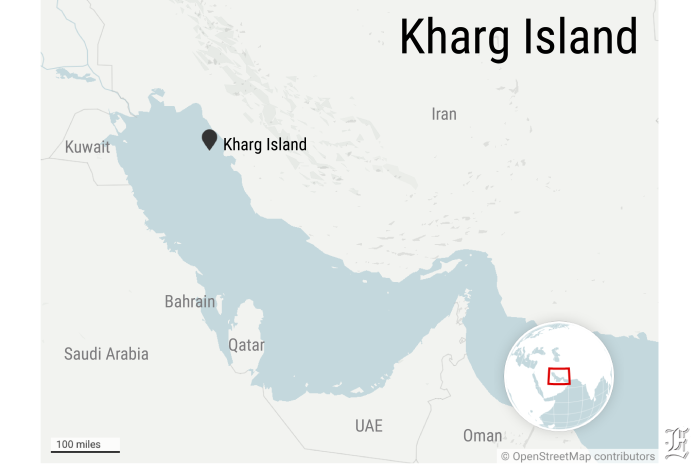
Iran’s ability to ship oil also hinges on Kharg Island, which handles 90% of its crude exports and is its main export terminal in the Persian Gulf. The facility handles the vast majority of the country’s crude exports, making it a central source of government revenue.
Kharg Island is located roughly 16 miles off the coast of Iran and hosts a terminal that handles millions of barrels a day.
As long as Kharg Island remains operational, Iran can continue to generate income from oil sales that help sustain its economy and military operations. At the same time, its importance makes it a possible target, with any significant damage likely to reduce Iran’s export capacity sharply.
On March 30, Trump vowed the complete destruction of the island if Tehran does not agree to Washington’s peace proposal, but doing so would not only hurt Iran but send oil markets into a further spiral.
As a more advantageous option for the U.S., Trump previously told the Financial Times he was considering sending troops to seize the island and “take the oil in Iran.”
On June 11, Trump escalated pressure by threatening to seize Kharg Island, calling it a central target in efforts to cut off Iran’s oil income.
The Red Sea
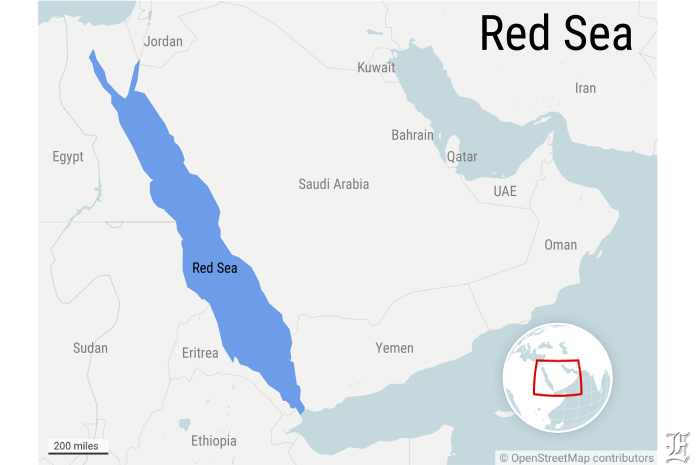
Beyond the Persian Gulf, the Red Sea has emerged as another critical front. Shipping routes through the Bab al Mandeb Strait link Middle Eastern exports to Europe and global markets.
Iran-aligned Houthi forces in Yemen entered the war Saturday, sending a barrage of missiles toward “sensitive Israeli military sites.” The Houthis’ action has prompted concern that Iranian proxies may attempt to block another vital shipping route.
Similarly to the Strait of Hormuz, the Bab al Mandeb Strait connects the Red Sea to the Gulf of Aden and is a crucial waterway through which 12% of the world’s seaborne traded oil flows, roughly 9.3 million barrels a day.
Dubbed the “Gate of Tears,” vessels arriving from the Indian Ocean pass through it to reach the Red Sea and then the Suez Canal, making it one of the fastest routes between Asia and Africa. If the Bab al Mandeb Strait were to be impaired, shipping would be rerouted down and around Africa’s southern peninsula, adding weeks to already strained oil shipments.
Iran has said it would look to Bab al Mandeb if the U.S. were to deploy ground troops in the Middle East, and such a shipping incursion is possible as its Houthi proxies have the weapons capabilities to strike ships seeking passage.
An unnamed Iranian military official was quoted on Iranian state media saying the strait “is among the most strategic straits in the world, and Iran has both the will and the capability to pose a fully credible threat against it.”
Saudi Arabia’s Yanbu coast, which also houses several refineries, is considered a rerouting opportunity as the Strait of Hormuz remains a security risk. Saudi Arabia can pump oil to the west and ship it through the Suez Canal rather than pump to the east and ship through the Strait of Hormuz.
Houthi forces in Yemen, who are aligned with Iran, continued threatening maritime traffic tied to the U.S. and Israel, preventing a broad return of commercial shipping through the Red Sea and Suez Canal corridor.
Following the U.S. naval blockade of the Strait of Hormuz, Iran threatened to block all trade through the Red Sea. Iran would have had to enlist the help of the Houthis, but Tehran has little control over the group. Additionally, such military action would require more naval assets than Iran has available.
Refineries and production
The broader regional energy system relies on a network of production sites, refineries, and export terminals that collectively sustain global supply.
Within Iran, oil production is concentrated in the southwest, particularly in Khuzestan province, which accounts for most of the country’s crude output.
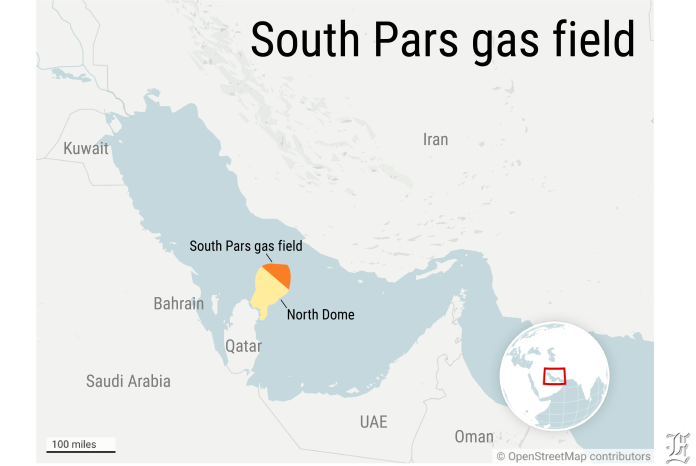
Offshore, the South Pars gas field, shared with Qatar, is one of the world’s largest natural gas reserves and a cornerstone of Iran’s domestic energy. Iran is heavily reliant on its natural gas for domestic consumption, and roughly 80% of this natural gas comes from South Pars, meaning that every public service and economic activity directly stems from the field.
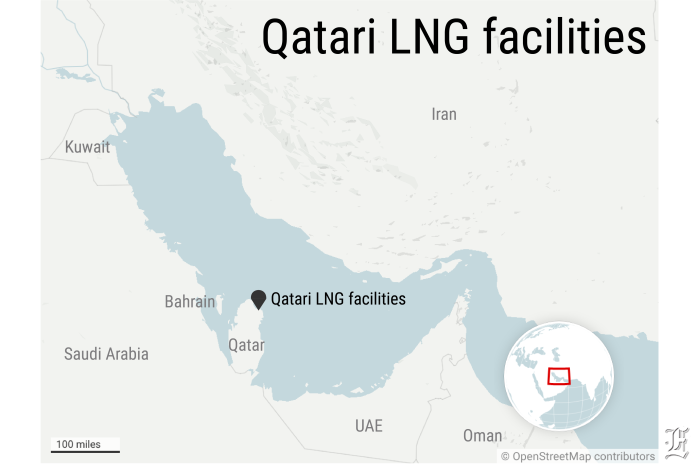
On the Qatari side, the same field supports one of the world’s largest LNG operations. Qatar is a leading LNG exporter to Europe and Asia, and its facilities are critical to global gas markets. Any disruption to Qatari LNG production or export terminals would likely have immediate effects on global prices.
TRUMP’S TWO PATHS FOR IRAN WAR: NEGOTIATION OR ESCALATION
Elsewhere in the region, major refining and export infrastructure plays a stabilizing role. Saudi Arabia’s Ras Tanura facility is among the largest oil processing and export hubs in the world, handling millions of barrels per day. Its continued operation is central to maintaining supply levels.
In the United Arab Emirates, the Fujairah oil terminal provides a key export hub outside the Strait of Hormuz, while the Ruwais refinery is one of the largest complexes in the Middle East. Both allow the UAE to continue exporting oil even if Gulf transit routes are disrupted.
