

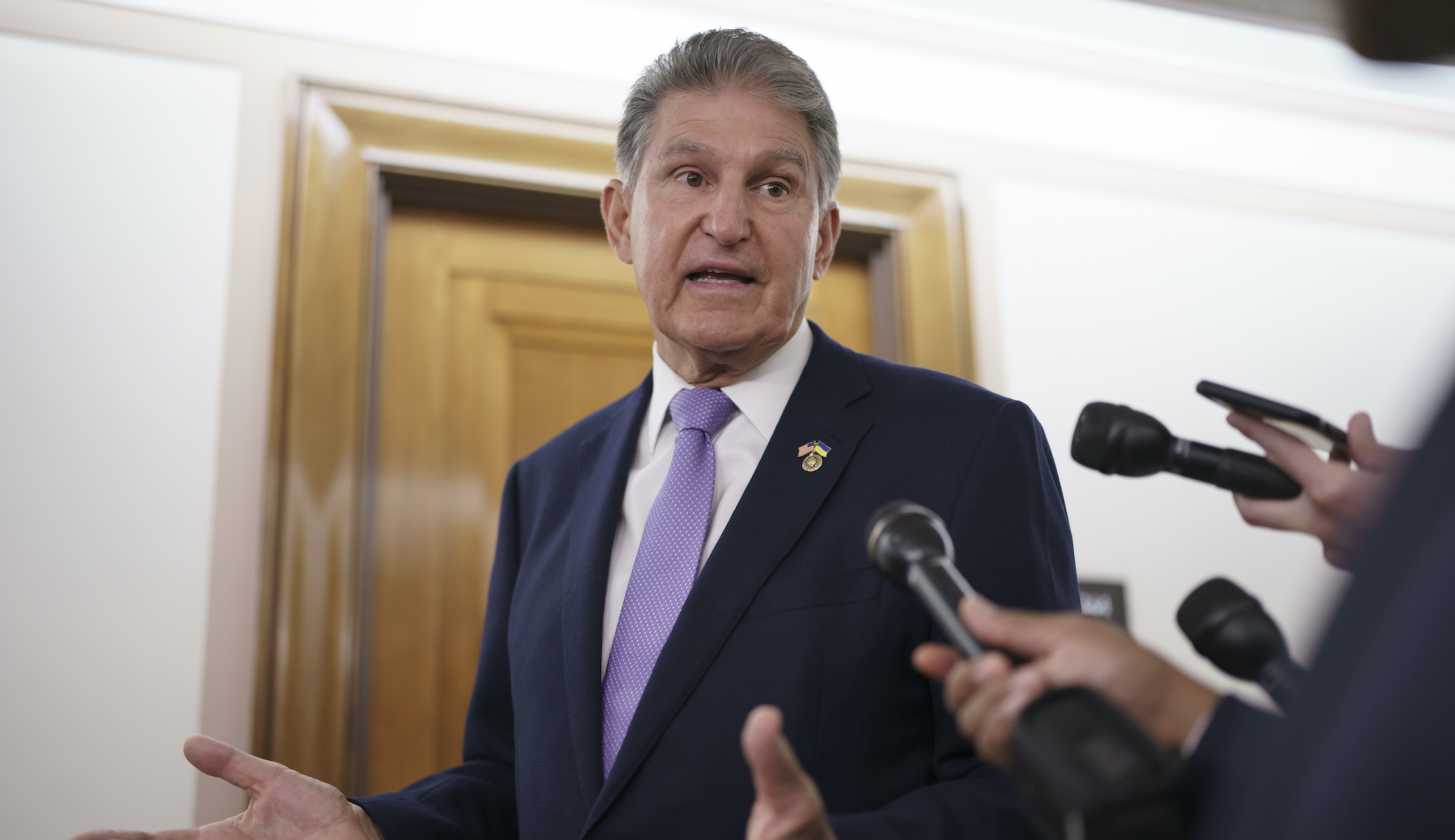
Sen. Joe Manchin (D-WV) agreed to support hundreds of billions of dollars’ worth of incentives for energy– and climate-related provisions following months of negotiations over what would make the cut in the successor to Democrats’ failed Build Back Better Act.
Details of the Inflation Reduction Act of 2022, agreed to by Manchin and Majority Leader Chuck Schumer (D-NY) and announced Wednesday, remain sparse, but a primer says it encompasses $369 billion in “energy security and climate change programs” over the next 10-year period covered by the budget reconciliation legislation.
THE SHAPE OF THE ENERGY BATTLEFIELD
It’s unclear how exactly the two bills compare, but the House-passed Build Back Better Act, which Manchin backed away from in December, would have funded some $555 billion worth of energy and climate incentives, such as production tax credits for green energy technologies.
The summary for Democrats’ new agreement also says the bill will “invest in domestic energy production and manufacturing” and reduce carbon emissions by roughly 40% by 2030.
The agreement is a marked victory for many Democrats, industry groups, and environmentalists who have been working toward an agreement before Congress’s August recess.
Manchin said on July 15 that he wasn’t ready to support a larger bill covering taxes and energy because he feared doing something that would inflame inflation further. Manchin said he asked Schumer to return to talks over tax and energy provisions after July’s inflation numbers were published.
The Senate Energy and Natural Resources chairman also criticized the Biden administration and much of his party, which he said wanted to “eliminate, eliminate, eliminate” the use of fossil fuels in favor of renewable energy sources.
“I’m not going to be part of eliminating what this country needs to run the economic engine and the lives of human beings throughout America,” Manchin said.
Manchin described the agreement Wednesday as “truly all of the above” and said it invests in hydrogen, nuclear, and renewable energy, fossil fuels, and energy storage.
The agreement also calls for “comprehensive permitting reform legislation,” the need for which fossil fuel backers and many renewable energy proponents alike consider necessary to more quickly stand up energy infrastructure, to be passed before the end of the fiscal year.
Clean energy groups hailed the agreement Wednesday. “This is an eleventh-hour reprieve for climate action and clean energy jobs and America’s biggest legislative moment for climate and energy policy,” said Heather Zichal, CEO of the American Clean Power Association.
Others, however, were critical that the bill isn’t aggressive enough and is concessionary to fossil fuel interests.
CLICK HERE TO READ MORE FROM THE WASHINGTON EXAMINER
“Streamlining permitting for natural gas pipelines and exports is not climate action — it is the opposite,” said Wenonah Hauter, executive director of the environmental policy group Food & Water Action.
