

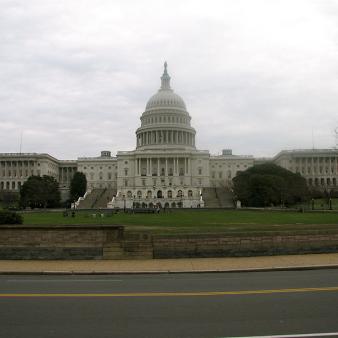
To meteorologists, an inversion is a deviation from the normal change of an atmospheric property. It can lead to pollution and adverse health effects. To Wall Street dealmakers, and now to most boards of directors, an inversion is a cross-border merger that allows the buyer to reincorporate in a more tax-friendly jurisdiction. It can lead to pollution of the hot air emitted in the Congress, and adverse effects on the health of the U.S. Treasury. And most of all, to big tax savings. The merging parties pay lip service to the idea that such deals produce companies that are efficient at more than reducing their tax bills, but that is because they want to appear skilled industrial strategists rather than the tax avoiders (not evaders) they really and legally are.
This tactic received maximum publicity during Pfizer’s failed attempt to take over Britain’s AstraZenica, with the result that no board of directors of an American company can fail to explore the possibility of a tax inversion: do it or have a very good reason to offer to shareholders for not doing it. That’s because our corporate tax rate, at 35 percent, is the highest in the world (not counting countries where de facto tax payments, also known as bribes, are not included in the official rate). And because America uniquely does not tax profits earned overseas until they are brought home. So do a tax inversion deal, lower your effective tax rate to increase shareholder returns, and bring cash home at advantageous rates. Very tempting, although for companies that can use a variety of features in the complex U.S. tax code to keep their effective rate—what they actually pay—below the 35 percent rate, less attractive than for others.
Recommended Stories


This tactic is enormously popular in the medical and pharmaceutical industries, the latter arguably facing strategic as well as tax incentives to consolidate: patents are expiring on profitable drugs and the belief is widespread that consolidating research efforts will result in savings that more than offset the lost competitive goad to progress. The most recent large inversion saw Meditronic, a maker of medical devices, merge with Ireland’s Covidien. All of Meditronic’s key staff will remain in Minneapolis and Covidien’s in Mansfield, Massachusetts. But since Covidien is already domiciled in Ireland (corporate tax rate 12.5 percent), the merged entity will be able to use some of Meditronic’s estimated $20 billion cash pile to pay off debt and finance the acquisition without incurring the 35 percent U.S. repatriation tax, with no inconvenience to any of its top employees.
Dealmakers and corporate boards are in a frenzy lest they miss out on this deal of the century—there is almost free money on the table, waiting for inverters to pocket it if they act before the government closes what many politicians see as a loophole. Indeed, it was just such “execution risk” AstraZeneca used as one of its reasons for rejecting its suitor. “The question is what the government is going to do about this, and how quickly they’re going to shut the loophole down,” says Gordon Hamilton, head of health care mergers at Cavendish Corporate Finance. Senate Finance Committee chairman Ron Wyden, a Democrat from Oregon, has his own answer. He told reporters that he would not “sit idly by” while companies “figure out how to hot-wire a way to tap into a loophole” that he wants to close retroactive to May 8 (assuming retroactive legislation is not unconstitutional).
Wyden’s colleagues know that the relatively high U.S. corporate rate creates difficulties for those of our companies that compete in globalized markets. Some even know, as Rob Portman, their very sensible Republican colleague from Ohio, recently reported, “Every single one of our major foreign competitors has reduced its corporate rate in the past 20 years.” But they know three other things.
First, it is impossible to pull on one loose thread in the tax without unravelling the entire code: better to wait for comprehensive tax reform. Second, and most important, congressional elections are only four months away. Third, confidence in Congress now stands at an all-time low of 11 percent (compare the military, 82 percent; small business 67 percent, television news 23 percent), in part because voters feel legislators have done a great deal for Wall Street—bank bailouts—and nothing to stop foreclosures on Main Street. To cut corporate rates so soon after imposing on individuals one of the largest tax increases they have been asked to bear since World War II—hidden in Obamacare but biting nevertheless—might be the straw that breaks the back of any reelection campaign already weighted down by the president’s poor approval ratings.
So despite Wyden’s statement, and I am told that he has lost interest in not “sitting idly by,” there is little significance to the sound and fury of senators who are always upset at legal solutions to uncompetitively high taxes. They are most likely to do not much and certainly not soon. Yes, there is a bill in the Senate that would limit inversions to mergers in which the foreign partner is equal in size to the American acquirer, rather than at least 20 percent as large as the law now stands. But my guess is that economist Douglas Holtz-Eakin, president of the American Action Forum, a Washington think tank, and former adviser to John McCain during his 2012 campaign for the presidency, has it right. Holtz-Eakin, as well or better informed about congressional thinking than anyone in the capital, tells me that some Democrats would like to end inversions, but they have no chance of getting the sixty votes they would need in the Senate. And if they somehow did, the bill would be killed in the Republican-controlled House, where the leadership prefers reducing the corporate tax rate to something like 25 percent as part of an overall reform of the tax code, expected after the November elections.
So there will be more inversions. Whether the economic effect of the revenue lost to the Treasury will be more than offset by an accelerated repatriation of foreign earnings now sitting idly in foreign banks will soon be the subject of more than few scholarly papers.
