There are a number of structural impediments to achieving “complete and irreversible denuclearization of North Korea,” the stated policy goal of the United States and her allies. The North Korean regime—while it may in fact be committed, at some level, to economic liberalization—has every reason for keeping its weaponry: defensively, because the Kims have (probably rightly) determined that only nuclear weapons will ensure their survival. And offensively too, because the regime is ideologically committed to absorbing South Korea one day. Nuclear weapons are an important part of the strategy for achieving that long-held goal, too. And then there’s the matter of verification. Even if North Korea commits rhetorically to denuclearizing, the Kim regime controls a vast, mountainous, poorly understood land. It wouldn’t be that hard to obscure parts of a still extant program.
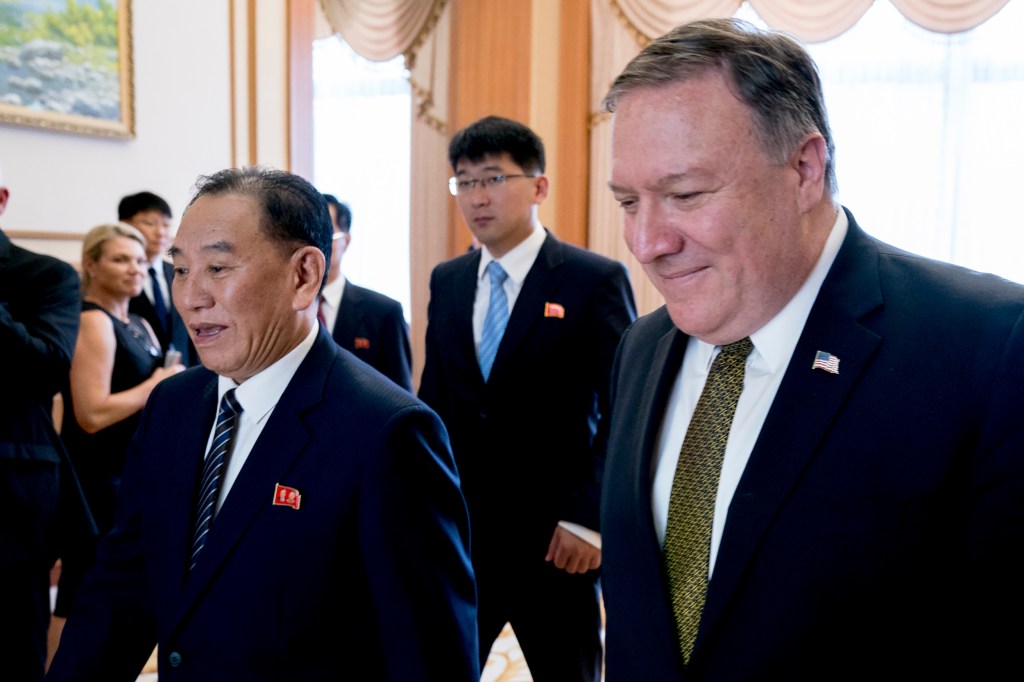
But there’s another reason, too, for the apparent breakdown of talks between Secretary of State Mike Pompeo and his North Korean counterpart. North Korea claims that Pompeo, during his third visit this year to Pyongyang, made a “unilateral and gangster-like demand for denuclearization.” The talks between North Korea and the U.S. are apparently in real trouble.