

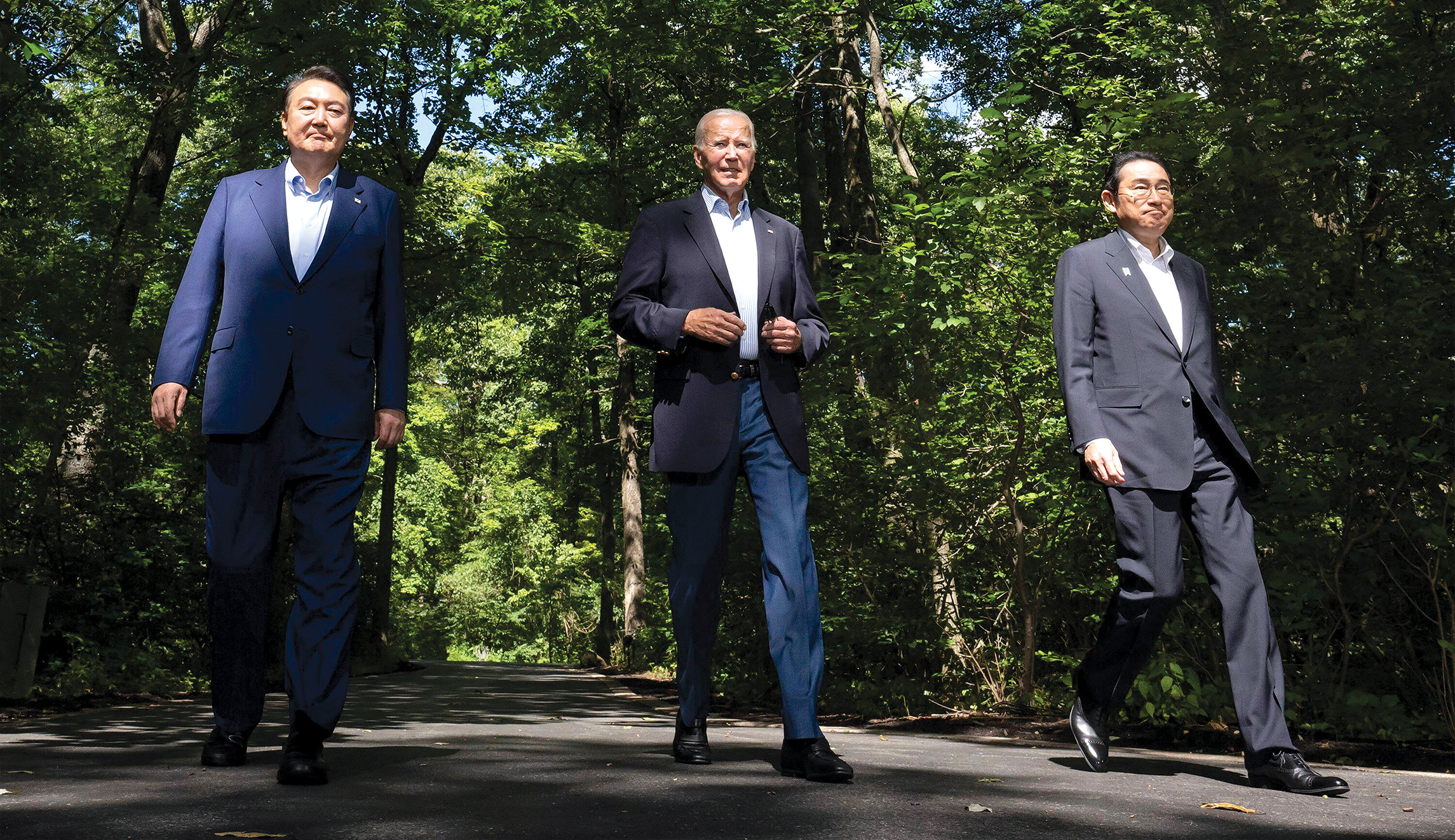
The outcome of this month’s Camp David summit is anything but ordinary. The national leaders of the Republic of Korea and Japan met with President Joe Biden to discuss mutual commitments to fair economic practices, sovereignty, territorial integrity, and maintaining a free and open Indo-Pacific, along with rather specific and pragmatic steps to mature hard power within a tripartite regional security architecture. While such statements might seem routine, what the summit represents is the start of a political-military regional alliance architecture for Asia. And though much depends on the next presidential election, Washington’s ability to seize this momentum could go a long way in deterring military aggression from the biggest threat to peace in the region and the world: Xi Jinping.
South Korea and Japan, both important democratic allies of the United States, have had to overcome vexing hurdles to get to the success of Camp David.
Stay informed.Stay ahead.
Join Washington Examiner for unlimited access to the news, analysis, and commentary that matter most.
Already a member? Log in
