

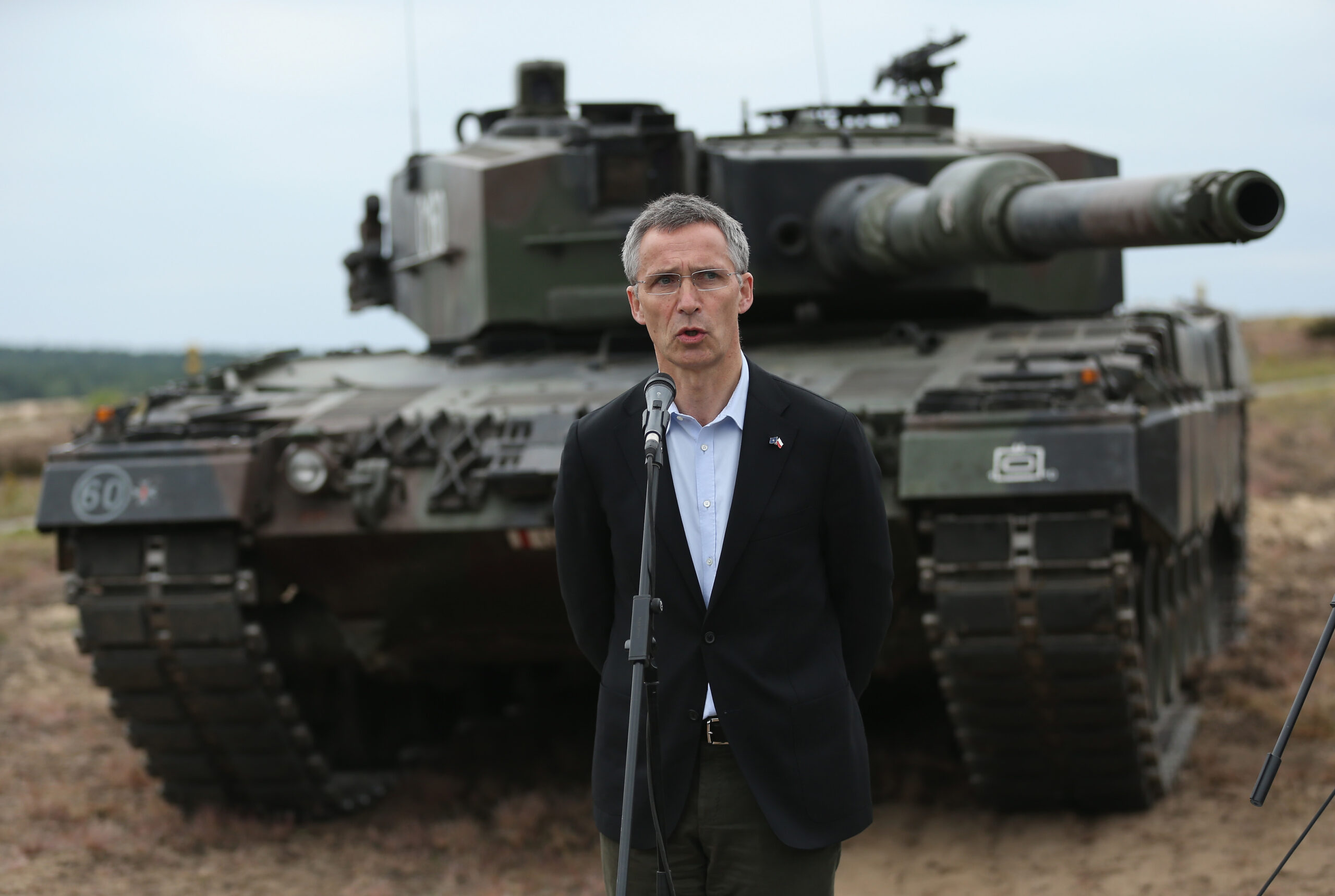
For much of the post-World War II era, the United States believed it required a military capable of fighting and winning two major conflicts at once. In no small measure this was a legacy of the war just fought, with major action in the Pacific against Imperial Japan and in Europe against Nazi Germany. But it was also a product of the nature of the threat posed by Soviet-led communism, which seemed determined to dominate the Eurasian landmass on both its eastern and western ends, and where possible to expand its sway in the Middle East. The two-war standard also had the advantage of giving the United States a built-in surge capacity for any unexpected war that went over and above its deterrence posture in Asia and Europe—something that came into good use, for example, in the First Gulf War when driving Saddam Hussein’s forces out of Kuwait.
Of course, it wasn’t always clear that the United States actually had sufficient forces to fight and win two major conflicts at once. And indeed, by early 2012, when the Obama administration issued its Defense Policy Guidance, it was clear that, at best, the U.S. military had the capacity to succeed in only one major conflict, while holding off, not necessarily defeating, an adversary in another region. Having reduced its active duty forces by nearly a quarter from 1991 to 2011 and severely cut military platforms such as tanks, submarines, and combat aircraft during the same period, while at the same time facing a more aggressive “rising power” in China, it was the Obama team’s strategic calculus that the time had come to “pivot” to Asia, declare European security a completed project, and draw down from the conflicts in the Middle East and Afghanistan. The United States would still be the preeminent military in the world, but it would no longer pretend to have the capacity to play the larger global role.
Stay informed.Stay ahead.
Join Washington Examiner for unlimited access to the news, analysis, and commentary that matter most.
Already a member? Log in
