Trump says Gulf States should recognize Israel as part of deal to end Iran war

Published May 25, 2026 9:48am ET | Updated May 25, 2026 9:48am ET


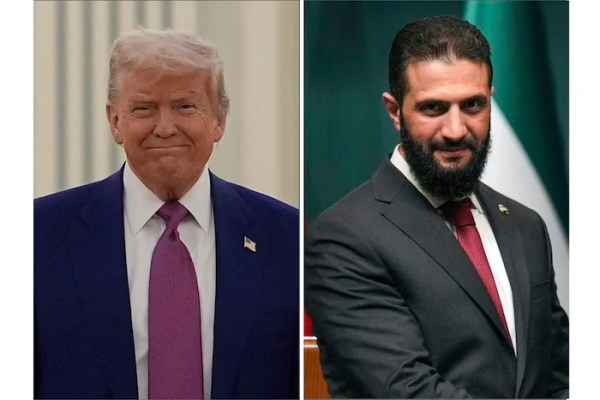
President Donald Trump said he is “mandatorily requesting” that several Gulf States join the Abraham Accords, a landmark agreement between Israel and multiple Arab nations to establish relations, as a part of a broader deal with Iran to end the conflict.

The Trump administration is negotiating an end to the war in Iran, but there have not yet been any breakthroughs, despite apparent progress. Trump, on Monday morning, took to social media to post that “it should be mandatory” that Saudi Arabia, the United Arab Emirates, Qatar, Pakistan, Turkey, Egypt, and Jordan, “at a minimum, simultaneously, sign onto the Abraham Accords.”

The president said he discussed the subject with the leaders of those countries during conversations over the weekend. He also referenced the UAE and Bahrain, both of which are already a part of the Abraham Accords, a landmark agreement from his first term as president. He did not say how their leaders responded to his suggestion.

“It may be possible that one or two have a reason for not doing so, and that will be accepted, but most should be ready, willing, and able to make this Settlement with Iran a far more Historic Event than it would, otherwise, be,” Trump said, adding, “Therefore, I am mandatorily requesting that all Countries immediately sign the Abraham Accords.”

Trump also suggested that Iran should join the Abraham Accords, although the idea is unlikely given Tehran’s pledged commitment to the destruction of Israel.

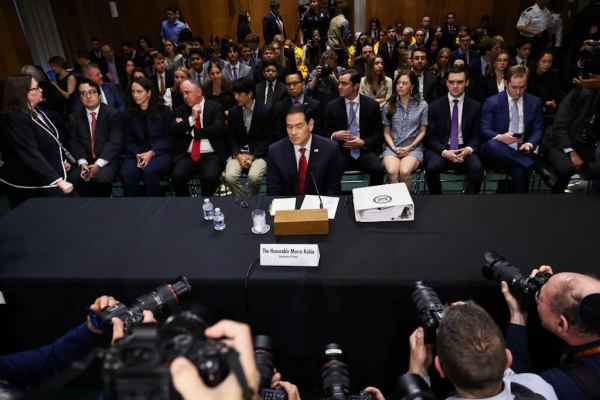
Secretary of State Marco Rubio said in India that the negotiations are “still a work in progress” and that there could be “some news” as soon as Monday.

“So we have what I think is a pretty solid thing on the table in terms of their ability to open up the straits, get the straits opened,” Rubio said. “It’s a very real, significant time limit of negotiation on the nuclear matter, and hopefully we can pull it off.  It has a lot of support in the Gulf.”

Esmaeil ​Baghaei, a spokesman for Iran’s foreign ministry, said Monday that Iran is ‌negotiating ⁠an end to the war and is not ​discussing ​its nuclear program, matching Rubio’s sentiment.

“The focus of the negotiations is on ending the war, and at this stage there is no discussion about nuclear details,” Baghaei said, adding that even though progress has been made on “a large portion of the discussion topics,” it does not mean that “the signing of an agreement is imminent.”

While Iran’s military capabilities have been diminished during the war, it has still been able to exert control over the Strait of Hormuz, a vital waterway for the transportation of oil and gas all over the world, which has caused negative economic impacts globally. Iran had not exerted this type of pressure, threatening to attack ships that do not pay it to pass through it, prior to the war. In response, Trump has instituted a blockade of the strait.

Media reports suggest the current deal being weighed by both the United States and Iran would reopen the waterway, cease hostilities, and set a time frame for further negotiations on Tehran’s nuclear program.

IRAN DEJA VU: US MAINTAINS IT INFLICTED MAXIMUM DAMAGE AS REPORTS SUGGEST OTHERWISE

The president said earlier this month that he would be willing to make a deal that called for Iran to halt its enrichment of uranium, which is also used in nuclear weapons, for 20 years. The U.S. also wants Iran to agree to allow either the U.S. or another third-party country to come in and recover its highly enriched uranium that is believed to be buried underground following the U.S. military’s attacks on three of Iran’s nuclear facilities last year.

However, it is unclear if Iran is willing to make these types of concessions. Trump has gone back and forth between pushing for a deal and threatening to resume offensive military operations if a deal cannot be finalized.