Treasury sanctions major Iranian cryptocurrency exchange

Published June 2, 2026 6:09pm ET


The Treasury Department announced Tuesday that it would target Nobitex, Iran’s largest cryptocurrency exchange, as part of a tranche of new sanctions addressing the nation’s ability to launder illicit funds.

The measures come as part of Operation Economic Fury, Treasury’s parallel effort to the military’s Operation Epic Fury. The department previously blacklisted two U.K.-based cryptocurrency exchanges with ties to the Iranian regime after Tehran’s crackdown on protesters across the country in January.

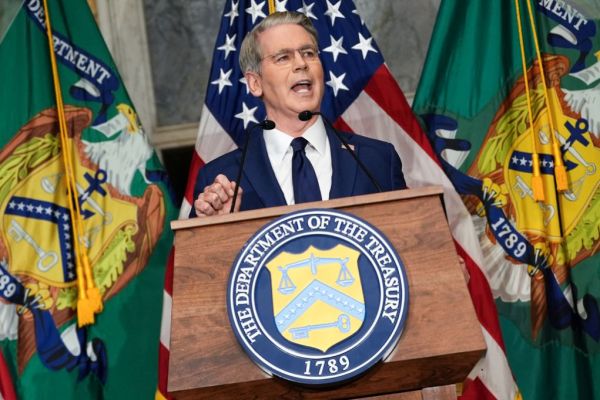
“While Iran’s economy is in free fall, the regime has chosen to co-opt digital asset technologies for its own corrupt agenda, including evading sanctions and transferring wealth out of the country,” Treasury Secretary Scott Bessent said in the Tuesday press release. “Iran’s current economic chaos is proof that President Trump’s maximum pressure campaign has been a success.”

Cryptocurrency plays a major role in Iran’s strategy to evade sanctions and monetarily support its terrorist proxy network across the Middle East. The Iranian cryptocurrency ecosystem reached over $7.78 billion in 2025. The Islamic Revolutionary Guard Corps accounted for roughly half of the country’s blockchain activity during the fourth quarter of that year, according to analysis firm Chainalysis. 

“We have seized about $1 billion of their crypto,” Bessent told Fox Business last week in an update on Operation Economic Fury. “Just outright grabbed the wallets.”

In March 2012, the SWIFT international payment network, the major artery for cross-border financial transactions, cut Tehran from its network. The network reconnected banks following the Obama-era nuclear deal in 2015, though it suspended Iranian banks again in 2018 to comply with pressure from the Trump administration.

Yet cryptocurrency operates on a peer-to-peer basis, meaning transactions are processed directly by the sender and recipient. That eliminates the need to rely on international financial infrastructure such as SWIFT. For the same reason, economic measures against cryptocurrency exchanges can be more difficult to enforce than traditional banking sanctions.

The Wall Street Journal reported in May that Binance, the world’s largest cryptocurrency exchange, facilitated $850 million in transactions for regime-affiliated businessman Babak Zanjani over two years. President Donald Trump pardoned Binance founder Changpeng Zhao in 2025 after he pleaded guilty to money laundering and tax crimes.

CRYPTO CLARITY: TIME FOR WASHINGTON TO TAKE THE FUTURE OF MONEY SERIOUSLY

In addition to the company itself, the Treasury’s Office of Foreign Assets Control introduced sanctions against Nobitex Chairman, co-founder, and former CEO Amir Hossein Rad, as well as other executives at the firm. The department also targeted Iran-based cryptocurrency exchanges Wallex, Bitpin, and Ramzinex.

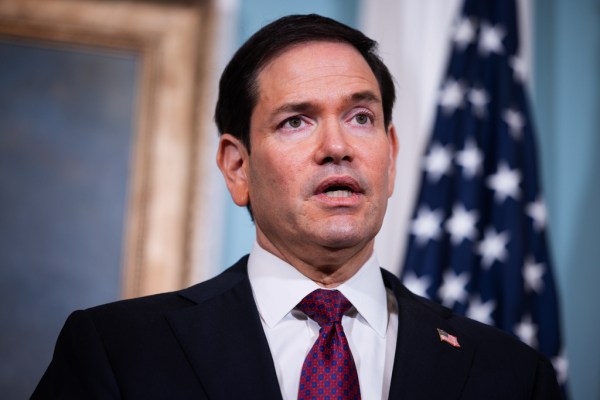
The new sanctions arrived on the same day that senior Trump administration officials descended on Capitol Hill for hearings with lawmakers. Secretary of State Marco Rubio told the Senate Foreign Relations Committee that Iran had agreed to negotiate on “aspects” of its nuclear program.