

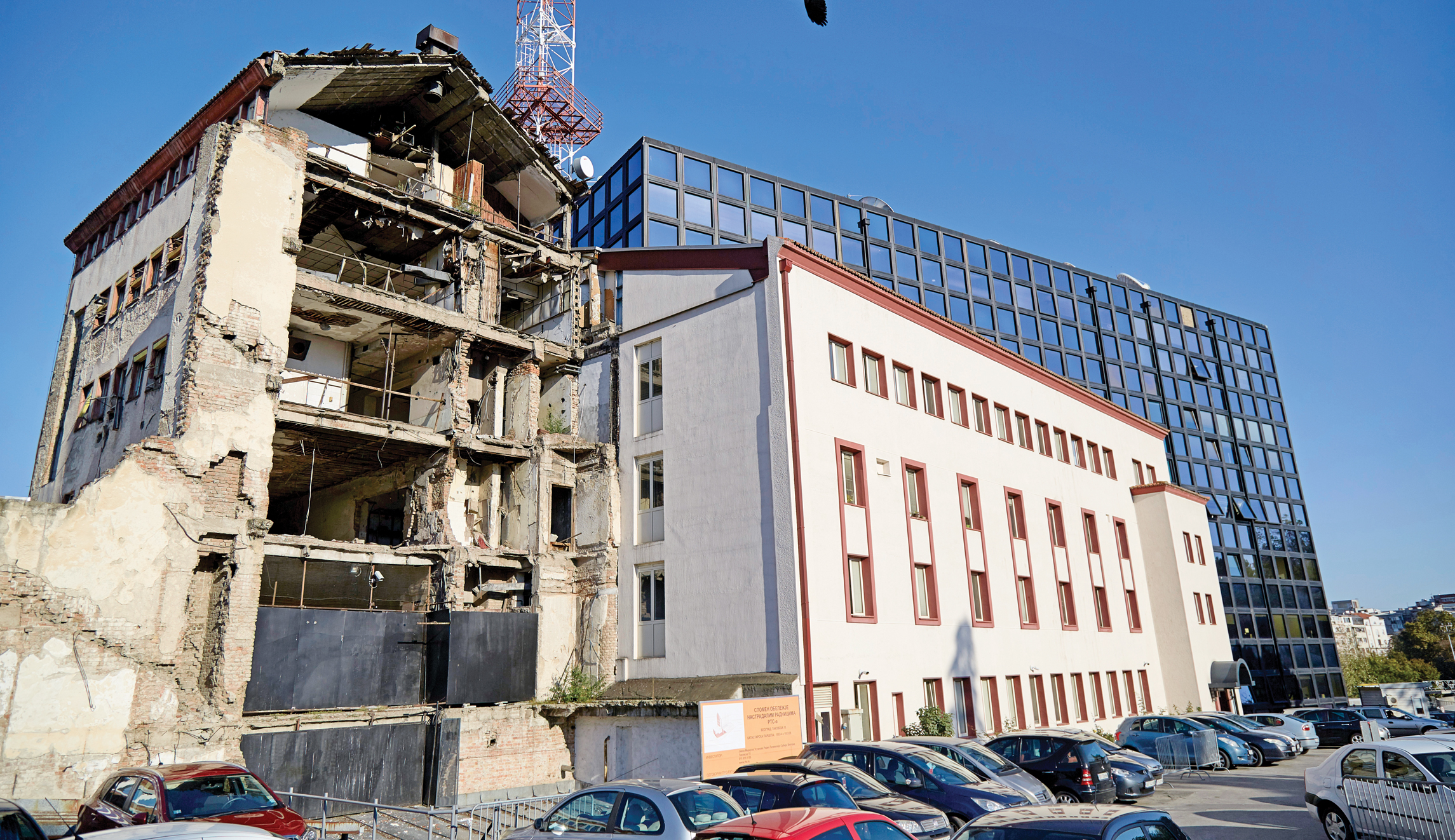
The 2,000-year-old city of Belgrade boasts a central fortress the Byzantines conquered from the Romans, a $3.5 billion glassy and garish waterfront development bought and paid for by the United Arab Emirates, Vienna Secession-style estates from the era of Austrian-Hungarian rule, Bauhaus and brutalist buildings built after the Iron Curtain fell, and, now, advertisements for Huawei everywhere. But if the Serbian capital’s physical space encapsulates the country’s past history of war and submission, no feature better epitomizes its schizophrenic present than the ruins of the old Radio Television of Serbia headquarters.
Bombed by NATO during the Yugoslav Wars, the state-run TV building remains in pieces long after the overthrow of Slobodan Milosevic and his murderous dictatorship. The Serbian government is perpetually torn between the past and the future, just as it is torn between West and East.
Stay informed.Stay ahead.
Join Washington Examiner for unlimited access to the news, analysis, and commentary that matter most.
Already a member? Log in
