

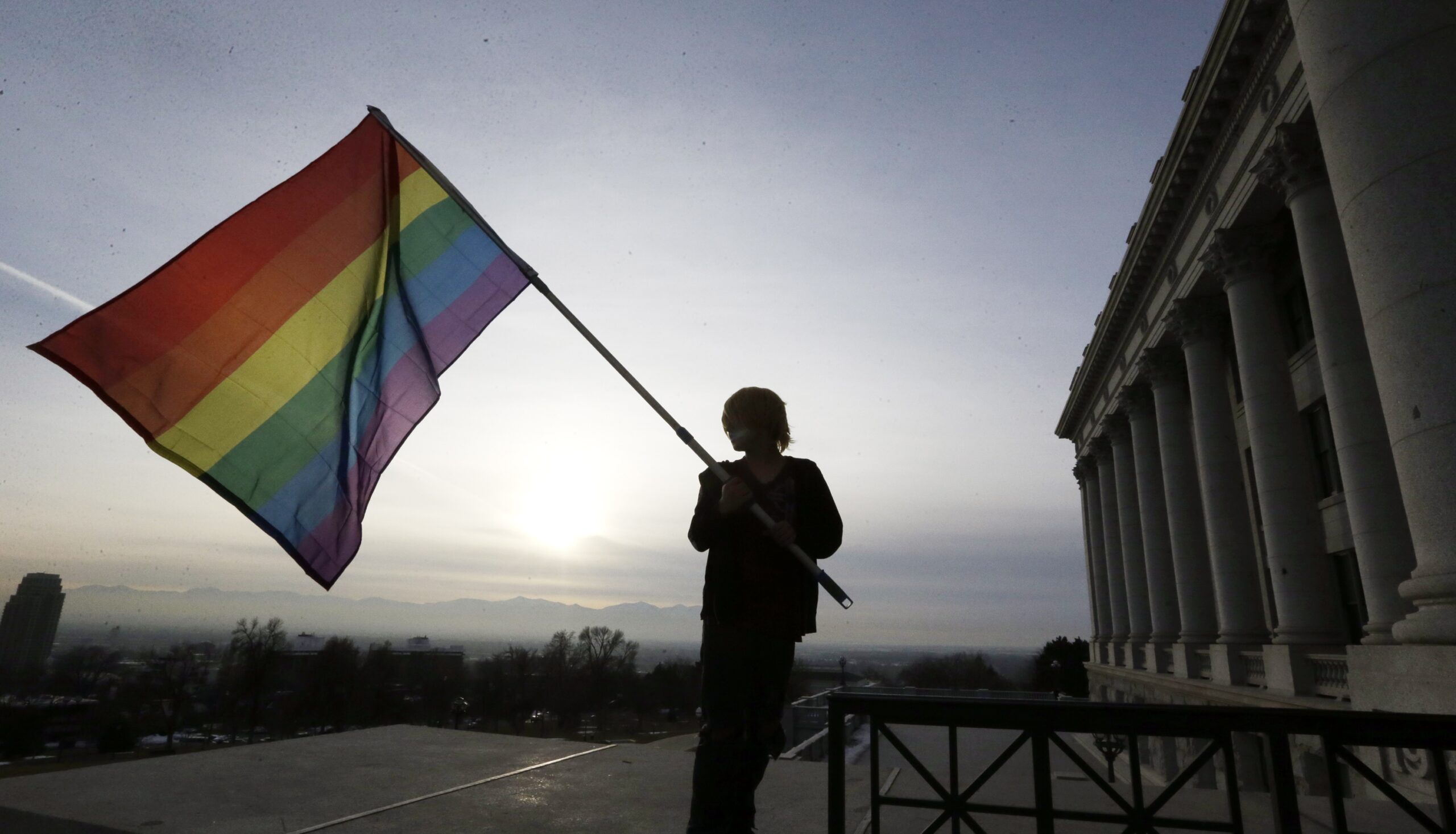
If the Supreme Court tells states to recognize same-sex marriage, the next front for gay rights activists is to ensure employers do too.
The nine justices will consider Tuesday whether all states must grant marriage licenses to same-sex couples — or at least recognize those issued by other states. If the court says yes to both questions, the remaining 14 states that don’t yet recognize gay marriage will be required to do so.
Recommended Stories


But that doesn’t mean employers will instantly be required to treat same-sex spouses just as they do opposite-sex spouses. While many have voluntarily decided to extend benefits like health insurance to spouses regardless of their gender, others haven’t done so for financial or religious reasons.
“The next step is to get rid of all that discrimination and get protection in the state laws,” said Bruce Bell, public engagement and information manager for Gay & Lesbian Advocates & Defenders. “There’s still a lot of work to do.”
Questions of whether businesses can use religious grounds to deny services for same-sex weddings have lately dominated the conversation around gay rights, with Indiana and Arkansas recently passing laws to provide business owners with such a defense.
But the question of whether they’ll be required to extend health benefits to same-sex spouses — assuming they choose to offer spousal coverage at all — has flown farther under the radar. About four in 10 employers that provide employees with insurance don’t offer it to same-sex spouses, according to a 2014 survey by the Society for Human Resource Management.
“It’s really kind of a novel issue,” said Jonathan Scruggs, an attorney for Alliance Defending Freedom, a legal group that takes on religious freedom cases. “It’s almost so new no one knows what to do.”
Requirements on insurance plans can be confusing, as they’re regulated by different laws. The self-insured plans that are offered by larger employers fall under the Employee Retirement Income Security Act, known as ERISA, which doesn’t require employers to offer spousal coverage at all or include same-sex spouses if they do.
Because the federal ERISA law is thought to trump any state regulations, it’s unclear whether states could force employers offering those kinds of plans to cover same-sex spouses.
Insurance plans offered by smaller employers are regulated by states. Some states, including Washington, say it’s illegal to extend benefits to straight but not gay spouses. But most states haven’t spelled that out, so right now the question is typically decided by however a plan defines “spouse.”
Gay rights advocates hope — and religious freedom advocates worry — that by ruling in favor of gay marriage, the Supreme Court could make it easier for workers to sue their employers over the issue by arguing that sexual orientation should be a protected class in Title Seven of the Civil Rights Act, which bans certain kinds of employment discrimination.
“If the Supreme Court says the Constitution allows [gay marriage], there might be a chance the courts start interpreting Title Seven to come in line with that, even though they’re not required to,” Scruggs said.
Kate Winslow, a employment tax attorney in Atlanta, said she’s been getting many more questions from clients about how to approach the issue. She recommends that if same-sex marriage is legal in their state, they should make sure their health plans explicitly include same-sex spouses.
“Once a same-sex marriage law comes into your state, if your document makes a distinction, you should probably change it immediately because you’re opening up yourself to a discrimination lawsuit,” she said.
