

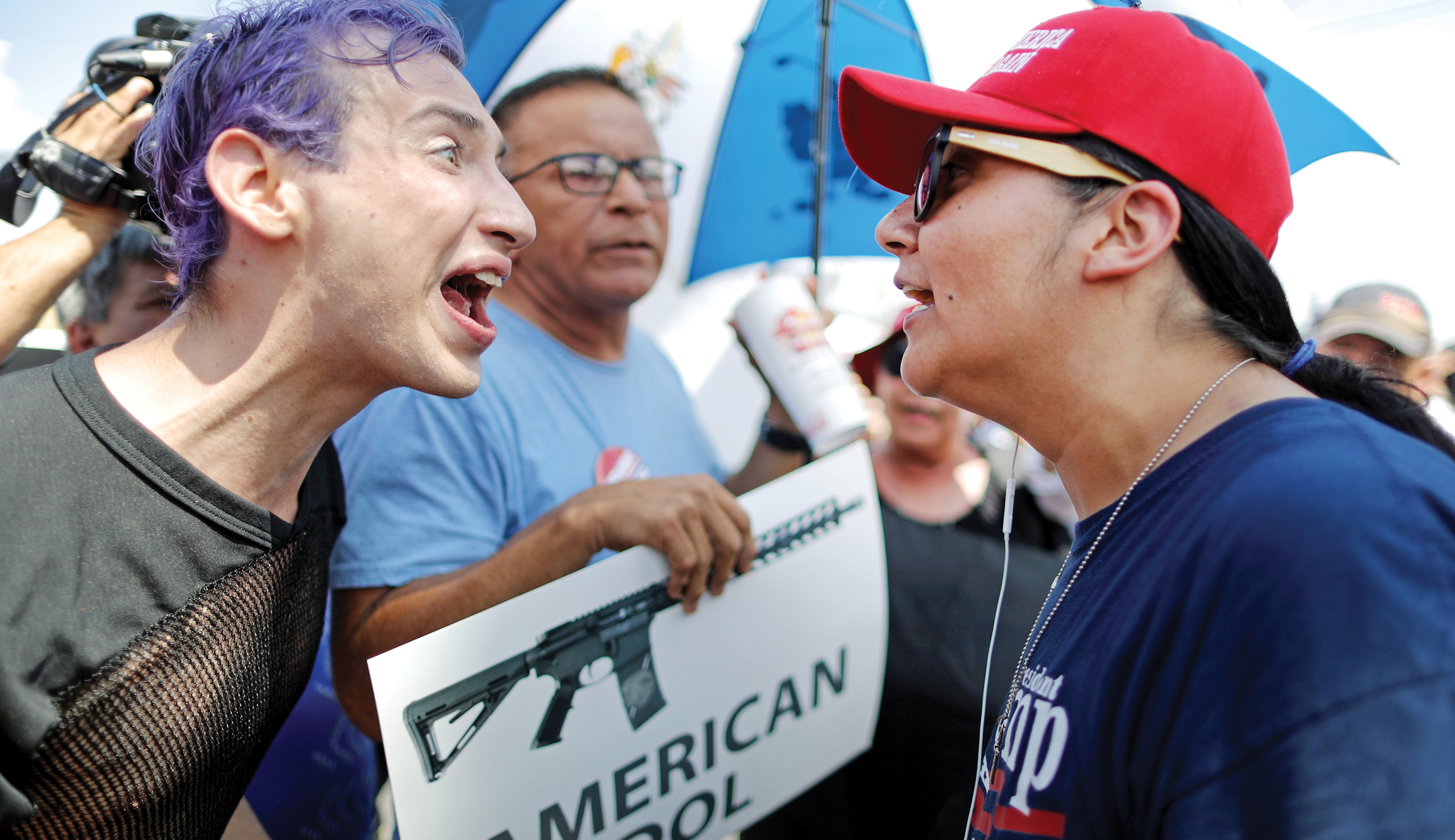
In the course of three years I just spent on the road speaking with voters about President Trump, what surprised me the most was how few people have actually changed their minds about him. With rare exceptions, those I spoke with who supported him on Election Day 2016 still support him today, and the same is true of those who opposed him. That’s not to say that people’s views of the president have not changed. But where they have changed, the change has all been in one direction — toward a more extreme and more deeply entrenched conception of the president. This is the product of the increasingly tribalistic nature of American politics.
Tribalism is predicated on group loyalty, but in the political sense, I found it has two other prominent features. The first is negative partisanship, the concept that when people support a candidate, they are driven more by opposition to his or her opponent. Second, it is one factor in the country’s partisan sorting — some choose where to live based on politics. Political tribalism in America, then, can be less about affinity and belonging and more about fear or antagonism. When it comes to Trump and our current politics, tribalism manifests itself in an inability to acknowledge any nuance when assessing the president or his policies. On my trips, I found political tribalism was just as common among Trump’s critics. Some on both sides unintentionally painted tribalism as a survival mechanism.
Stay informed.Stay ahead.
Join Washington Examiner for unlimited access to the news, analysis, and commentary that matter most.
Already a member? Log in
