

A new medical technology expected to be on the market in 2027 is poised to help patients in middle America have greater access to heart transplants.
Xvivo Perfusion, a leader in organ transplant technology, is close to publishing clinical trial results for a new product that keeps hearts viable for longer after they have been retrieved from a deceased donor.
The demand for heart transplants significantly outpaces supply. Eighteen new heart patients are added to the waitlist each day on average, but only about 12 hearts are donated daily, according to the Organ Procurement and Transplantation Network, a public-private partnership overseen by the Department of Health and Human Services.
TRUMP RAID REOPENS 2020 FAULT LINES IN GEORGIA GOVERNOR AND SENATE RACES
But nearly 20% of all types organs retrieved from deceased donors for transplant are discarded, often because the organ is not viable by the time it reaches the transplantee.
Hearts retrieved for donation are usually turned down by transplant surgeons within a few hours of retrieval because they have deteriorated in transit, Xvivo’s Vice President of medical affairs Jaya Tiwari told the Washington Examiner.
“You need a better way to preserve the heart in order to extend that time,” Tiwari said.
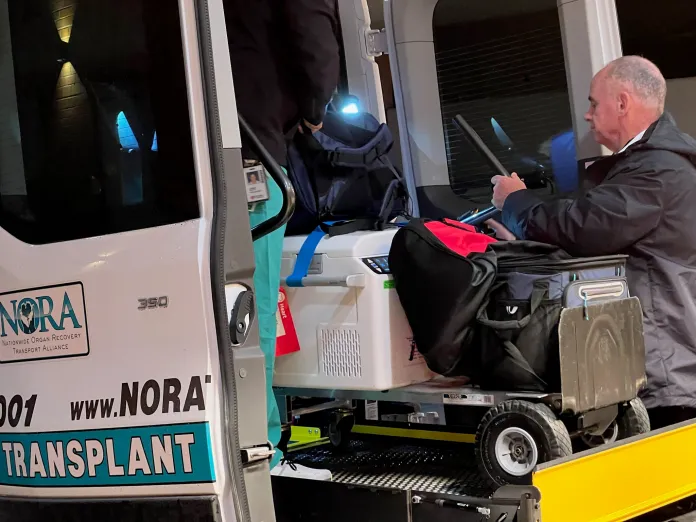
Tiwari said the new heart technology currently finishing clinical trials is a form of cold perfusion, a process of preserving a donated organ by pumping fluid through it while it is outside the body. Xvivo’s proprietary perfusion formula not only oxygenates the heart, but also evenly cools the organ to make it last longer, thereby making it possible to expand the distance the organ can travel between donor and transplant recipient.
Clinical trial results for the new heart perfusion technology will be presented in April at a heart and lung transplant conference in Toronto, and the company plans to submit its Pre-Market Approval application to the Food and Drug Administration this spring.
But the technology has been granted experimental use authorization in France and has been used to transport hearts back and forth on a commercial airline from the French Caribbean to Paris. Tiwari said the goal is to do something similar for the U.S..
EPSTEIN FILES IMPLODE BRITISH POLITICS WITH ‘BIGGEST SCANDAL’ IN ‘OVER ONE CENTURY’
“We can be seeing organ sharing coast to coast, even with Alaska and Hawaii, these far out regions, which, otherwise, because of the time constraint, you can’t have that broad of organ sharing,” Tiwari said.
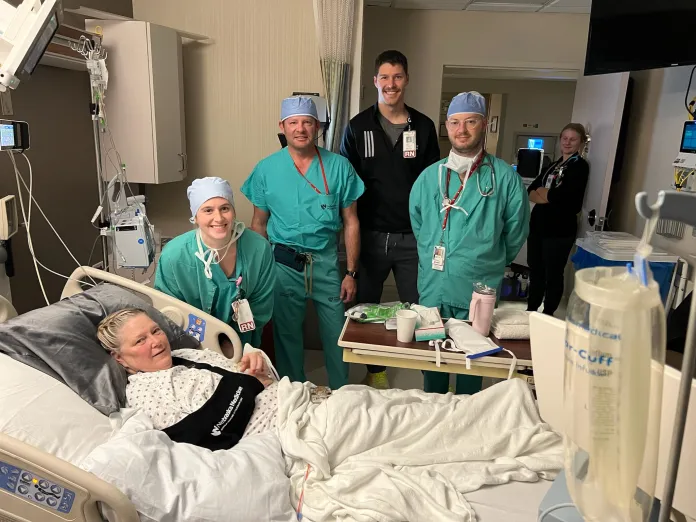
Kim Castellano of Omaha, Nebraska, has already benefited from the technology’s capacity to expand the donor pool, having received a heart transplant in 2024 through the clinical trial. She is one of the 92% of heart transplant patients who survive more than one year after surgery, marking a success story for the new product.
Transplant in the heartland
Castellano was born with a congenital heart defect and received a pacemaker at three years old. She was the third child in the U.S. to receive such treatment, making her one of the longest-living patients with a pacemaker device.
Having relied on a pacemaker for decades, Castellano says she knew her heart would eventually start to decline, but she did not realize it would deteriorate rapidly starting in 2022.
She was put on the transplant list in May 2024. Her cardiology team said, because of the nuances of her condition, only as many as 6% of hearts viable for transplant would have any possibility of success for her.
HUGO GURDON: AMERICAN DECLINE, OR A REBOUND?
On an evening in mid-October 2024, Castellano got the call from her doctors saying they had a viable heart for transplant. She describes her experience prepping for a heart transplant in the hospital as “such a whirlwind,” with as many as six providers working on her at a time.
But after a series of delays over a few hours, the heart was no longer viable, a devastating blow for her and her family. Then came the Xvivo clinical trial.
Xvivo’s heart perfusion technology made it such that Castellano could receive a heart that would match her needs from anywhere within a five-hour radius, rather than the traditional two. She enthusiastically signed up for the trial, saying she and her husband “felt like this would give me a good match and a good chance.”
Two weeks later, Castellano received what she calls her Halloween Heart on Oct. 31, 2024.
“After I woke up and everything, and I was stable, the doctor came in and said, I don’t think we could have found a better match. This was literally the perfect match for you,” Castellano said. “So I don’t think I would have gotten that without being a part of this group.”
Perfusion technology changing the game
Xvivo is one of the several major companies addressing the rapidly increasing demand for organ transplants through improving preservation methods.
CAR STOP-START SYSTEMS MAY GO AWAY THANKS TO TRUMP DEREGULATION
In the U.S. alone, about 103,000 people are on the national transplant waitlist, with an average of 13 people dying each day while waiting for an organ.
Perfusion technology that improves the length of time an organ is viable increases the chances that it will make it to the transplant patient and ultimately not go to waste.
The global market for organ preservation solutions is growing at a rate of nearly 7% per year, expanding from $281 million in 2025 to an estimated $420 million by 2031.
Heart transplants in particular are a profitable business. A report from the market analyst group Milliman in 2025 found that they cost an average of $1.9 million before insurance.
The majority of the cost comes from lengthy hospital admission pre- and post-surgery, but organ procurement itself costs nearly $215,000.
WHY IT COULD TAKE WEEKS TO FEEL THE BRUNT OF A DHS SHUTDOWN
Tiwari said Xvivo’s heart technology makes it possible to cut down on these costs by using commercial airlines for transport.
“No need for the expenses associated with private planes in the middle of the night and pilots,” Tiwari said.
National Donor Day
Castellano said she hopes that policymakers improve support systems for living donors, who are able to live with one kidney or only portions of their lungs or livers.
She said the costs of health insurance for living donors and transplant recipients is of chief concern, considering how expensive procedures and immunosuppressive drugs are.
Castellano’s donor died, but she said she plans to send a special thank-you message on National Donor Day, Feb. 14, to her donor’s family who made the choice to give the gift of life.
“I hope someday I get to at least say ‘thank you’ to the family,” Castellano said. “I could not be more grateful.”
DEMOCRATS BET KITCHEN-TABLE ISSUES CAN BLUNT GOP MONEY ADVANTAGE
Castellano said that her goal in recovery from her surgery has been to be able to walk across Disney World with her adult daughters and three grandchildren. She refers to herself and her family as “Disney nuts.”
Thanks to her donor heart, Castellano said she’s looking forward to achieving her goal later this year.
