

Planned Parenthood Federation of America has managed to survive nearly six months without the funding cut by Republicans.
The GOP, as part of the One Big Beautiful Bill Act signed by President Donald Trump last year, defunded Planned Parenthood by blocking reimbursements to large abortion providers through Medicaid, the massive healthcare program for low-income and disabled people.
That fulfilled a decades-long goal of the anti-abortion movement.
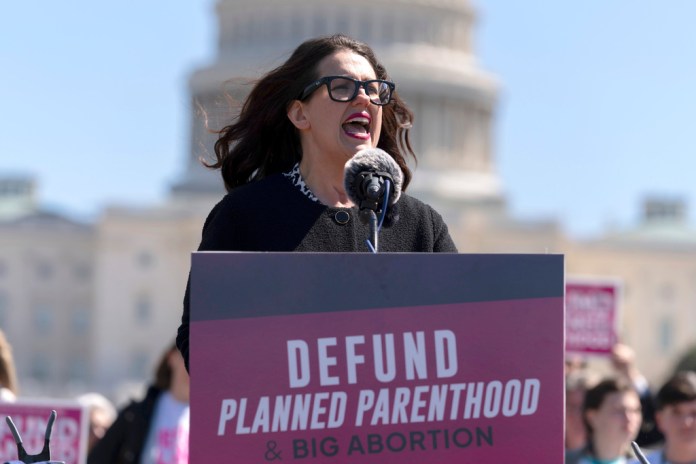
But the bill only cut funding for one year. And Planned Parenthood is now halfway through that year in relatively strong shape, thanks to stepped-up contributions from state governments and private donors. It’s not clear that the measure has hastened the pace of Planned Parenthood closures or prevented a significant number of abortions.
In other words, the defunding of Planned Parenthood has not proved to be the catastrophe claimed by abortion rights supporters.
Nor has it been the massive victory claimed by the anti-abortion movement. Activists are now hoping for another chance to cut off funding permanently, but that opportunity may not come.
What abortion supporters claimed would happen
Congressional rules have long prohibited federal dollars from Medicaid for directly covering abortion, but the new defunding effort also stopped abortion providers from getting reimbursements for non-abortion services, such as cervical cancer screenings, STI testing, and treatment. Anti-abortion advocates argued that such a restriction was necessary because money is fungible.
A significant number of Planned Parenthood’s patient population is covered by Medicaid. Before the OBBBA, Medicaid reimbursement accounted for a large portion of the roughly $800 million in government services and grants that Planned Parenthood makes annually, or about 40% of its budget.
Abortion rights advocates have argued that the federal prohibition on Medicaid reimbursement for non-abortion services will hurt patients who depend upon their services for regular OBGYN care.
Planned Parenthood President Alexis McGill Johnson described the loss of funding as “unsustainable” in November, two months into the reimbursement cut, and said that “patients’ access to health care will worsen considerably over time due to the Trump administration’s actions.”
The company’s impact report on the defunding law describes their health centers as “being pushed to the brink” and “buckling under immense financial strain.”
Planned Parenthood released a statement in January saying that it closed 51 of its clinics nationwide in 2025 due to funding cuts from the Trump administration, including the separate freezing of Title X family planning funds to abortion providers. The organization attributes at least 20 of those directly to the cut in federal Medicaid reimbursement.
The reality: Planned Parenthood has survived the funding hit
But the financial damage done to Planned Parenthood by the GOP’s federal Medicaid prohibition may be overestimated, considering how state funding and private donations have been able to fill in the gap.
Planned Parenthood said in its January report that it covered the cost of more than 100,000 patient visits for Medicaid beneficiaries, totaling $45 million in uncompensated care, between September, when the OBBBA’s provision took effect, and the end of 2025.
But, on top of increased private donations, Planned Parenthood’s affiliate organizations have recouped nearly $280 million through state pledges since the passage of the federal Medicaid ban, according to the health policy research group KFF.
Gov. Gavin Newsom (D-CA) last October pledged over $140 million to the seven Planned Parenthood affiliates in his state. In February, he pledged another $90 million.
Other states have also pledged lump-sum amounts of up to $41 million, the largest being $35 million from Gov. Kathy Hochul (D-NY).
New York also joined Colorado, New Mexico, and Washington in passing legislation to permit Planned Parenthood reimbursement using state-only Medicaid dollars.
Before the most recent cash promises, McGill Johnson said in November that public commitments from states helped stabilize the organization’s situation, but it needed more to stay afloat in the long term.
“While several states have made public commitments to provide emergency funding to ensure patients using Medicaid can continue getting their care at Planned Parenthood health centers, totaling approximately $200 million [as of the end of 2025], a critical gap of hundreds of millions of dollars remains,” McGill said.
The cause of clinic closures is unclear
It is also not clear that the GOP law caused the closures of Planned Parenthood clinics or substantially decreased the number of abortions in the United States.
It is true that the number of Planned Parenthood clinics has declined.
But the number was already trending down in recent years, even before the defunding measure, according to data from the University of California, San Francisco’s reproductive health policy research program.
There are two major trends that explain the decline.
The most significant is the proliferation of telemedicine providers prescribing the abortion pill mifepristone online. Following the COVID-19 pandemic, the Food and Drug Administration removed in-person screening requirements for abortion providers to dispense the drug mifepristone. This allowed for the opening of online telemedicine practitioners to ship abortion medications directly to patients, decreasing the demand for brick-and-mortar abortion providers.
The other is the enactment of state laws restricting abortion in the wake of the 2022 Dobbs v. Jackson Women’s Health Organization Supreme Court decision, which found that there is no constitutional right to abortion. Twelve states entirely ban elective abortions following the ruling.
Those factors have led to a drop in the number of Planned Parenthood clinics.
In 2017, UCSF recorded 362 Planned Parenthood abortion providers, representing 47% of the market. By 2023, the number of Planned Parenthood locations nationwide had shrunk to 348, representing 36% of the market.
UCSF recorded the launching of online abortion provider websites as the opening of “independent clinics,” accounting for the dramatic deviation between independent and Planned Parenthood centers starting in 2022.
The increasing prevalence of telehealth abortion has also made it murky to discern how many abortions the GOP’s one-year defund prevented.
The pro-abortion Society of Family Planning published a report in December outlining that nearly three in 10 abortions nationwide were conducted via telehealth during the first six months of 2025, before the Planned Parenthood defunding took effect.
SFP estimates that abortions have risen steadily year-over-year since the overturning of Roe, with much of that increase due to telehealth abortion access.
For the first six months of 2025, SFP reported nearly 592,000 abortions. Data for the second half of 2025, during which the Medicaid freeze took effect, has not yet been released.
Also, Planned Parenthood says only half of the centers that closed last year performed abortions. The organization estimates that the closures prevented 48,000 patients from receiving contraceptives and 21,000 patients from undergoing abortions.
Anti-abortion activists claim victory: Proof of concept
While the defunding of Planned Parenthood has not proved the critical blow they might have once hoped, anti-abortion advocates argue that the experience should embolden Republicans to pass similar measures in upcoming legislation, even during an election year, in light of the limited repercussions. In other words, they say that the one-year defunding measure serves as proof of concept that the policy can be a winner for the GOP.
David Bereit, head of the anti-abortion coalition group Life Leadership Conference, told the Washington Examiner that Planned Parenthood’s survival of the one-year defund “gives [him] hope” that Congress can pass another bill.
“They’ve proven they don’t need it,” Bereit said of Planned Parenthood. “We’ve proven that we can pass this measure and that America didn’t fall apart as a result of it, and we have the safety net of other resources that can help those who are really facing difficult situations.”
Kristan Hawkins, president of Students for Life, told the Washington Examiner that the fact that the abortion provider has survived on the whole has “proven we can be a society that does not fund Planned Parenthood.”
Republicans passed the legislation using reconciliation, a special legislative maneuver that allows for bills to avoid the filibuster and clear the Senate with only a simple majority. Republicans said the measure was limited to one year because of procedural rules governing the reconciliation process, but leaders did not explain which rules prevented a longer-term defunding.
Hawkins also said that any reconciliation bill that does not include prohibitions on all Medicaid reimbursement for abortion providers is considered “a pro-abortion vote” that Republicans will not want on their records.
“What you’ve done is ensured we are going to be a pain in your butt now every single year, and we can’t go away, because now you’ve proven you can do it,” Hawkins said.
Prospects for new legislation
The prospects for another reconciliation bill this year, though, look slim. And Republicans may not hold on to their majorities after this year’s midterm elections, making it far from clear that anti-abortion activists will get another chance to restrict funding from Planned Parenthood.
And, after July 5th, when funding resumes, Planned Parenthood could have both federal funding and the added state dollars and private donations.
That would be “nearly a worst-case scenario,” said Noah Brandt, vice president of communications for the anti-abortion group Live Action.
“In July, you could be looking at an abortion industry that actually has more money than ever,” Brandt said.

Some anti-abortion activists argue that failing to pass new legislation that defunds could demoralize the base. Rep. Chris Smith (R-NJ), the co-chairman of the House Pro-Life Caucus, told the Washington Examiner that he has talked with GOP leadership about the need to re-up the defund effort to rally anti-abortion voters ahead of the midterms.
“It’s not only about defending the defenseless and the vulnerable, but it’s also, we’ve got amazing people working throughout this country to get people elected,” Smith said.
Anti-abortion voters are already expressing dissatisfaction with Republicans heading into the midterm elections.
Polling commissioned this month from Susan B. Anthony Pro-Life America found that anti-abortion voters and campaign volunteers are less enthusiastic for the GOP heading into the midterms this year because of the Trump administration’s hesitancy to implement tougher restrictions on the abortion pill mifepristone.
Smith said he is confident that House Speaker Mike Johnson (R-LA) and House Majority Leader Steve Scalise (R-LA) are “truly pro-life” but acknowledged that passing a reconciliation bill would require all Republicans to support the measure.
“We do have a thin majority, so we got to be, you know, know how to prevail,” Smith said. “Having the President’s leadership on defunding Planned Parenthood would be helpful.”
Johnson’s office declined to comment on whether or not cutting off Medicaid funds for Planned Parenthood would be included in his push for a reconciliation bill, but the Speaker celebrated the provision of the OBBBA as a win for the anti-abortion movement during his speech at the 53rd March for Life in January.
