

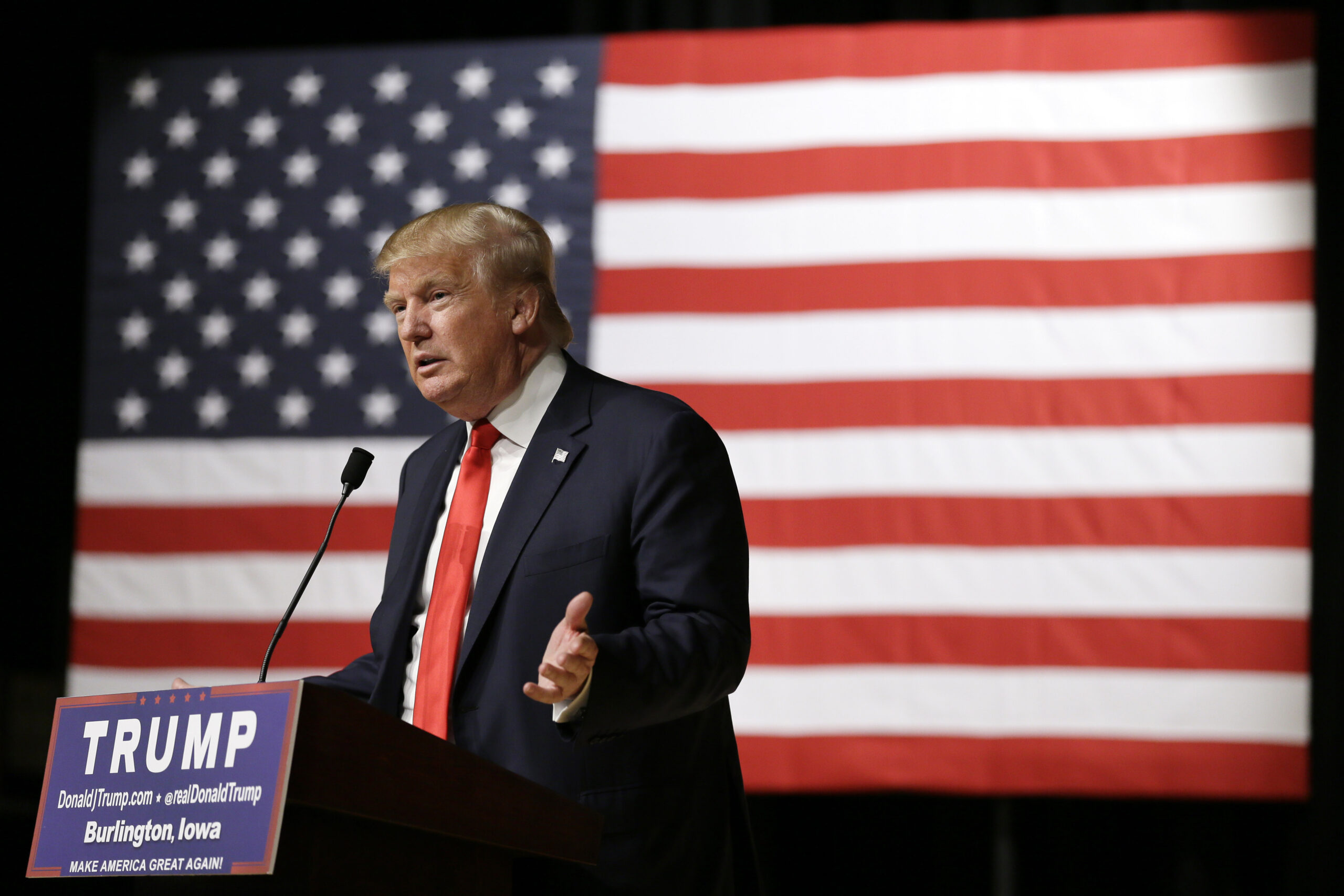
The country’s biggest business group is speaking favorably of the Trump phenomenon, at least for now.
Donald Trump, the billionaire populist who currently leads the Republican presidential field, “will be a positive participant in this process for a while,” said Tom Donohue, president and CEO of the U.S. Chamber of Commerce.
Recommended Stories



Donohue’s conciliatory commentary on Trump Friday morning is notable given that Trump’s candidacy is a threat to some of the top priorities of the business group, especially in regard to immigration reform.
In the past, Donohue has suggested that the Chamber, one of the biggest campaign donors, might depart from its normal policy of staying out of presidential races in order to respond to a candidate who threatens the country’s free-enterprise policies.
Neither Trump nor any of the other anti-establishment GOP candidates fit the bill, though, at least not yet.
Donohue acknowledged the differences between Trump and business, saying that Trump engages in campaign rhetoric that runs counter to the Chamber’s preferences “far beyond immigration.”
Nevertheless, he said that the Trump boom represents legitimate frustrations with government.
“He’s an articulation of frustration,” he said.
Speaking alongside Donohue at a Christian Science Monitor press event, Chamber executive vice president Bruce Josten sketched out a similar view of how populism is influencing the 2016 campaign.
Non-officeholder candidates like Trump, retired neurosurgeon Ben Carson, and former Hewlett-Packard CEO Carly Fiorina are representative of frustration on both the right and left over the federal government’s inability to create economic growth and boost the fortunes of the middle class, Josten argued.
“They’re tapping that fear and anger,” he said.
Some of Trump’s success in the primary can be attributed to his tough stance on illegal immigration. But he’s also departed from business orthodoxy in opposing many trade deals, seeking to raise some taxes on investment income, and proposing to tax companies that seek to move their headquarters outside of the U.S.
Despite the rise of Trump, Donohue suggested that the country is moving closer to addressing its immigration policy problems, in part because the economic need for workers is becoming more pressing.
“We’re much closer than we were,” he said.
