

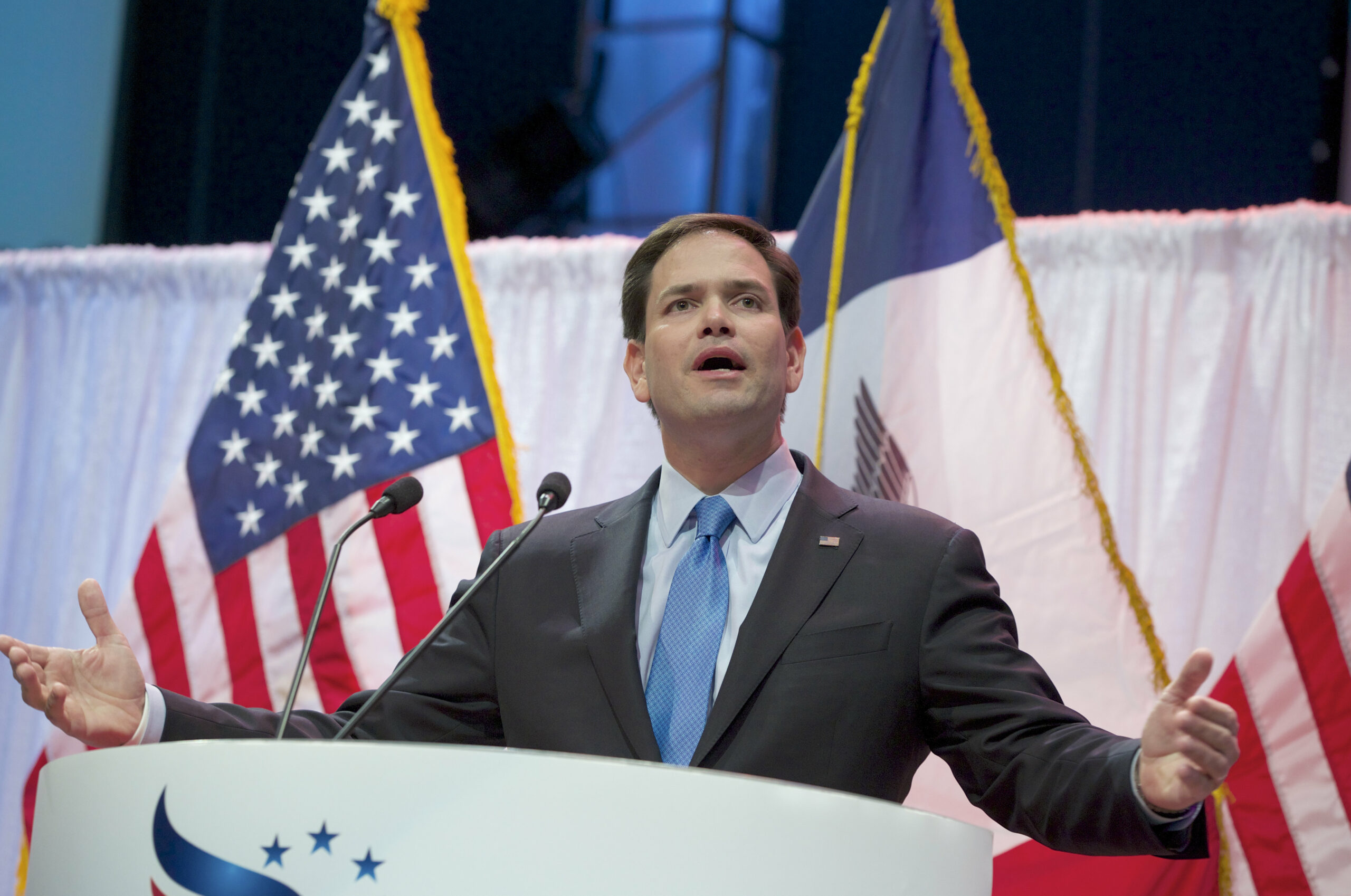
Florida Sen. Marco Rubio, a 2016 Republican presidential contender, stressed his family’s immigrant history during a speech at an event hosted by the Iowa Faith and Freedom Coalition. He did not discuss immigration reform itself though.
Recommended Stories


Rubio cast his family history as an inspiring American success story of how strangers could arrive and thrive and how his parents could have a grandchild who could rise to the U.S. Senate — and by implication, become a presidential candidate.
He did not call on the crowd to support any immigration reform measures or discuss his own, though. After a bruising two years in the Senate trying to broker a deal that saw little progress, he has evidently decided to limit talk on the issue to his own biography.
“My father lost his father when he was nine. He went to work and then worked the next 70 years of his life. My mother was one of seven girls raised in rural Cuba by a father disabled by polio as a young child who struggled to provide for his girls his entire life. Yet in 1956 they came to the one place where people like them could have a chance. They came to the United States,” he said.
They were never rich but they never knew the despair their parents did and they knew their children could do even better, Rubio said.
“That is the America I grew up [in]. This was the extraordinary nation that changed the world,” he told the audience. The audience’s response was positive but not enthusiastic. Rubio drew greater applause by warning that “our allies are watching” and alarmed over how President Obama has treated the U.S.’s ally, Israel.
Jeff Mossman, an audience member, said the immigration story was “the most inspiring” moment of the event, but he was leaning towards Scott Walker.
Rubio brought immigration up again obliquely in the conclusion of his speech, talking about how much his grandfather loved this country and how he made his grandson promise to take advantage of the opportunities available to him.
“Long before he was a citizen, long before he was fully in this country, he was an American,” Rubio said.
