

The Trump administration is shifting into a new phase of deportation planning to expand and overhaul immigrant detention this year.
Three sources familiar with the Trump administration’s plans to deport illegal immigrants said the recent hiring of thousands of ICE officers will lead to more arrests. That means, far more detention space will quickly become necessary to hold as many people as are being taken into custody, as they navigate deportation proceedings in court and are removed from the country.
An internal ICE document obtained by the Washington Examiner details the agency’s plan to reengineer detention practices with $38 billion in funding that it received in last year’s One Big, Beautiful Bill.
“[ICE] Enforcement and Removal Operations will fully implement a new detention model by the end of Fiscal Year 2026,” the document states. “This effort aims to meet the growing demand for bedspace and streamline the detention and removal process, focusing on non-traditional facilities built specifically to support ICE’s needs.”
As part of the overhaul, ICE will acquire and renovate eight large-scale detention centers and 16 facilities where people in custody are processed, as well as 10 “turnkey” facilities that it already has. Those changes are expected to bring the total to 92,600 beds, an increase from roughly 50,000 at the start of Trump’s second term.
“The new sites will serve as ICE’s long-term detention solution,” the document states.
Congressional funding to expand detention
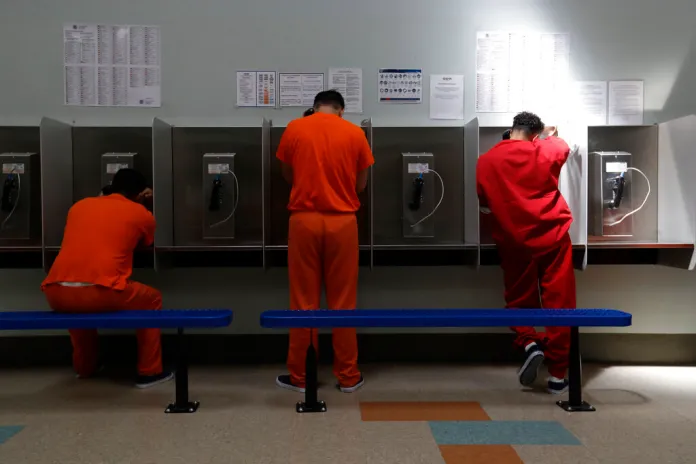
ICE has roughly three dozen existing immigrant detention sites nationwide that are owned and operated by private contractors. It also relies on agreements with county jails in many states to detain illegal immigrants for them.
The 16 regional processing centers will hold between 1,000 and 1,500 detainees each, with the goal of three- to seven-day detainments. People in detention will be staged temporarily at those sites as ICE determines which “large-scale detention facilities” have space for them.
Future plans for the different types of detention facilities should help the government quickly process recent arrestees into custody and expedite removals by shifting those in large facilities to smaller centers near airports, a former senior ICE official familiar with the plans told the Washington Examiner.
“The government’s basically looking for facilities where they’ll do processing, and [detainees] will stay only for a few days, and then temporary holding facilities, where they’re getting ready to be removed,” the official said. “They’ll be closer to the ICE flight lines.”
The eight large centers will house 7,000 to 10,000 people each for “periods averaging less than 60 days,” though ICE has historically exceeded that two-month average considerably. These detention sites will provide food, clothing, hygiene products, bedding, and recreation to the thousands of people in detention as they go through deportation proceedings in court and await deportation.
As is the case with existing ICE detention centers, the document states that the facilities should have a legal library available to detainees, visitation space, religious spaces, and communication centers where people in custody can speak by phone and receive mail. Meals will be served in a cafeteria, and detainees are generally housed in a large room with bunk beds scattered throughout.
ICE warehouse plans move forward
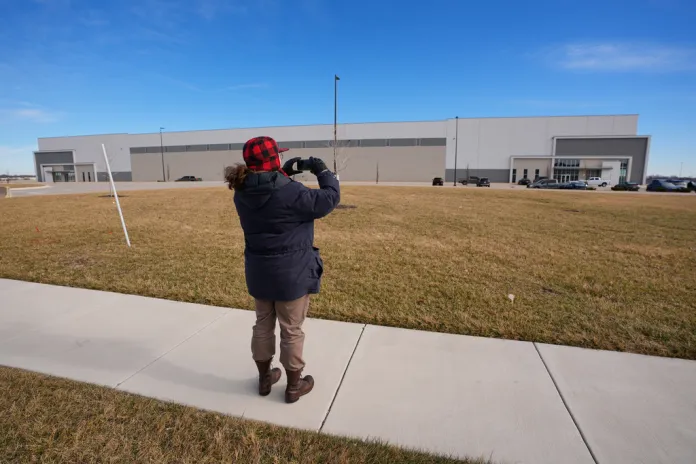
Over the past month, ICE has moved forward with plans to buy additional sites that will be created out of warehouses. Those facilities will be run by private contractors, such as GEO Group or CoreCivic.
The warehouse search is moving forward, but has faced pushback from some communities as activists learn of local warehouses that ICE is considering purchasing.
Kansas City Mayor Quinton Lucas (D-MO) issued a statement last week celebrating how the purchase of a warehouse on the city’s south side had fallen through amid pushback from some residents.
Around the same time this month, the owner of a warehouse in Dallas suburb Hutchins, Texas, backed out of talks with ICE following pushback. Texas state Rep. Rafael Anchia applauded Dallas-area residents in a post to X for speaking out against the deal.
“Public engagement works. Property owners have affirmed they will not sell their warehouse for use as an ICE detention center,” Anchia wrote.
A former senior ICE official familiar with the Trump administration’s plans to convert the warehouses into additional detention centers said the pushback is a problem, but does not ultimately expect it to prevent the agency from acquiring 10 warehouses.
INSIDE ICE’S BATTLE WITH DEMOCRATS TO CONVERT WAREHOUSES INTO DETENTION SITES
“Honestly, the government will just go somewhere else. They’re going to find people that want to sell property,” the official said in a phone call, adding that the government is offering “top dollar” for buildings that are “sitting unused.”
ICE has issued requests for proposals to the private sector, asking corporations to submit their best prices to convert individual warehouses and operate them once detainees arrive.
