

Homeland Security Secretary Markwayne Mullin has taken immigration detention in a different direction than the “flashy,” gimmicky style that his predecessor, Kristi Noem, had sought to carry out the Trump administration’s mass deportations, according to three sources aware of department plans.
Mullin has spent nearly two months in his new role plotting a course that will make the jailing of illegal immigrants through court proceedings more efficient and cost-effective, without the pomp and circumstance seen over the past year.
Recommended Stories


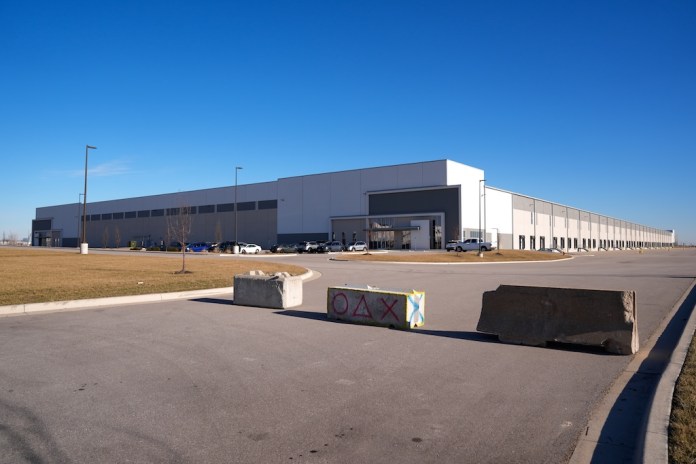
To do this, Mullin and DHS advisers have chosen to walk away from several warehouses that Noem had tried to buy with the intention of converting the facilities into immigrant jails. DHS has also looked at doing away with the alliteratively named state detention sites, such as “Alligator Alcatraz” and the “Deportation Depot” in Florida.
“I would say that the approach is more sensible and not flashy. No gimmicks,” a senior administration official wrote in a text message. “Not hooking up their friends.”
The move comes amid pushback from communities where new immigration detention sites were planned and as Immigration and Customs Enforcement, a DHS agency, continues to carry out President Donald Trump’s illegal immigration crackdown.
Noem and her former cohort, special government employee Corey Lewandowski, chose to expand immigrant detention space significantly by shopping for 10 massive warehouses and converting them into jails, as well as covering the costs for states to open their own detention sites where illegal immigrants could be held through deportation proceedings.
As part of Noem’s detention overhaul funded by the One Big Beautiful Bill Act, ICE was set to acquire and renovate eight large-scale detention centers and 16 facilities where people in custody are processed, as well as 10 “turnkey” facilities that it already has. Those changes are expected to bring the total to 92,600 beds, up from roughly 50,000 at the start of Trump’s second term.
Noem put in place an unprecedented policy requiring her team to review all DHS contracts over $100,000 personally to avoid wasting money. However, some lawmakers worried that the secretary’s office’s control over all contracts opened the department to nepotism.
The DHS Office of Inspector General has launched an investigation into Noem and Lewandowski’s plans to spend $38 billion converting warehouses into jails, the Wall Street Journal reported this week.
It comes on the heels of an Atlantic report that the government spent $145 million purchasing a Utah warehouse valued at $97 million.
In an about-face from Noem’s plans, Mullin had ICE pause all purchases of warehouses that were intended to be converted into detention facilities for illegal immigrants in deportation proceedings.
Under Mullin, ICE has now been given permission to move forward with no more than seven warehouse facilities. The additional 10 planned under Noem may be repurposed for DHS use by ICE or other agencies, according to a second source.
Mullin is also reevaluating the use of state-run sites for immigration detention after Noem launched several such sites nationwide. Since July 2025, the DHS has announced the openings of Alligator Alcatraz and Deportation Depot in Florida; “Speedway Slammer” in Indiana; “Cornhusker Clink” in Nebraska; and the “Louisiana Lockup” in Louisiana.

“I would say they are going to be looked at. Some are good. Some just make no sense and are a waste of money,” the first official said.
Separately, ICE uses roughly 30 existing immigrant detention sites nationwide that are owned and operated by private contractors paid by the DHS.
GEO Group and CoreCivic are the largest government contractors assisting ICE with detention. As of early 2026, GEO Group’s portfolio included approximately 20 ICE detention or staging sites where illegal immigrants are held pending court proceedings. CoreCivic owned and oversaw roughly 10 detention facilities.
BORDER PATROL CHIEF MIKE BANKS ANNOUNCES SUDDEN RETIREMENT
ICE wants to remake these existing immigration detention sites to give the federal government far more control over them so that they are not beholden to state policies.
Up to 10 of these privately owned detention facilities are expected to be purchased by the government by mid-summer.
