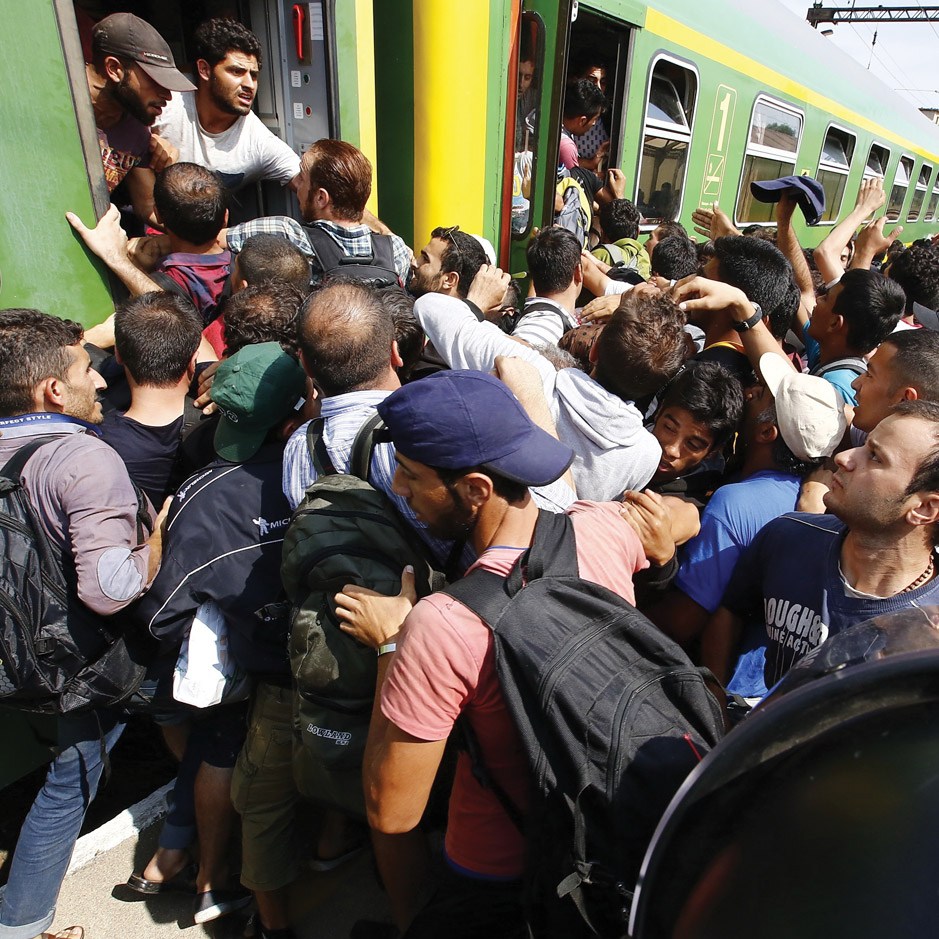
Europe’s migrant crisis, the continent’s greatest humanitarian disaster since the aftermath of World War II, continues to worsen. The summer began with mass drownings in the Mediterranean and bickering between the European Union and the governments of its member states over who should foot the bill for search and rescue patrols of Europe’s southern coasts. The summer is ending with a series of appalling images that have galvanized public opinion, especially in the northern European states, and forced both national and supranational authorities to act.
On the Greek holiday island of Kos, migrants rioted when the police tried to corral them in a sports stadium. At Calais, migrants stormed a security fence and were repelled from the Channel Tunnel by tear gas. At Neusiedl in Austria, police discovered the bodies of 71 people, asphyxiated in the back of an abandoned truck. In Budapest, thousands of migrants, most of them Syrian, jammed the streets and tunnels around the Keleti train station. When the Hungarian government refused to let them travel onward, some fought their way onto trains, and a small army of desperate, exhausted, and hungry people set off on foot for the Austrian border.